Your dashboard speaks in three colors, and the color matters more than the symbol. Here is the translation, including the few lights that mean pull over immediately.
The color system every automaker uses
Dashboards follow a traffic-light convention. Red indicates a serious problem or safety issue requiring immediate attention. Yellow or amber indicates something needing service or caution soon. Green and blue simply confirm a feature is on, like high beams. When a new light appears, the color tells you the urgency before you even identify the symbol.
Your owner’s manual contains the authoritative glossary for your specific vehicle, and modern cars usually pair lights with text messages on the driver display. This guide covers the lights common to nearly all vehicles.
The red lights that mean stop now
Oil pressure, an oil can symbol, means the engine may be losing lubrication; continuing to drive can destroy an engine in minutes. Pull over safely, shut off, and check the oil level; do not resume driving on a lit oil light. Engine temperature, a thermometer in liquid, means overheating; pull over, shut off, and never open a hot radiator cap.
The battery light while driving means the charging system has failed and the car is running on battery reserve; head directly for service before everything shuts down. Red brake warnings, beyond the parking brake being engaged, can indicate low fluid or hydraulic failure and deserve immediate, cautious attention.
The check engine light, steady vs. flashing
A steady check engine light means the emissions and engine management system logged a fault. The car is usually drivable; have the code read soon, and check the gas cap first, since a loose cap is a classic trigger. Many parts stores read codes free, and inexpensive OBD-II readers work with phone apps.
A flashing check engine light is different: it signals an active misfire dumping unburned fuel into the catalytic converter, which can overheat and fail expensively. Reduce speed and load and get service promptly rather than finishing the road trip.
The yellow lights people ignore too long
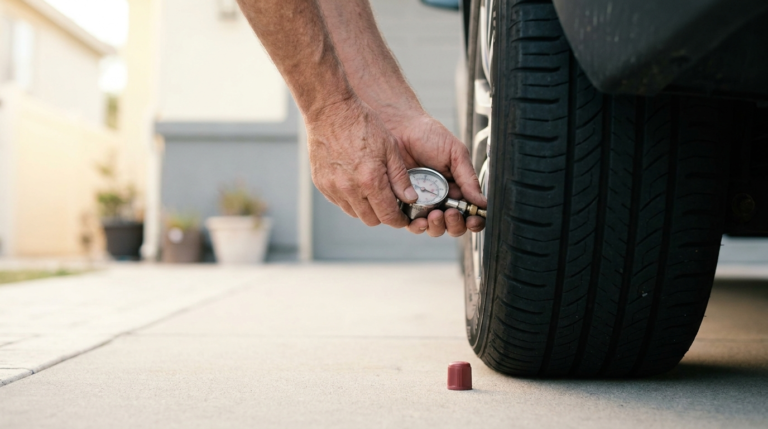
Tire pressure warnings deserve a same-day check with a gauge; underinflation wears tires and worsens handling, and NHTSA ties correct pressure directly to safety. ABS and traction control lights usually leave normal braking intact while disabling the assistance systems, which is a fine reason to schedule service and a poor reason to panic.
Airbag warning lights mean the restraint system may not deploy in a crash; that is a schedule-it-now repair. And any light you cannot identify is worth the two minutes with the manual before deciding it is probably nothing.
Frequently asked questions
Can I keep driving with a steady check engine light?
Usually yes for a short period if the car drives normally, but read the code soon; some codes are trivial and some are early warnings of costly damage.
Why did my light turn off by itself?
Codes clear after a fault stops recurring for a set number of drive cycles. The event is still stored in history and readable at a shop; intermittent faults tend to return.
Do warning lights get checked in state inspections?
In many states with inspections, an illuminated check engine light is an automatic emissions failure. Fix the cause, not the bulb.