
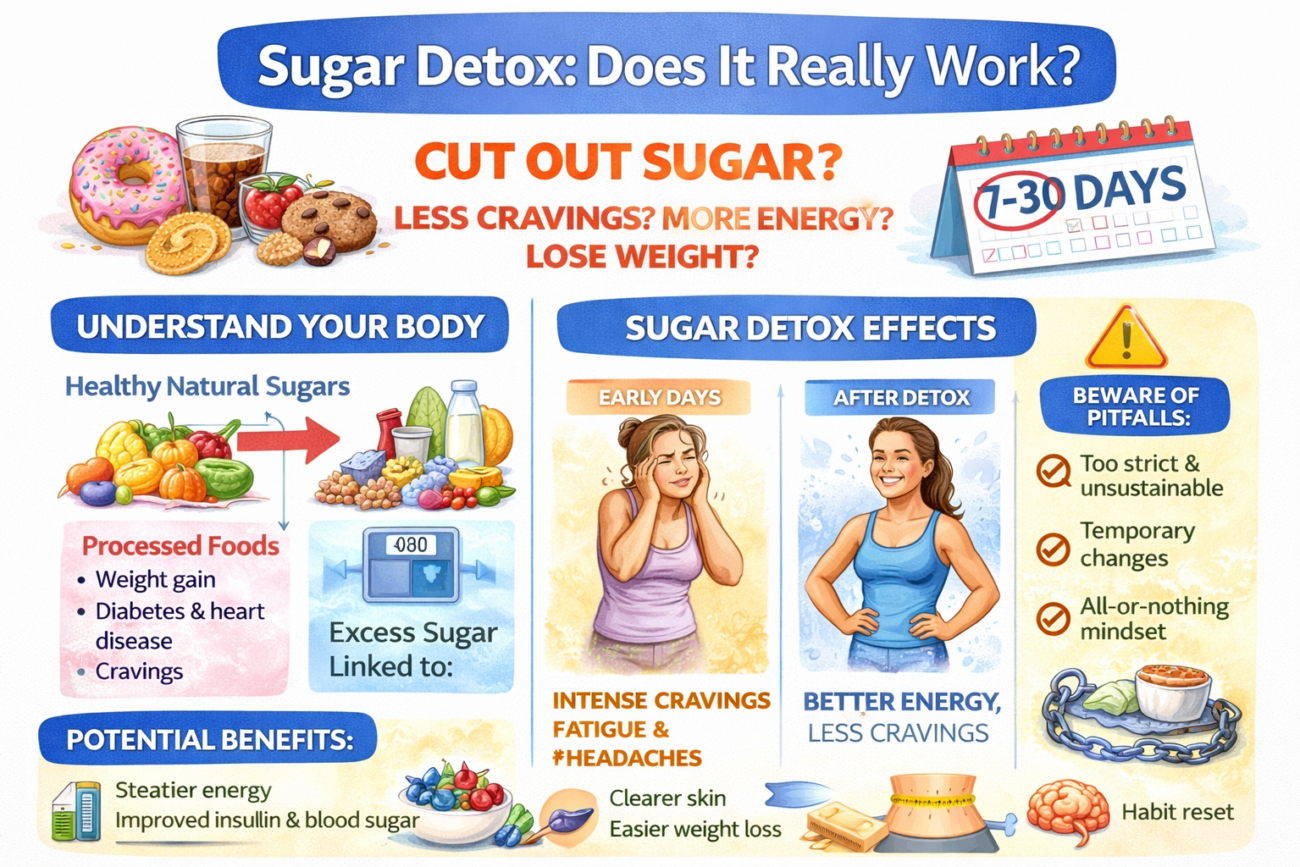
Sugar has become public enemy number one in the nutrition world, blamed for everything from obesity and diabetes to acne and aging. In response, “sugar detoxes” have exploded in popularity, promising to reset your taste buds, eliminate cravings, boost energy, and help you lose weight—all by cutting out sugar for a set period, typically 7 to 30 days. These programs often come with dramatic testimonials and before-and-after photos. But does a sugar detox actually work, or is it just another wellness trend built more on marketing than science?
Understanding Sugar and Your Body
Before evaluating whether sugar detoxes work, it’s important to understand what sugar actually does in your body. Sugar is a simple carbohydrate that your body breaks down into glucose, which serves as fuel for your cells, particularly your brain. Not all sugars are created equal, however.
Natural sugars found in whole fruits, vegetables, and dairy come packaged with fiber, vitamins, minerals, and other beneficial compounds that slow digestion and provide nutritional value. Added sugars—the kind in candy, baked goods, sodas, sauces, and countless processed foods—provide calories without nutrients, often called “empty calories.”
The average American consumes about 17 teaspoons of added sugar daily, far exceeding the American Heart Association’s recommendation of no more than 6 teaspoons for women and 9 for men. This excessive intake is linked to weight gain, increased risk of type 2 diabetes and heart disease, fatty liver disease, inflammation throughout the body, accelerated aging and skin problems, tooth decay, and even mood disorders and depression.
The “Detox” Misconception
The term “detox” itself is problematic from a scientific standpoint. Your body already has sophisticated detoxification systems—primarily your liver, kidneys, digestive system, skin, and lungs—that work continuously to eliminate toxins and waste products. Sugar isn’t a toxin that needs to be “detoxed” in the way that, say, heavy metals or environmental poisons do.
However, while “detox” may be a misnomer, the underlying concept of dramatically reducing added sugar intake can have legitimate benefits. Perhaps a better term would be “sugar reset” or “sugar reduction challenge.”
What Happens During a Sugar Detox
Most sugar detox programs involve eliminating or drastically reducing all added sugars and sometimes natural sugars as well for a set period. Some programs are more restrictive than others—some eliminate fruit, while others allow it. Most eliminate obvious sources like candy, cookies, and soda, along with hidden sources in condiments, sauces, bread, and processed foods.
The First Few Days: Many people experience withdrawal-like symptoms during the initial 3-5 days. This isn’t because sugar is literally addictive like drugs, but because your brain has become accustomed to regular dopamine hits from sweet foods. Common symptoms include intense sugar cravings, headaches, fatigue and low energy, irritability or mood swings, difficulty concentrating, and sometimes physical symptoms like shakiness or muscle aches.
This period can be genuinely challenging, leading some people to abandon the effort. However, these symptoms typically peak around day 3-4 and then begin improving.
Days 5-10: Most people report that cravings begin to subside during this period. Energy levels often improve as blood sugar stabilizes. Many notice better sleep quality, reduced bloating and digestive issues, and clearer thinking. Taste buds start to adjust, making naturally sweet foods like berries taste sweeter than they did before.
Beyond Two Weeks: By this point, most people find that intense sugar cravings have largely disappeared. Foods that once seemed normal now taste overly sweet. Energy levels are typically more stable throughout the day without the blood sugar roller coaster. Many people report weight loss, particularly around the midsection, improved skin clarity, better mood stability, and reduced inflammation and joint pain.
The Science: What Research Actually Shows
While there haven’t been many formal studies specifically on “sugar detoxes,” research on reducing sugar intake provides relevant insights.
Weight Loss: Cutting out added sugars almost invariably leads to reduced calorie intake and subsequent weight loss. Studies show that people who reduce sugar consumption lose weight even without consciously restricting other foods. This occurs both because sugary foods are calorie-dense and because sugar consumption is linked to increased appetite and food intake overall.
Metabolic Improvements: Research demonstrates that reducing sugar intake improves insulin sensitivity, lowers triglyceride levels, reduces inflammatory markers, decreases blood pressure, and improves liver function. These changes can occur relatively quickly—sometimes within just a few weeks of reduced sugar consumption.
Brain and Behavior: Studies using brain imaging show that high sugar intake activates reward pathways similarly to addictive substances. While sugar isn’t addictive in the clinical sense, it can create patterns of craving and overconsumption. Reducing sugar intake can help break these patterns, though the concept of “sugar addiction” remains controversial among scientists.
Taste Adaptation: Research confirms that our taste preferences are remarkably adaptable. When people reduce sugar intake for several weeks, their preference for intense sweetness decreases. Foods they once found pleasantly sweet may taste too sweet, while foods they previously found bland become more enjoyable.
Potential Benefits of Reducing Sugar
Whether you call it a detox or simply cutting back on sugar, reducing added sugar intake can provide numerous benefits including more stable energy levels throughout the day without crashes, reduced inflammation and potential improvement in inflammatory conditions, better blood sugar control and reduced diabetes risk, improved cardiovascular health markers, clearer skin and potential reduction in acne, better dental health, more stable mood and reduced anxiety, improved sleep quality, weight loss without conscious calorie counting, and reduced cravings for sweets over time.
These benefits don’t require complete sugar elimination—even modest reductions can produce noticeable improvements.
The Downsides and Potential Problems
Sugar detoxes aren’t without drawbacks and potential issues that deserve consideration.
Overly Restrictive Approaches: Some sugar detox programs eliminate all sources of sugar, including fruit, dairy, and even some vegetables. This is unnecessarily restrictive and can lead to nutrient deficiencies. Fruit provides valuable fiber, vitamins, minerals, and antioxidants that support health. The natural sugars in whole fruit are processed differently by your body than added sugars due to the fiber content.
All-or-Nothing Thinking: Extreme restrictions can backfire by creating an unhealthy relationship with food. When certain foods become completely “forbidden,” they often become more desirable, potentially leading to binge eating once the detox period ends. This cycle of restriction and overeating can be psychologically damaging.
Temporary Changes: Many people successfully complete a sugar detox only to immediately return to their previous eating patterns. Without addressing the underlying habits and environmental factors that led to high sugar consumption, the benefits quickly disappear. Sustainable, gradual changes are typically more effective long-term than short, intense restrictions.
Social and Practical Challenges: Completely avoiding sugar can be socially isolating and practically difficult. Birthday celebrations, restaurant meals, and social gatherings often involve sweet foods, and rigid avoidance can create stress and anxiety around these situations.
Missing the Bigger Picture: Focusing intensely on sugar can distract from other important aspects of nutrition. Someone might successfully avoid sugar while still eating a diet high in processed foods, lacking vegetables, or deficient in protein and healthy fats.
Does It Really Work? The Nuanced Answer
Sugar detoxes “work” in the sense that reducing sugar intake produces measurable health benefits. However, the detox framework itself may not be the most effective or sustainable approach. Here’s a more nuanced evaluation:
What Works: Dramatically reducing added sugar intake for any period of time can help break the cycle of cravings, reset taste preferences, reveal hidden sources of sugar in your diet, provide motivation and a clear starting point, and produce quick wins that encourage continued healthy eating.
What Doesn’t Work: The “detox” framing that implies sugar is a toxin requiring special elimination, extreme restrictions that eliminate nutritious foods like fruit, short-term thinking that doesn’t address long-term habits, and rigid rules that create an unhealthy relationship with food.
A More Effective Approach: Gradual Sugar Reduction
Rather than an all-or-nothing detox, most nutrition experts recommend a more moderate, sustainable approach to reducing sugar intake.
Start by Eliminating the Obvious: Cut out sodas, sweetened beverages, candy, cookies, and obvious desserts. This alone can reduce sugar intake dramatically for most people.
Read Labels Carefully: Sugar hides in unexpected places—pasta sauce, salad dressing, bread, yogurt, granola, and “healthy” snacks. Check ingredient lists for terms like high fructose corn syrup, cane sugar, agave nectar, honey, and the many other names for added sugar.
Replace Rather Than Restrict: Instead of simply eliminating sweet foods, replace them with naturally sweet whole foods. Swap candy for fresh berries, trade cookies for dates stuffed with almond butter, or replace sugary yogurt with plain Greek yogurt topped with fruit.
Reduce Gradually: Instead of going cold turkey, gradually reduce sugar in your coffee, choose dark chocolate instead of milk chocolate, or dilute fruit juice with sparkling water. These small changes are easier to maintain long-term.
Focus on Addition, Not Subtraction: Emphasize adding nutritious foods—vegetables, lean proteins, healthy fats, and fiber-rich whole grains—which naturally crowd out space and desire for sugary foods.
Allow Flexibility: Build in room for occasional treats without guilt. A piece of birthday cake or dessert on special occasions won’t derail your health, and allowing yourself these experiences prevents the restriction-binge cycle.
Practical Tips for Success
If you decide to significantly reduce your sugar intake, whether as a formal “detox” or simply as a healthy change, these strategies can help:
Plan ahead by clearing your house of tempting foods and stocking up on healthy alternatives. Stay well-hydrated, as thirst can sometimes masquerade as cravings. Get adequate sleep, since sleep deprivation increases cravings for sugary foods. Manage stress through exercise, meditation, or other healthy coping mechanisms rather than turning to comfort foods.
Eat regular, balanced meals with adequate protein and healthy fats to maintain stable blood sugar and reduce cravings. Find non-food rewards and comforts to replace the emotional role sugar may have played in your life. Get support from friends, family, or online communities going through similar changes.
Expect and prepare for the difficult first few days. Having a plan for managing cravings—going for a walk, calling a friend, drinking herbal tea—can help you push through.
The Bottom Line
Sugar detoxes can serve as a useful reset button and motivation tool, but they’re not magic and the “detox” terminology is misleading. Your body doesn’t need a special program to eliminate sugar; it simply benefits from consuming less of it.
The real question isn’t whether a 7, 21, or 30-day sugar detox “works,” but rather whether it helps you develop sustainable, long-term habits that reduce your sugar intake permanently. For some people, the clear boundaries and definite timeframe of a detox provide helpful structure and motivation. For others, the all-or-nothing approach creates stress and sets them up for failure.
What matters most is finding an approach that helps you significantly reduce added sugar consumption in a way that feels sustainable and doesn’t create an unhealthy relationship with food. Whether you call it a detox, a reset, or simply making healthier choices, eating less sugar will almost certainly improve your health. The key is making changes you can maintain not just for a few weeks, but for life. Gradual, consistent reduction often beats dramatic, short-term restriction when it comes to lasting change.