Heart disease remains the leading cause of death globally, claiming millions of lives each year. While genetics play a role, lifestyle factors including diet significantly influence cardiovascular health. Among dietary interventions, omega-3 fatty acids have emerged as one of the most well-researched and scientifically validated nutrients for protecting heart health. Understanding how these essential fats work and how to incorporate them into your diet can be a powerful step toward reducing your cardiovascular risk.
What Are Omega-3 Fatty Acids?
Omega-3 fatty acids are a family of polyunsaturated fats that are considered “essential” because your body cannot produce them independently. You must obtain them through diet or supplementation. The three main types of omega-3s are eicosapentaenoic acid (EPA), docosahexaenoic acid (DHA), and alpha-linolenic acid (ALA).
EPA and DHA are primarily found in fatty fish and marine sources, and they’re the forms most directly linked to cardiovascular benefits. ALA comes from plant sources like flaxseeds, chia seeds, and walnuts. While your body can convert small amounts of ALA to EPA and DHA, this conversion is inefficient, typically less than 10%, making direct sources of EPA and DHA particularly valuable for heart health.
Reducing Triglyceride Levels
One of the most well-established benefits of omega-3 fatty acids is their ability to lower triglyceride levels. Triglycerides are a type of fat in your blood, and elevated levels increase the risk of heart disease, stroke, and pancreatitis. High triglycerides often accompany other cardiovascular risk factors like obesity, metabolic syndrome, and type 2 diabetes.
Studies have consistently shown that omega-3 supplementation, particularly EPA and DHA, can reduce triglyceride levels by 15-30%, with even greater reductions in people with very high levels. The mechanism involves reducing the liver’s production of triglyceride-rich particles and increasing the clearance of triglycerides from the bloodstream. This effect is dose-dependent, meaning higher intakes generally produce greater reductions, though even modest amounts provide benefit.
For people with severely elevated triglycerides, prescription omega-3 formulations containing high doses of EPA have been FDA-approved specifically for triglyceride management, demonstrating the therapeutic power of these fatty acids.
Lowering Blood Pressure
Hypertension, or high blood pressure, is a major risk factor for heart attack, stroke, and heart failure. Omega-3 fatty acids have been shown to produce modest but clinically meaningful reductions in blood pressure, particularly in people with existing hypertension or prehypertension.
Research indicates that omega-3s can reduce systolic blood pressure by an average of 3-5 mmHg and diastolic pressure by 2-3 mmHg. While these numbers may seem small, even modest reductions in blood pressure at the population level can significantly decrease cardiovascular events. The effect appears to be dose-dependent, with higher intakes producing greater benefits.
The mechanisms behind this blood pressure-lowering effect include improved endothelial function, which helps blood vessels dilate properly, reduced inflammation that can damage vessel walls, decreased production of compounds that constrict blood vessels, and improved arterial elasticity. These effects work synergistically to promote healthier blood pressure regulation.
Reducing Inflammation
Chronic inflammation plays a central role in the development and progression of atherosclerosis, the process where plaque builds up in arterial walls. This inflammation contributes to plaque instability, increasing the risk that plaques will rupture and trigger heart attacks or strokes.
Omega-3 fatty acids, particularly EPA and DHA, are powerful anti-inflammatory agents. They work by competing with omega-6 fatty acids in inflammatory pathways, reducing the production of pro-inflammatory molecules called eicosanoids and cytokines. They also promote the production of specialized pro-resolving mediators, compounds that actively help resolve inflammation and promote healing.
Studies measuring inflammatory markers like C-reactive protein (CRP), interleukin-6, and tumor necrosis factor-alpha have found that omega-3 supplementation can significantly reduce these indicators of systemic inflammation. This anti-inflammatory effect extends beyond the cardiovascular system, benefiting overall health, but it’s particularly important for protecting arterial health and reducing cardiovascular risk.
Preventing Dangerous Heart Rhythms
Cardiac arrhythmias, particularly ventricular fibrillation and ventricular tachycardia, are life-threatening irregular heartbeats that can cause sudden cardiac death. Omega-3 fatty acids have been shown to have anti-arrhythmic properties, helping to stabilize heart rhythm and reduce the risk of these dangerous events.
Research suggests that omega-3s work by modulating ion channels in heart muscle cells, improving the heart’s electrical stability. They help maintain normal calcium and sodium flow across cell membranes, which is essential for coordinated heartbeats. Studies have found that people with higher omega-3 levels in their blood have a lower risk of sudden cardiac death.
Some of the most compelling evidence comes from studies showing that omega-3 supplementation after heart attacks reduces the risk of fatal arrhythmias during the critical recovery period. While more research is ongoing, the anti-arrhythmic effects of omega-3s represent an important mechanism for cardiovascular protection.
Improving Arterial Health and Function
Your arteries need to be flexible and responsive to properly regulate blood flow throughout your body. Omega-3 fatty acids help maintain arterial health through several mechanisms. They improve endothelial function, the ability of the inner lining of blood vessels to regulate dilation and constriction. Healthy endothelial function is crucial for maintaining proper blood flow and preventing hypertension.
Studies using flow-mediated dilation, a measure of endothelial function, have shown that omega-3 supplementation improves arterial responsiveness. This improvement in vascular function helps ensure adequate blood flow to organs and tissues, reducing the heart’s workload.
Omega-3s also help prevent arterial stiffening, a process that occurs with aging and is accelerated by cardiovascular risk factors. Maintaining arterial elasticity is important for healthy blood pressure and reducing strain on the heart. Research indicates that people with higher omega-3 intake tend to have more flexible, responsive arteries compared to those with lower intake.
Reducing Plaque Buildup and Atherosclerosis
Atherosclerosis, the buildup of fatty deposits in arterial walls, is the underlying process behind most heart attacks and strokes. Omega-3 fatty acids help slow this process through multiple pathways. They reduce inflammation in arterial walls, which is a key driver of plaque formation and progression. They help prevent oxidation of LDL cholesterol, making it less likely to contribute to plaque development.
Additionally, omega-3s may help stabilize existing plaques, making them less likely to rupture. Plaque rupture is the triggering event for most heart attacks and many strokes, so stabilizing plaques is a critical protective mechanism. Some research suggests that omega-3s can be incorporated into plaque structure, potentially making plaques more stable and less prone to complications.
Imaging studies using ultrasound and other techniques have shown that omega-3 supplementation can slow the progression of atherosclerosis and, in some cases, may even contribute to modest plaque regression when combined with other interventions.
Reducing Risk of Heart Attack and Stroke
The ultimate goal of any cardiovascular intervention is to prevent heart attacks and strokes. Large population studies have consistently shown that people who consume more omega-3 fatty acids, either through diet or supplementation, have a lower risk of these events.
A comprehensive analysis of multiple studies found that omega-3 supplementation reduces the risk of heart attack by approximately 8-10% and cardiovascular death by similar margins. While these percentages may seem modest, when applied to large populations, they represent thousands of prevented heart attacks and deaths.
The protective effects appear strongest in people with existing heart disease or multiple risk factors, though benefits extend to healthier populations as well. The key is consistent, long-term intake rather than sporadic supplementation, as omega-3s need time to incorporate into cell membranes and exert their protective effects.
Supporting Heart Failure Management
Heart failure, a condition where the heart cannot pump blood efficiently, affects millions of people and significantly impacts quality of life and survival. Emerging research suggests omega-3 fatty acids may benefit people with heart failure by improving heart muscle function, reducing inflammation that contributes to heart muscle damage, and helping maintain healthy heart rhythm.
Studies in heart failure patients have shown that omega-3 supplementation can reduce hospitalizations and may improve exercise capacity and quality of life. While omega-3s are not a cure for heart failure, they appear to be a valuable adjunct to standard treatments, helping optimize outcomes for people living with this challenging condition.
Improving Cholesterol Profiles
While omega-3s’ effects on LDL cholesterol are modest and variable, they can favorably influence overall cholesterol profiles. Most notably, they tend to increase HDL cholesterol, the “good” cholesterol that helps remove excess cholesterol from the bloodstream and arterial walls. Higher HDL levels are associated with reduced cardiovascular risk.
Omega-3s can also change the size and density of LDL particles. They tend to shift LDL from small, dense particles, which are more dangerous and more likely to penetrate arterial walls, to larger, less dense particles that are less atherogenic. This qualitative improvement in LDL characteristics may be as important as absolute LDL levels for cardiovascular risk.
Combined with their triglyceride-lowering effects, omega-3s help create a more favorable lipid profile that supports long-term cardiovascular health.
How Much Omega-3 Do You Need?
Recommendations for omega-3 intake vary depending on your health status and goals. For general heart health in people without heart disease, the American Heart Association recommends eating fatty fish at least twice per week, which typically provides about 500 mg of combined EPA and DHA daily.
For people with documented heart disease, the recommendation increases to about 1,000 mg of combined EPA and DHA daily, preferably from fish or supplements. For those with high triglycerides, higher doses of 2,000-4,000 mg daily may be appropriate, though this should be done under medical supervision.
It’s worth noting that higher doses are generally safe and well-tolerated, though they may increase bleeding risk in people taking anticoagulant medications or those with bleeding disorders.
Best Sources of Omega-3 for Heart Health
Fatty fish remain the gold standard for obtaining heart-healthy omega-3s. Excellent sources include salmon, mackerel, sardines, herring, anchovies, and trout. These fish are not only rich in EPA and DHA but also provide high-quality protein, vitamin D, selenium, and other nutrients that support overall health.
For people who don’t eat fish regularly, fish oil supplements can provide concentrated EPA and DHA. Look for products that have been tested for purity and are free from contaminants like mercury, PCBs, and dioxins. Molecularly distilled or pharmaceutical-grade fish oils undergo rigorous purification processes.
Krill oil is another option that provides EPA and DHA in a form that some research suggests may be well-absorbed, though it’s typically more expensive than fish oil. Algae-based omega-3 supplements offer a vegetarian source of EPA and DHA, making them ideal for people who avoid animal products.
Plant sources like flaxseeds, chia seeds, hemp seeds, and walnuts provide ALA, which offers some cardiovascular benefits, though they’re less potent than direct EPA and DHA sources. For optimal heart health, combining plant-based ALA with EPA and DHA sources is ideal.
Quality and Safety Considerations
When choosing omega-3 supplements, quality matters. Look for products that display third-party testing certifications from organizations like USP, NSF International, or IFOS, which verify purity and potency. Check that the product is protected from oxidation, which can make omega-3s rancid and less effective. Supplements should be stored properly and consumed before expiration dates.
Fresh fish oil should have minimal fishy smell or taste. A strong, unpleasant odor may indicate oxidation. Some people prefer enteric-coated capsules that dissolve in the intestines rather than the stomach, reducing fishy aftertaste and burps.
Be aware of potential interactions with medications, particularly blood thinners like warfarin, aspirin, or antiplatelet drugs, as omega-3s can increase bleeding risk. Always inform your healthcare provider about supplements you’re taking.
The Bottom Line
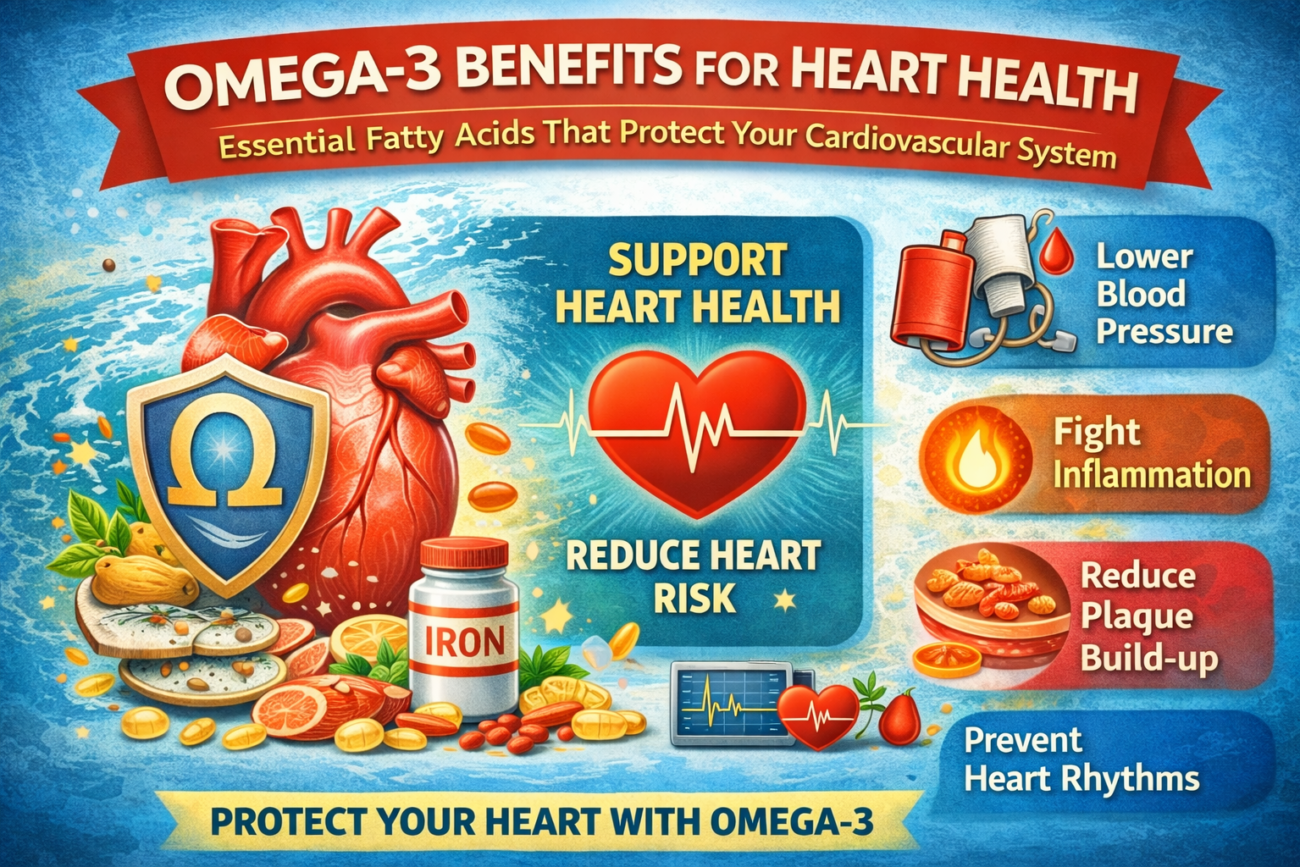
Omega-3 fatty acids offer comprehensive cardiovascular protection through multiple mechanisms, including lowering triglycerides, reducing blood pressure, fighting inflammation, stabilizing heart rhythm, improving arterial function, and slowing atherosclerosis progression. The evidence supporting their benefits is robust, backed by decades of research and population studies.
Whether obtained through regular consumption of fatty fish or high-quality supplements, omega-3s represent one of the most evidence-based nutritional strategies for protecting heart health. They work best as part of an overall heart-healthy lifestyle that includes a balanced diet, regular physical activity, stress management, and other preventive measures. For people with existing heart disease or significant risk factors, omega-3 supplementation under medical guidance can be a valuable component of comprehensive cardiovascular care. Given their safety profile and wide-ranging benefits, omega-3 fatty acids deserve a place in any heart disease prevention strategy.