
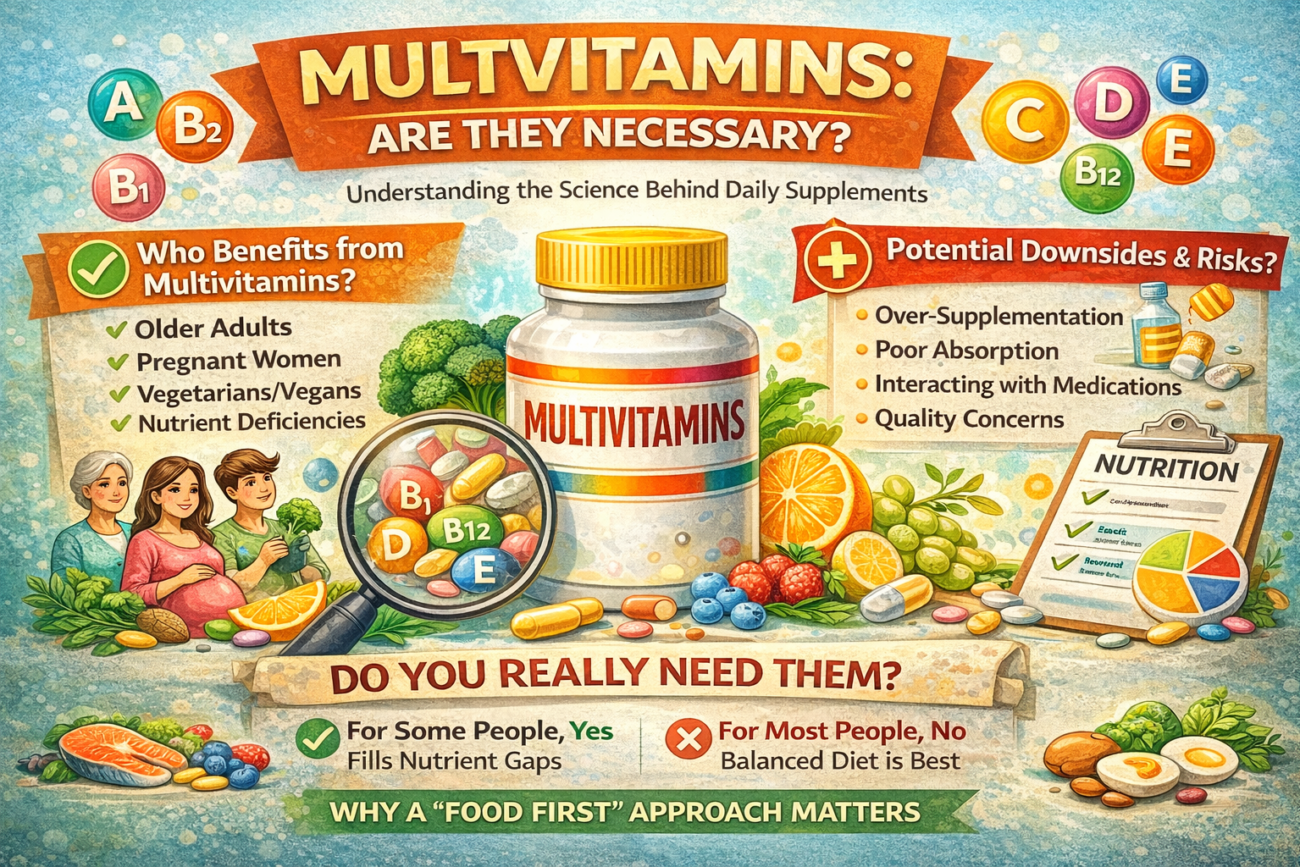
Walk into any pharmacy or health food store, and you’ll find shelves lined with colorful bottles of multivitamins promising everything from increased energy to disease prevention. The multivitamin industry generates billions of dollars annually, with an estimated half of American adults taking these supplements regularly. But do you actually need them? The answer, as with many health questions, is more nuanced than a simple yes or no. Understanding who benefits from multivitamins, who doesn’t, and what the science actually shows can help you make an informed decision about whether they belong in your daily routine.
What Are Multivitamins?
Multivitamins are dietary supplements containing a combination of vitamins, minerals, and sometimes other ingredients like herbs or amino acids. They’re designed to supplement your diet by providing nutrients you might not get in adequate amounts from food alone. A typical multivitamin contains essential vitamins including A, C, D, E, K, and the B-complex vitamins, along with important minerals such as calcium, magnesium, zinc, iron, and selenium.
The formulations vary widely between products. Some are designed for specific populations like women, men, seniors, or children, with nutrient ratios tailored to their particular needs. Others target specific health concerns like bone health, immune support, or energy production. The quality, bioavailability, and dosing of these products can differ dramatically, making it important to understand not just whether to take a multivitamin, but which type might be most appropriate for your situation.
The Case Against Routine Multivitamin Use
Several large-scale studies have challenged the widespread belief that multivitamins are universally beneficial. Research has consistently shown that for generally healthy people eating a reasonably balanced diet, multivitamins do not reduce the risk of heart disease, cancer, cognitive decline, or premature death. These findings have surprised many people who assumed that supplementing with vitamins would provide extra health insurance.
The problem is that most vitamins and minerals work best when obtained from whole foods, which contain a complex matrix of nutrients, fiber, and beneficial compounds that work synergistically. Isolated nutrients in pill form don’t provide the same benefits as the complete nutritional package found in fruits, vegetables, whole grains, and other whole foods. Your body has evolved to absorb and utilize nutrients from food efficiently, while synthetic vitamins may be processed differently.
Additionally, some research suggests that high doses of certain vitamins, particularly when taken as supplements rather than obtained from food, may actually cause harm. Beta-carotene supplements, for instance, have been linked to increased lung cancer risk in smokers. High-dose vitamin E has been associated with increased mortality in some studies. Excessive vitamin A can contribute to bone loss and birth defects during pregnancy.
There’s also the risk of creating a false sense of security. People who take multivitamins may believe they’ve covered their nutritional bases and feel less motivated to eat a healthy diet. This can be counterproductive, as no supplement can replicate the thousands of beneficial compounds found in whole foods, including phytochemicals, antioxidants, and fiber that contribute to overall health.
Who Actually Benefits from Multivitamins?
While multivitamins may not be necessary for everyone, certain populations can genuinely benefit from supplementation. Older adults often have reduced nutrient absorption due to decreased stomach acid production and may have diminished appetites, making it harder to meet nutritional needs through diet alone. They may particularly benefit from supplementation with vitamin B12, vitamin D, and calcium.
Pregnant women or those trying to conceive have significantly increased nutritional needs. Prenatal vitamins containing folic acid are crucial for preventing neural tube defects, and they also provide iron for increased blood volume and calcium for fetal bone development. The importance of prenatal vitamins is well-established and universally recommended by healthcare providers.
People with dietary restrictions face unique challenges. Vegans and vegetarians may need supplementation with vitamin B12, which is primarily found in animal products, along with iron, zinc, and omega-3 fatty acids. Those with food allergies or intolerances that eliminate entire food groups may also benefit from targeted supplementation.
Individuals with medical conditions affecting nutrient absorption, such as Crohn’s disease, celiac disease, gastric bypass surgery, or chronic pancreatitis, often cannot absorb nutrients adequately from food. Certain medications can also interfere with nutrient absorption or increase nutrient needs, making supplementation necessary.
People with diagnosed deficiencies need supplementation to restore optimal levels. However, this should be based on actual blood tests showing deficiency, not just assumptions. Supplementing without knowing your status can lead to taking unnecessary nutrients or even creating imbalances.
Those with very limited diets due to poverty, eating disorders, or extreme picky eating may not consume adequate nutrients from food. In these cases, a basic multivitamin can help prevent deficiency diseases while efforts are made to improve dietary quality.
What the Research Shows
The scientific literature on multivitamins presents a mixed picture. The Physicians’ Health Study II, which followed nearly 15,000 male physicians for over a decade, found a modest reduction in cancer risk among multivitamin users but no effect on cardiovascular disease or mortality. However, other large studies have found no benefit for cancer prevention.
Research on cognitive function has been similarly inconclusive. Some studies suggest multivitamins might slow cognitive decline in older adults, while others show no benefit. The quality of studies varies, and many are funded by supplement manufacturers, raising questions about potential bias.
Where multivitamins do show clear benefit is in preventing deficiency diseases in at-risk populations. They can improve nutritional status in people with inadequate diets and help maintain nutrient levels during periods of increased need like pregnancy or illness. The key is that benefits are most apparent in people who actually need additional nutrients, not in those already meeting their requirements through diet.
Interestingly, some research suggests that the placebo effect may play a role in the perceived benefits of multivitamins. People who take them often report feeling healthier and more energetic, even when objective measures don’t show significant changes. This psychological benefit, while real to the person experiencing it, doesn’t justify the expense for everyone.
Nutrients Often Lacking in Modern Diets
Even with the best intentions, certain nutrients are commonly insufficient in modern diets. Vitamin D deficiency is widespread, particularly among people living in northern latitudes or those who spend little time outdoors. Since few foods naturally contain vitamin D, supplementation often makes sense, either through a multivitamin or standalone supplement.
Magnesium intake is below recommended levels for many Americans. This mineral is crucial for hundreds of bodily processes, yet soil depletion and food processing have reduced its presence in the food supply. While magnesium-rich foods like nuts, seeds, and leafy greens should be prioritized, supplementation may benefit some people.
Vitamin K2, important for bone health and cardiovascular function, is found primarily in fermented foods and animal products from grass-fed animals, foods not commonly consumed in Western diets. Many multivitamins don’t contain adequate K2, so this may require separate consideration.
Iodine deficiency has reemerged in some populations, particularly among those who avoid iodized salt and dairy products. A multivitamin containing iodine can help ensure adequate intake for thyroid function.
Potential Risks and Downsides
Multivitamins are not without risks. Over-supplementation can occur when people take multiple supplements containing the same nutrients or consume fortified foods in addition to multivitamins. Fat-soluble vitamins including A, D, E, and K can accumulate in the body, potentially reaching toxic levels.
Nutrient interactions can also be problematic. High doses of one mineral can interfere with absorption of others. For example, excess zinc can impair copper absorption, while too much calcium can interfere with iron and magnesium absorption. Iron in multivitamins can cause digestive upset, constipation, and nausea in some people, particularly when taken on an empty stomach.
Quality control in the supplement industry is inconsistent. Unlike pharmaceuticals, supplements aren’t rigorously tested before reaching the market. Third-party testing has revealed that some products don’t contain what their labels claim, may contain contaminants, or have nutrients in forms poorly absorbed by the body.
There’s also the financial consideration. Regular multivitamin use can cost from $50 to several hundred dollars per year. For many people, this money might be better spent on higher-quality whole foods that provide superior nutrition along with fiber and beneficial plant compounds.
Making an Informed Decision
To determine whether you need a multivitamin, start by honestly assessing your diet. Keep a food diary for a week and analyze whether you’re consistently eating a variety of fruits, vegetables, whole grains, lean proteins, and healthy fats. If your diet is genuinely varied and nutritious, you may not need supplementation.
Consider your life stage and circumstances. Pregnancy, breastfeeding, advanced age, or specific health conditions may justify supplementation even with a good diet. Ask yourself about any dietary restrictions that might create nutritional gaps.
If you decide a multivitamin is appropriate, consult with your healthcare provider first, especially if you take medications or have health conditions. They can order blood tests to identify actual deficiencies rather than guessing, and recommend appropriate supplements based on your individual needs.
Choosing a Quality Multivitamin
If supplementation is warranted, select a high-quality product. Look for third-party testing certification from organizations like USP, NSF International, or ConsumerLab, which verify that products contain what their labels claim and are free from harmful contaminants.
Choose appropriate dosing that provides 100% of the Daily Value for most nutrients without excessive amounts. Be wary of mega-dose formulas claiming to provide 500% or more of certain vitamins, as these rarely offer additional benefits and may increase risks.
Consider bioavailability by selecting forms of nutrients that are well-absorbed. For example, methylated B vitamins, chelated minerals, and vitamin D3 rather than D2 tend to be better utilized by the body.
Avoid unnecessary additives, fillers, or allergens. Read ingredient lists carefully if you have sensitivities or preferences about ingredients like gelatin, artificial colors, or genetically modified ingredients.
Match the formulation to your needs. A 25-year-old man and a 65-year-old woman have very different nutritional requirements. Gender- and age-specific formulas account for these differences.
The Bottom Line: Food First, Supplements Second
The overwhelming evidence supports a “food first” approach to nutrition. No multivitamin can replicate the complex nutritional benefits of a varied, whole-foods diet rich in fruits, vegetables, whole grains, lean proteins, and healthy fats. Whole foods provide not just vitamins and minerals but also fiber, beneficial plant compounds, and nutrients we may not even fully understand yet.
For generally healthy people eating a balanced diet, multivitamins are probably unnecessary and unlikely to provide significant health benefits. The money might be better invested in higher-quality food. However, for specific populations including pregnant women, older adults, people with restricted diets, those with absorption issues, and individuals with diagnosed deficiencies, multivitamins can play a valuable role in maintaining nutritional adequacy.
The key is making an informed decision based on your individual circumstances rather than following blanket recommendations or marketing claims. If you choose to take a multivitamin, view it as supplementary insurance, not a replacement for healthy eating habits. And remember that more is not always better when it comes to vitamins and minerals. Balance, moderation, and personalization are the principles that should guide your decision about whether multivitamins are necessary for you.
