The debate between low-carb and low-fat diets has dominated nutritional discussions for decades, creating confusion and passionate advocates on both sides. In the 1980s and 90s, low-fat diets were promoted as the path to health and weight loss. More recently, low-carb approaches like keto and Atkins have gained popularity, with proponents claiming superior results. So which approach is actually better? The answer, as with most nutrition questions, is more nuanced than you might expect.
Understanding the Basics
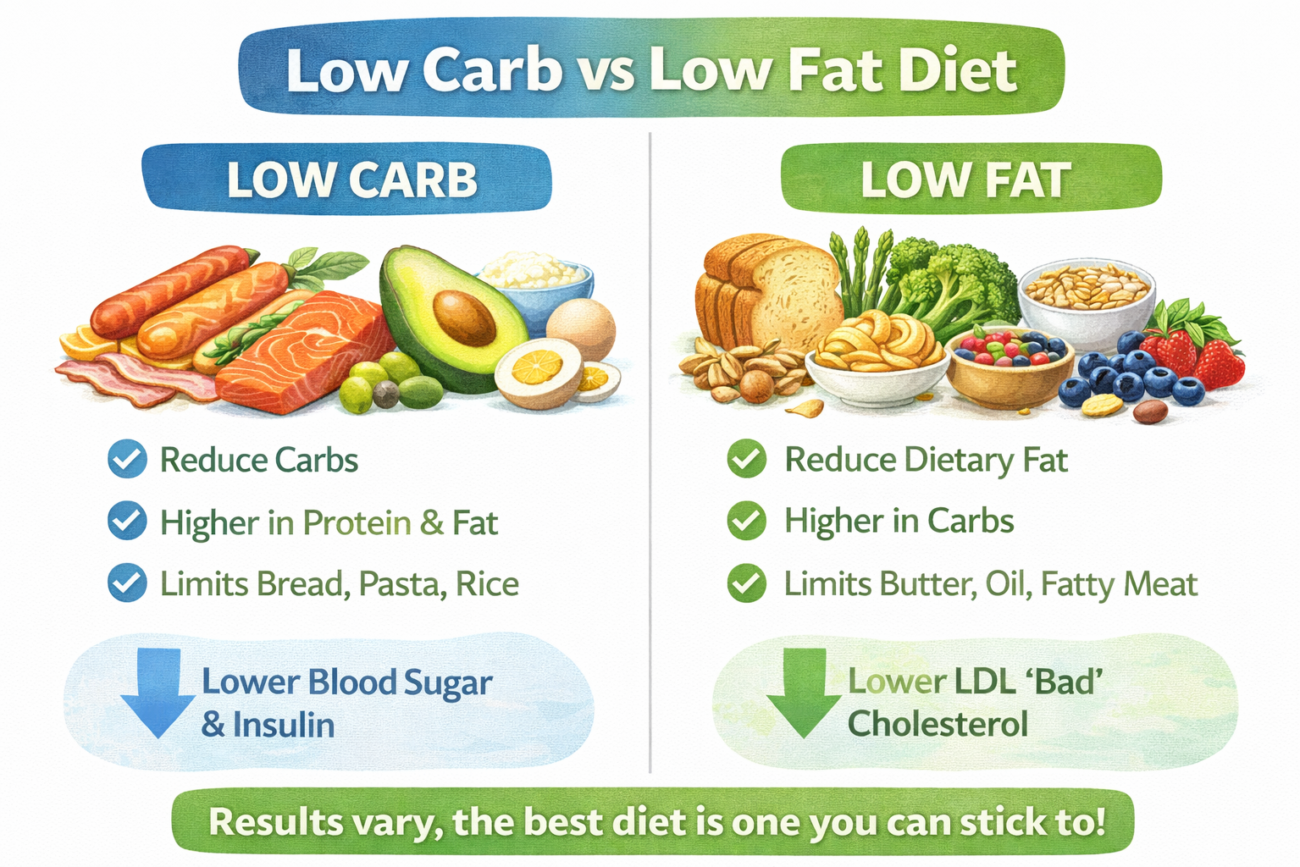
Low-Carb Diets restrict carbohydrate intake, typically to less than 130 grams per day, though some very low-carb or ketogenic diets limit carbs to 20-50 grams daily. These diets emphasize protein and fat while minimizing grains, sugars, starchy vegetables, and sometimes even fruits. The goal is often to shift the body into ketosis, a metabolic state where fat becomes the primary fuel source instead of glucose.
Low-Fat Diets limit fat intake to roughly 20-30% of total calories, focusing instead on carbohydrates and lean proteins. These diets emphasize whole grains, fruits, vegetables, and lean proteins while restricting oils, butter, fatty meats, full-fat dairy, and nuts. Traditional low-fat approaches dominated nutritional guidelines for decades based on concerns about saturated fat and heart disease.
The Science Behind Low-Carb Diets
When you drastically reduce carbohydrate intake, your body undergoes significant metabolic changes. Insulin levels drop since there’s less glucose entering the bloodstream. Lower insulin facilitates fat breakdown and reduces fat storage. After several days of very low carb intake, your liver begins producing ketones from fat, which become an alternative fuel source for your brain and body.
Low-carb diets often lead to rapid initial weight loss, partly from water loss as glycogen stores are depleted. Each gram of glycogen is stored with about 3 grams of water, so depleting these stores can result in several pounds of water weight loss in the first week.
Research shows low-carb diets can be effective for weight loss, improving triglyceride levels, increasing HDL (good) cholesterol, reducing blood sugar and insulin levels, and may be particularly beneficial for people with insulin resistance or type 2 diabetes. Some studies suggest low-carb diets reduce appetite more than low-fat diets, potentially making them easier to follow.
However, low-carb diets can also cause initial side effects including the “keto flu” (fatigue, headaches, irritability), constipation from reduced fiber intake if not carefully planned, bad breath from ketone production, and nutrient deficiencies if the diet isn’t well-balanced. Very restrictive low-carb diets can be difficult to sustain long-term and may limit important nutrient sources like fruits and whole grains.
The Science Behind Low-Fat Diets
Low-fat diets gained popularity based on observations that populations eating low-fat, high-carb diets had lower rates of heart disease. The idea was that dietary fat, particularly saturated fat, raised cholesterol and contributed to cardiovascular disease.
When done correctly with whole foods, low-fat diets can reduce LDL (bad) cholesterol levels, support weight loss through calorie reduction, improve insulin sensitivity when emphasizing whole grains and fiber, and be sustainable long-term for many people. High-fiber, plant-based low-fat diets are associated with reduced risk of certain cancers and improved digestive health.
However, the low-fat movement led to some problematic trends. When fat was vilified, the food industry created thousands of “low-fat” processed products loaded with sugar and refined carbohydrates to maintain palatability. Many people following low-fat diets actually increased their sugar and refined carb intake, which contributed to obesity and metabolic problems.
Additionally, extremely low-fat diets can impair absorption of fat-soluble vitamins (A, D, E, K), reduce satiety leading to increased hunger and snacking, and lower HDL cholesterol along with LDL. Fats are essential for hormone production, brain health, and cellular function, so excessively restricting them can cause problems.
Head-to-Head Comparisons: What Research Shows
Numerous studies have directly compared low-carb and low-fat diets, and the results might surprise you. In terms of weight loss, most high-quality studies show that low-carb diets produce slightly greater weight loss in the short term (3-6 months), but by one year, the difference between low-carb and low-fat diets largely disappears. The most important factor for long-term weight loss isn’t which approach you choose, but which you can stick to consistently.
For cardiovascular health, low-carb diets typically improve triglycerides and HDL cholesterol more than low-fat diets, while low-fat diets may reduce LDL cholesterol more effectively, particularly when emphasizing unsaturated fats. Overall cardiovascular risk appears to improve with both approaches when weight loss occurs.
Regarding blood sugar control, low-carb diets generally produce more dramatic improvements in blood sugar and insulin levels, making them particularly effective for people with type 2 diabetes or prediabetes. However, well-designed low-fat diets emphasizing whole grains and fiber can also improve insulin sensitivity.
For hunger and satiety, protein and fat are generally more satiating than carbohydrates, which may make low-carb diets easier for some people to follow without feeling constantly hungry. However, high-fiber carbohydrates from whole foods can also promote fullness.
Individual Variation: Why One Size Doesn’t Fit All
Perhaps the most important finding from diet research is that individual responses vary tremendously. Some people thrive on low-carb diets while others feel terrible. Some find low-fat eating sustainable and satisfying while others struggle with constant hunger.
Factors influencing which approach might work better for you include insulin sensitivity (people with insulin resistance often do better on lower-carb diets), genetics (some genetic variations affect how individuals process fats and carbs), activity level (athletes and highly active people generally need more carbohydrates for performance), personal preferences (the best diet is one you’ll actually follow), cultural and social factors (dietary patterns that fit your lifestyle and traditions are more sustainable), and existing health conditions (certain conditions may respond better to specific approaches).
The Middle Ground: Moderate Approaches
Increasingly, nutrition experts recognize that most people don’t need to choose between extreme low-carb or low-fat approaches. Moderate diets that balance all macronutrients while emphasizing food quality often work just as well or better than extreme restrictions.
A balanced approach might include 40-50% of calories from carbohydrates (emphasizing whole grains, fruits, vegetables), 20-35% from healthy fats (olive oil, nuts, avocados, fatty fish), and 20-30% from protein (lean meats, fish, legumes, dairy). This provides flexibility while ensuring adequate nutrients from all food groups.
Quality Matters More Than Quantity
Whether you choose lower-carb or lower-fat eating, food quality is crucial. A low-carb diet built on processed meats, cheese, and low-carb junk food is very different from one emphasizing vegetables, nuts, fish, and whole foods. Similarly, a low-fat diet of sugary cereals and fat-free cookies differs vastly from one centered on fruits, vegetables, whole grains, and lean proteins.
For carbohydrates, choose whole grains over refined grains, emphasize vegetables and fruits, include legumes and beans, and limit added sugars and processed foods. For fats, prioritize unsaturated fats from olive oil, avocados, nuts, and fish, include moderate amounts of saturated fats from whole food sources, and avoid trans fats and heavily processed oils.
Practical Considerations for Choosing Your Approach
Try Low-Carb If: You have insulin resistance, prediabetes, or type 2 diabetes; you feel satisfied by high-fat, high-protein foods; you struggle with sugar and carb cravings; you don’t mind giving up bread, pasta, and rice; or you have PCOS or metabolic syndrome.
Try Low-Fat If: You have high LDL cholesterol; you enjoy grains, fruits, and starchy vegetables; you’re physically very active or an athlete; you prefer plant-based eating; or you have digestive issues with high-fat foods.
Try a Balanced Approach If: You want maximum flexibility; you’re active and need sustained energy; you want to include foods from all groups; you’re focused on overall diet quality rather than macronutrient ratios; or extreme restrictions haven’t worked for you in the past.
Sustainability and Long-Term Success
The most successful diet is the one you can maintain long-term. Research consistently shows that adherence matters far more than the specific diet chosen. Quick weight loss from an unsustainable approach almost always leads to regain.
Ask yourself: Can I eat this way at restaurants? Does this fit with my family’s eating patterns? Will I feel deprived or restricted? Can I see myself eating this way in five or ten years? If the answer to any of these is no, consider a different approach or a less extreme version.
The Bottom Line
The low-carb versus low-fat debate has created false dichotomies that don’t reflect nutritional reality. Both approaches can work for weight loss and health improvement when done thoughtfully with whole foods. Neither is universally superior for everyone.
The most important factors for success aren’t whether you’re low-carb or low-fat, but rather emphasizing whole, minimally processed foods, creating a sustainable calorie deficit if weight loss is your goal, choosing an approach you can maintain long-term, focusing on food quality regardless of macronutrient distribution, and ensuring adequate protein, fiber, vitamins, and minerals.
Rather than getting caught up in dietary dogma, experiment to find what makes you feel best, supports your health goals, and fits your lifestyle. You might even find that your ideal approach changes over time based on your activity level, health status, or life circumstances. The flexibility to adapt your eating pattern as needed, rather than rigidly adhering to one extreme, often leads to the best long-term outcomes. Listen to your body, consult with healthcare professionals when needed, and remember that the best diet is ultimately the one that nourishes both your body and your life.