Iron deficiency is the most common nutritional deficiency worldwide, affecting an estimated 2 billion people. This essential mineral plays a critical role in producing hemoglobin, the protein in red blood cells that carries oxygen throughout your body. When iron levels drop too low, it can progress from mild depletion to iron deficiency anemia, causing a wide range of symptoms that can significantly impact your quality of life. Recognizing the signs early can help you address the problem before it becomes severe.
Understanding Iron Deficiency
Iron deficiency occurs in stages, beginning with depleted iron stores, progressing to reduced iron in the blood, and eventually developing into iron deficiency anemia when there isn’t enough iron to produce adequate hemoglobin. Your body needs iron not only for oxygen transport but also for energy production, immune function, cognitive performance, and proper growth and development.
While anyone can develop iron deficiency, certain groups face higher risk, including women of childbearing age due to menstrual blood loss, pregnant women whose iron needs nearly double, infants and young children during periods of rapid growth, vegetarians and vegans who don’t consume heme iron from animal sources, frequent blood donors, and people with conditions affecting iron absorption.
Common Signs and Symptoms of Iron Deficiency
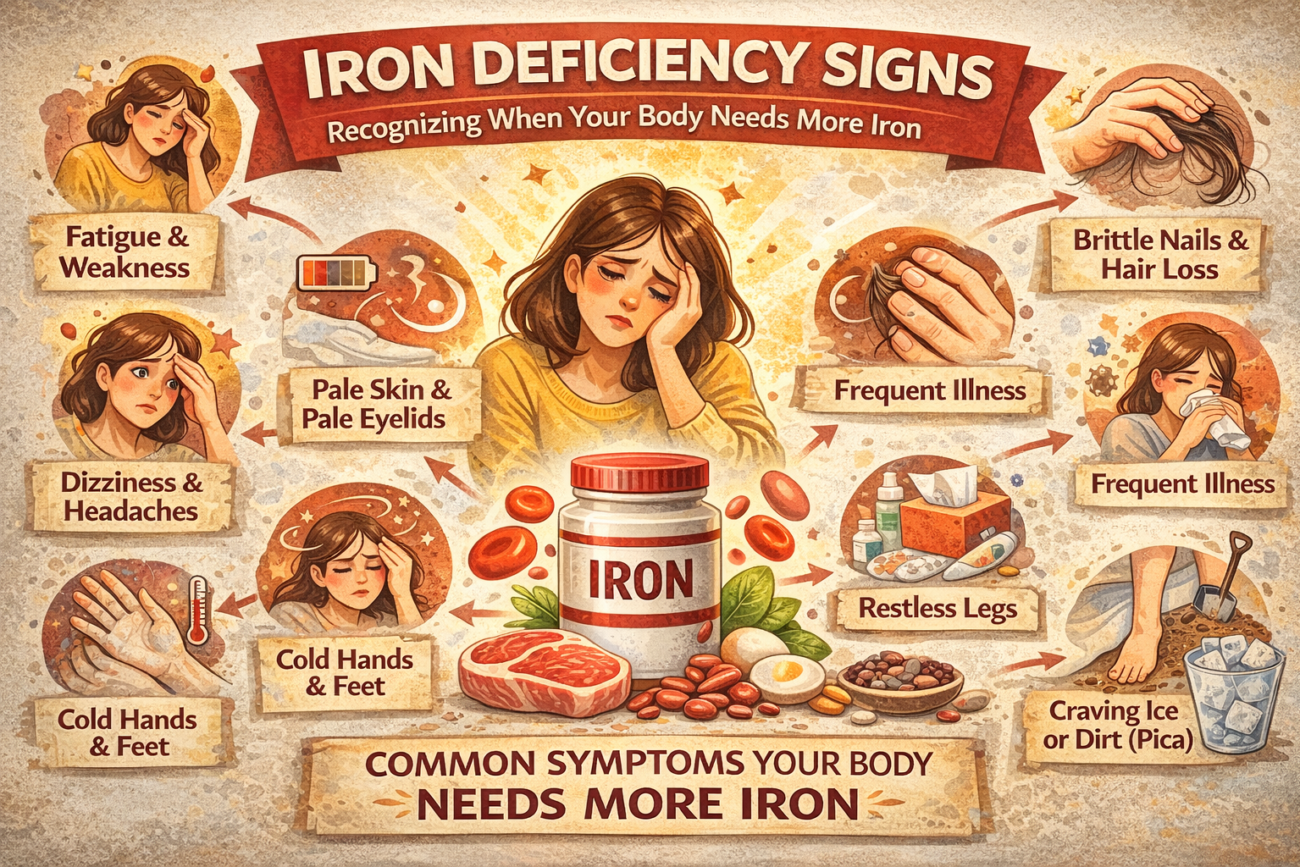
Unusual Fatigue and Weakness
One of the earliest and most common signs of iron deficiency is persistent tiredness that doesn’t improve with rest. When your body lacks sufficient iron to produce hemoglobin, your tissues and muscles don’t receive adequate oxygen, forcing your heart to work harder to circulate oxygen-rich blood. This results in fatigue that can range from mild tiredness to complete exhaustion that interferes with daily activities.
Unlike normal tiredness from a busy day or poor sleep, iron deficiency fatigue is persistent and disproportionate to your activity level. You might find yourself struggling to get through your normal routine or needing frequent rest periods throughout the day.
Pale Skin and Nail Beds
Hemoglobin gives blood its red color, which in turn gives skin its healthy, rosy tone. When iron levels are low, reduced hemoglobin can cause skin to lose its normal color and appear noticeably paler. This pallor is often most visible in the face, inner eyelids, gums, and nail beds.
To check, gently pull down your lower eyelid and look at the inner surface. In people with adequate iron, this area should be a vibrant red. If it appears pink or pale, it could indicate iron deficiency. Similarly, nail beds should have a healthy pink color when pressed, returning quickly to pink after releasing pressure.
Shortness of Breath and Rapid Heartbeat
When oxygen levels in your blood are low due to insufficient hemoglobin, your body tries to compensate by increasing your breathing rate and heart rate. You might notice yourself becoming winded from activities that previously didn’t challenge you, such as climbing stairs, walking at a normal pace, or doing light exercise.
Your heart may race or pound even during rest or minimal activity as it attempts to pump more blood to deliver oxygen to your tissues. Some people describe feeling like their heart is working overtime, experiencing palpitations or an uncomfortable awareness of their heartbeat.
Frequent Headaches and Dizziness
Reduced oxygen delivery to the brain can trigger headaches, which may range from mild tension-type headaches to more severe, throbbing pain. These headaches often worsen with physical activity or when standing up quickly. Iron deficiency headaches are frequently accompanied by lightheadedness or dizziness, particularly when changing positions from sitting to standing.
Some people experience a feeling of wooziness or unsteadiness, especially after exertion. In more severe cases, you might feel faint or experience actual fainting spells, though this is less common and typically occurs only with significant anemia.
Cold Hands and Feet
Feeling cold when others are comfortable, particularly in your extremities, can be a sign of iron deficiency. Poor circulation resulting from reduced oxygen-carrying capacity means your hands and feet may not receive adequate warm, oxygenated blood. You might find yourself constantly wearing socks or gloves even in moderate temperatures, or notice that your hands and feet feel unusually cold to the touch.
This symptom can be particularly noticeable compared to how you felt before developing iron deficiency, representing a change in your normal temperature regulation.
Brittle Nails and Hair Loss
Iron plays a role in maintaining healthy hair and nails. Deficiency can cause nails to become brittle, develop ridges, or take on a concave, spoon-like shape called koilonychia in severe cases. Nails may chip, break, or peel easily, and you might notice they grow more slowly than usual.
Hair loss or thinning can occur because hair follicles need adequate oxygen and nutrients to produce healthy hair. You might notice more hair in your brush, on your pillow, or in the shower drain. While everyone sheds some hair daily, excessive shedding or noticeable thinning could indicate iron deficiency, especially when combined with other symptoms.
Frequent Infections and Illness
Iron is essential for proper immune system function. When you’re deficient, your body’s ability to fight off infections becomes compromised, making you more susceptible to colds, flu, and other illnesses. You might notice that you catch every bug that goes around, that infections last longer than they should, or that you struggle to fully recover before getting sick again.
Research has shown that iron deficiency can impair the function of immune cells, reducing your body’s ability to mount an effective defense against pathogens.
Restless Leg Syndrome
There’s a strong connection between iron deficiency and restless leg syndrome, a condition characterized by uncomfortable sensations in the legs and an irresistible urge to move them, particularly when resting or trying to sleep. The sensations are often described as crawling, tingling, aching, or throbbing deep within the leg muscles.
Moving the legs temporarily relieves the discomfort, but the sensations return when movement stops. This can significantly disrupt sleep quality and contribute to daytime fatigue. Studies have found that a significant percentage of people with restless leg syndrome have low iron levels, even if they don’t have full-blown anemia.
Difficulty Concentrating and Poor Memory
Your brain uses about 20% of the oxygen in your blood, making it particularly vulnerable to the effects of iron deficiency. Reduced oxygen delivery can impair cognitive function, leading to difficulty concentrating, brain fog, poor memory, and reduced mental clarity. You might find it hard to focus on tasks, forget things more frequently, or struggle with problem-solving that would normally come easily.
Students might notice declining academic performance, while professionals may struggle with productivity and decision-making. This cognitive impact can be particularly concerning because it affects your ability to function effectively in work and daily life.
Unusual Cravings for Non-Food Items
A condition called pica, characterized by cravings for non-nutritive substances, can occur with iron deficiency. Common cravings include ice (pagophagia), dirt, clay, chalk, paper, or starch. While it might seem bizarre, these cravings are surprisingly common among people with significant iron deficiency.
Ice craving is particularly associated with iron deficiency anemia, and some people report that the craving disappears once iron levels are restored. If you find yourself constantly chewing ice or craving unusual non-food items, it’s worth having your iron levels checked.
Sore or Swollen Tongue
Iron deficiency can cause changes in the tongue’s appearance and sensation. The tongue may become swollen, inflamed, pale, or unusually smooth due to loss of papillae, the small bumps on the tongue’s surface. Some people develop painful cracks at the corners of the mouth, a condition called angular cheilitis.
The tongue might feel sore, tender, or burning, and you may experience changes in taste perception or difficulty swallowing. These oral symptoms, while less commonly recognized, can be important indicators of iron deficiency.
Unusual Pale or Yellow Skin Tone
Beyond simple pallor, some people with iron deficiency develop a slightly yellow or jaundiced appearance. This can occur because low iron levels may cause increased breakdown of red blood cells, releasing bilirubin that can give skin a yellowish tinge. This is different from the yellow color associated with liver problems and is typically subtle.
The combination of paleness from reduced hemoglobin and slight yellowing from increased red blood cell breakdown can create a distinctive appearance that may prompt others to ask if you’re feeling well.
Risk Factors for Iron Deficiency
Understanding your risk factors can help you stay vigilant for symptoms. Heavy menstrual periods are a leading cause of iron deficiency in premenopausal women, with blood loss exceeding the body’s ability to replace iron stores. Pregnancy dramatically increases iron requirements, as your blood volume expands and the developing baby draws on your iron reserves.
Gastrointestinal bleeding from conditions like ulcers, gastritis, colon polyps, or colorectal cancer can cause chronic blood loss that leads to iron deficiency, sometimes before other symptoms of the underlying condition appear. Digestive disorders including celiac disease, Crohn’s disease, and ulcerative colitis can impair iron absorption even when dietary intake is adequate.
Vegetarian and vegan diets require careful planning because plant-based iron (non-heme iron) is less readily absorbed than the heme iron found in meat. While it’s entirely possible to meet iron needs on a plant-based diet, it requires attention to iron-rich foods and absorption enhancers like vitamin C.
Frequent blood donation, certain medications including antacids and proton pump inhibitors that reduce stomach acid needed for iron absorption, intense athletic training, particularly in endurance athletes, and rapid growth periods during infancy, childhood, and adolescence all increase iron deficiency risk.
When to See a Doctor
If you’re experiencing several signs of iron deficiency, especially persistent fatigue combined with other symptoms, it’s important to see your healthcare provider. Don’t attempt to self-diagnose or self-treat with iron supplements without medical guidance, as some conditions can mimic iron deficiency, and excessive iron can be harmful.
Your doctor can perform simple blood tests to check your iron status, including a complete blood count that measures hemoglobin and hematocrit levels, serum ferritin which indicates your iron stores, serum iron and total iron-binding capacity, and transferrin saturation. These tests together provide a comprehensive picture of your iron status and can help identify the stage of deficiency.
If iron deficiency is confirmed, your doctor will also investigate the underlying cause, particularly if you’re male or postmenopausal, since deficiency in these groups often indicates internal bleeding that needs to be addressed.
Addressing Iron Deficiency
Treatment typically involves iron supplementation, usually with ferrous sulfate, ferrous gluconate, or ferrous fumarate. The specific dose and duration depend on the severity of deficiency and the underlying cause. Iron supplements are typically taken on an empty stomach for better absorption, though this can cause gastrointestinal upset in some people, in which case taking them with food is acceptable even if absorption is slightly reduced.
Vitamin C enhances iron absorption, so taking supplements with orange juice or a vitamin C supplement can improve effectiveness. Avoid taking iron with calcium supplements, dairy products, tea, or coffee, as these can inhibit absorption. Side effects may include constipation, nausea, dark stools, or stomach upset.
Dietary sources of iron include heme iron from red meat, poultry, and fish, which is most readily absorbed, and non-heme iron from beans and lentils, tofu, fortified cereals, spinach and dark leafy greens, pumpkin seeds, and quinoa. Combining non-heme iron sources with vitamin C-rich foods like citrus fruits, tomatoes, bell peppers, or strawberries significantly enhances absorption.
It typically takes several weeks to months to replenish iron stores, even after hemoglobin levels normalize. Consistent supplementation and follow-up testing are important to ensure complete recovery.
The Bottom Line
Iron deficiency can develop gradually, with symptoms that are easy to dismiss as simply being tired or stressed. However, recognizing the signs early and seeking appropriate treatment can prevent progression to more severe anemia and the complications that come with it. If you’re experiencing persistent fatigue along with other symptoms like pale skin, shortness of breath, cold extremities, or unusual cravings, don’t ignore these warning signs. A simple blood test can determine whether iron deficiency is the culprit, and treatment is typically straightforward and effective. With proper diagnosis and treatment, most people experience significant improvement in their symptoms and overall energy levels within weeks to months.