Intermittent fasting has surged in popularity over recent years, transforming from a niche health practice into a mainstream approach to eating. Unlike traditional diets that focus on what you eat, intermittent fasting centers on when you eat. This eating pattern involves cycling between periods of eating and fasting, and proponents claim it can help with weight loss, improve metabolic health, and even extend lifespan. If you’re curious about trying intermittent fasting but don’t know where to start, this guide will walk you through everything you need to know.
What Is Intermittent Fasting?
Intermittent fasting (IF) is an eating pattern that alternates between periods of eating and voluntary fasting on a regular schedule. It doesn’t prescribe specific foods to eat, but rather specifies when you should eat them. Throughout human history, fasting has been a natural part of life—our ancestors didn’t have constant access to food, and many religious and spiritual traditions incorporate fasting practices. From a biological perspective, our bodies are well-equipped to function without food for extended periods.
Popular Intermittent Fasting Methods
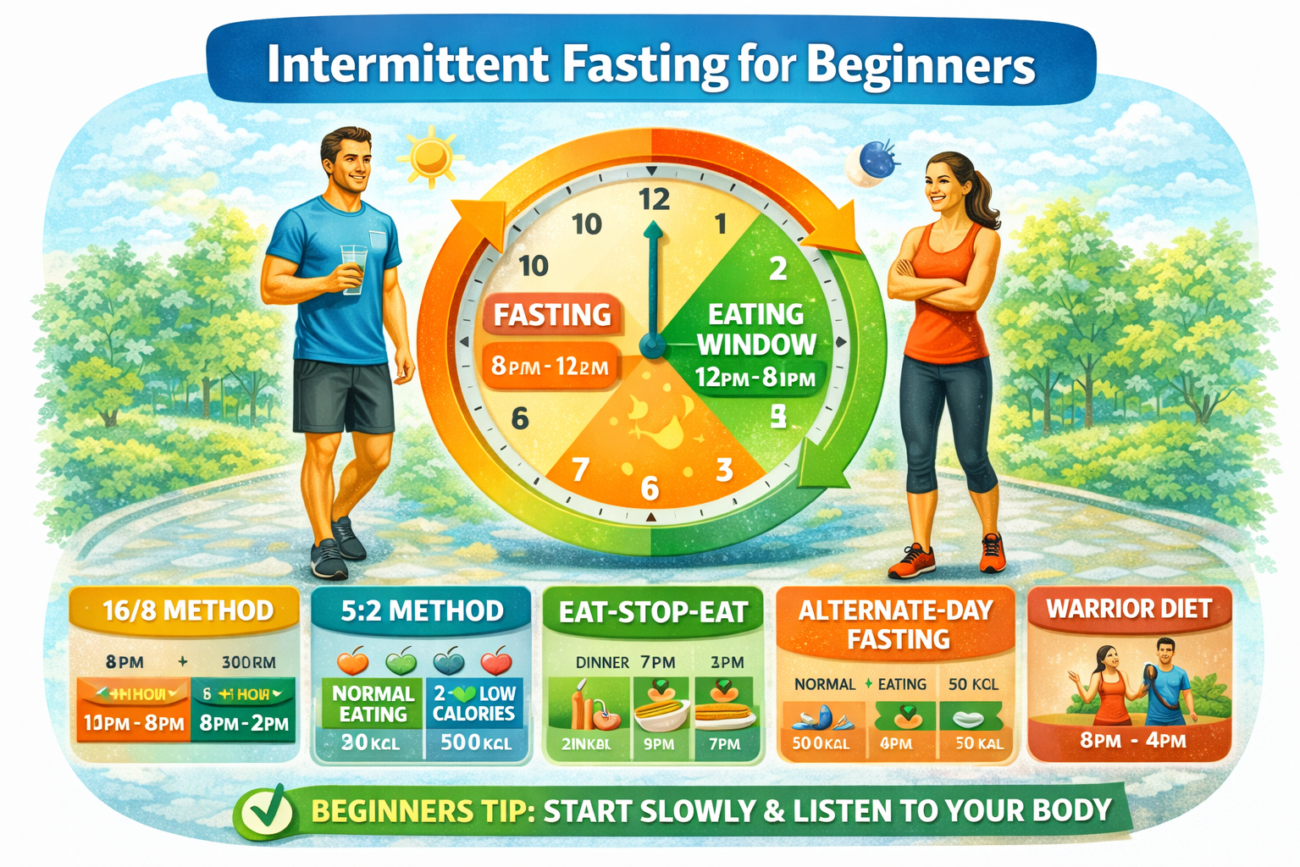
The 16/8 Method: This is the most popular and beginner-friendly approach. You fast for 16 hours each day and eat all your meals within an 8-hour window. For example, you might eat between noon and 8 PM, then fast from 8 PM until noon the next day. Many people find this method easiest because it essentially means skipping breakfast and not eating anything after dinner.
The 5:2 Diet: This method involves eating normally five days of the week while restricting calories to about 500-600 calories on two non-consecutive days. For instance, you might eat normally Monday through Friday, then consume only 500 calories on Tuesday and Thursday.
Eat-Stop-Eat: This approach involves a 24-hour fast once or twice per week. For example, you might finish dinner at 7 PM on Monday and not eat again until 7 PM on Tuesday. This method can be challenging for beginners and is generally not recommended as a starting point.
Alternate-Day Fasting: This involves fasting every other day, either by not eating anything or consuming only about 500 calories on fasting days. This is one of the more extreme forms and can be difficult to maintain long-term.
The Warrior Diet: This method involves eating small amounts of raw fruits and vegetables during the day and one large meal at night, essentially fasting for 20 hours and eating during a 4-hour window.
For beginners, the 16/8 method is typically the most sustainable and easiest to implement without disrupting daily life significantly.
How Intermittent Fasting Works
When you eat, your body spends several hours processing and absorbing that food, during which insulin levels are elevated and your body preferentially burns glucose for energy. When you fast, insulin levels drop and your body begins to burn stored fat for fuel—a metabolic state called ketosis. This metabolic switch typically occurs after 12-16 hours of fasting.
During fasting periods, several things happen at the cellular and molecular level: insulin levels drop significantly, facilitating fat burning; human growth hormone levels may increase, supporting fat loss and muscle gain; cellular repair processes are triggered, including autophagy where cells remove dysfunctional proteins; and gene expression changes in ways that may promote longevity and disease protection.
Potential Benefits of Intermittent Fasting
Weight Loss and Fat Loss: By restricting your eating window, you naturally tend to consume fewer calories. Additionally, the hormonal changes that occur during fasting enhance fat breakdown and increase metabolic rate slightly. Studies show that intermittent fasting can cause 3-8% weight loss over 3-24 weeks, which is significant compared to other weight loss methods.
Improved Insulin Sensitivity: Fasting can reduce insulin resistance, lowering blood sugar levels and protecting against type 2 diabetes. Some studies have shown fasting blood sugar reductions of 3-6% and insulin reductions of 20-31%.
Reduced Inflammation: Chronic inflammation is linked to many diseases. Some studies suggest intermittent fasting can reduce markers of inflammation in the body.
Heart Health: Intermittent fasting may improve various risk factors for heart disease, including blood pressure, cholesterol levels, triglycerides, and inflammatory markers.
Brain Health: Fasting increases levels of brain-derived neurotrophic factor (BDNF), a protein that supports the growth of new neurons and may protect against Alzheimer’s disease. Animal studies suggest it may also help protect against strokes.
Cellular Repair: Fasting triggers autophagy, a process where cells break down and recycle old, dysfunctional proteins. This may provide protection against several diseases, including cancer.
Longevity: While research in humans is limited, animal studies suggest that intermittent fasting may extend lifespan, though more research is needed to confirm this in humans.
Getting Started: A Beginner’s Approach
If you’re new to intermittent fasting, start gradually. Begin with a 12-hour fast overnight—for instance, finish dinner by 7 PM and don’t eat breakfast until 7 AM. This is something many people already do naturally. Once you’re comfortable, gradually extend your fasting window by an hour each week until you reach 16 hours.
Choose an eating window that fits your lifestyle. If you’re not particularly hungry in the morning, skipping breakfast and eating from noon to 8 PM works well. If you prefer breakfast, try eating from 8 AM to 4 PM instead. The best schedule is one you can stick with consistently.
During your fasting window, you can drink water, black coffee, and unsweetened tea. These contain virtually no calories and won’t break your fast. Stay well-hydrated, as thirst is sometimes mistaken for hunger.
What to Eat During Your Eating Window
While intermittent fasting doesn’t dictate what foods to eat, the quality of your diet still matters tremendously. Focus on whole, nutrient-dense foods including lean proteins, healthy fats, vegetables, fruits, whole grains, and legumes. Avoid using your eating window as an excuse to binge on junk food—this will undermine the benefits and leave you feeling terrible.
Don’t try to compensate for fasting by overeating during your eating window. Eat normally and listen to your hunger cues. Many people find they naturally eat less when following an intermittent fasting schedule.
Ensure you’re getting adequate protein to preserve muscle mass, especially if you’re exercising regularly. Include plenty of fiber-rich foods to support digestive health and help you feel satisfied.
Exercise and Intermittent Fasting
You can absolutely exercise while practicing intermittent fasting. Some people prefer working out in a fasted state, claiming it enhances fat burning, while others feel better exercising during their eating window. Experiment to see what works best for your body and energy levels.
If you do intense workouts, you may need to time them closer to your eating window to ensure adequate nutrition for recovery. Listen to your body—if you feel weak or dizzy during fasted workouts, adjust your schedule.
Common Side Effects and How to Manage Them
Hunger: This is the most common side effect, especially initially. It typically improves within a few weeks as your body adapts. Drinking water, coffee, or tea can help manage hunger pangs.
Headaches: Often caused by dehydration or caffeine withdrawal if you normally drink coffee with breakfast. Ensure adequate hydration and consider having black coffee during your fasting window.
Low Energy: Some people experience fatigue initially. This usually resolves as your body adapts to using fat for fuel. If it persists, intermittent fasting might not be right for you.
Irritability: Hunger can make you cranky. This typically improves with time. If it doesn’t, consider a less restrictive eating window.
Digestive Issues: Some people experience constipation or other digestive changes. Ensure you’re eating plenty of fiber and staying hydrated.
Who Should Avoid Intermittent Fasting
Intermittent fasting isn’t for everyone. You should avoid it or consult a healthcare provider first if you’re pregnant or breastfeeding, have a history of eating disorders, are underweight or have a history of malnutrition, are under 18 years old, have diabetes or issues with blood sugar regulation, have low blood pressure, take certain medications, or have a history of amenorrhea (missed periods).
Even if none of these apply to you, it’s wise to consult your healthcare provider before starting any significant dietary change, especially if you have underlying health conditions.
Tips for Success
Stay busy during fasting periods—keeping your mind occupied makes time pass faster. Plan your meals ahead to ensure you’re eating nutritious foods during your eating window. Be flexible—if you have a special event or feel unwell, it’s okay to adjust your fasting schedule. Don’t weigh yourself constantly—focus on how you feel rather than obsessing over daily weight fluctuations.
Give it time—your body needs a few weeks to adapt. Track your progress beyond just weight, including energy levels, sleep quality, mental clarity, and how your clothes fit. Join online communities or find a fasting buddy for support and motivation.
The Bottom Line
Intermittent fasting is a powerful tool that can support weight loss, improve metabolic health, and potentially offer other health benefits. However, it’s not a magic solution and won’t work for everyone. Success depends on choosing a method you can sustain long-term and maintaining a healthy diet during your eating windows.
Start slowly, listen to your body, and be patient with the adaptation process. If intermittent fasting makes you feel good and fits naturally into your lifestyle, it can be an effective approach to improving your health. However, if you find it unsustainable, stressful, or detrimental to your wellbeing, there’s no shame in choosing a different path. The best eating pattern is always the one you can maintain consistently while feeling healthy and energized.