Weight loss is one of the most searched health topics in the world, yet it is also one of the most misunderstood. Many people chase quick fixes, extreme diets, or aggressive workouts, only to regain the weight later or harm their health in the process.
Safe weight loss is not about speed. It is about consistency, balance, and habits you can maintain long term.
What Does “Safe Weight Loss” Actually Mean?
Safe weight loss means:
- Losing fat without losing muscle
- Supporting your metabolism instead of damaging it
- Improving energy, sleep, and overall health
- Avoiding extreme calorie restriction or starvation
A healthy rate of weight loss is 0.5 to 1 kg per week. Anything faster often leads to muscle loss, hormonal imbalance, fatigue, and rebound weight gain.
Step 1: Set Realistic Expectations
Weight loss is not linear. Some weeks you lose more, some weeks less. Plateaus are normal.
Instead of focusing only on the scale, track:
- Waist and hip measurements
- Energy levels
- Clothes fitting
- Strength and stamina
- Consistency of habits
Fat loss shows up in many ways before it shows up on the scale.
Step 2: Fix Your Diet Without Starving Yourself
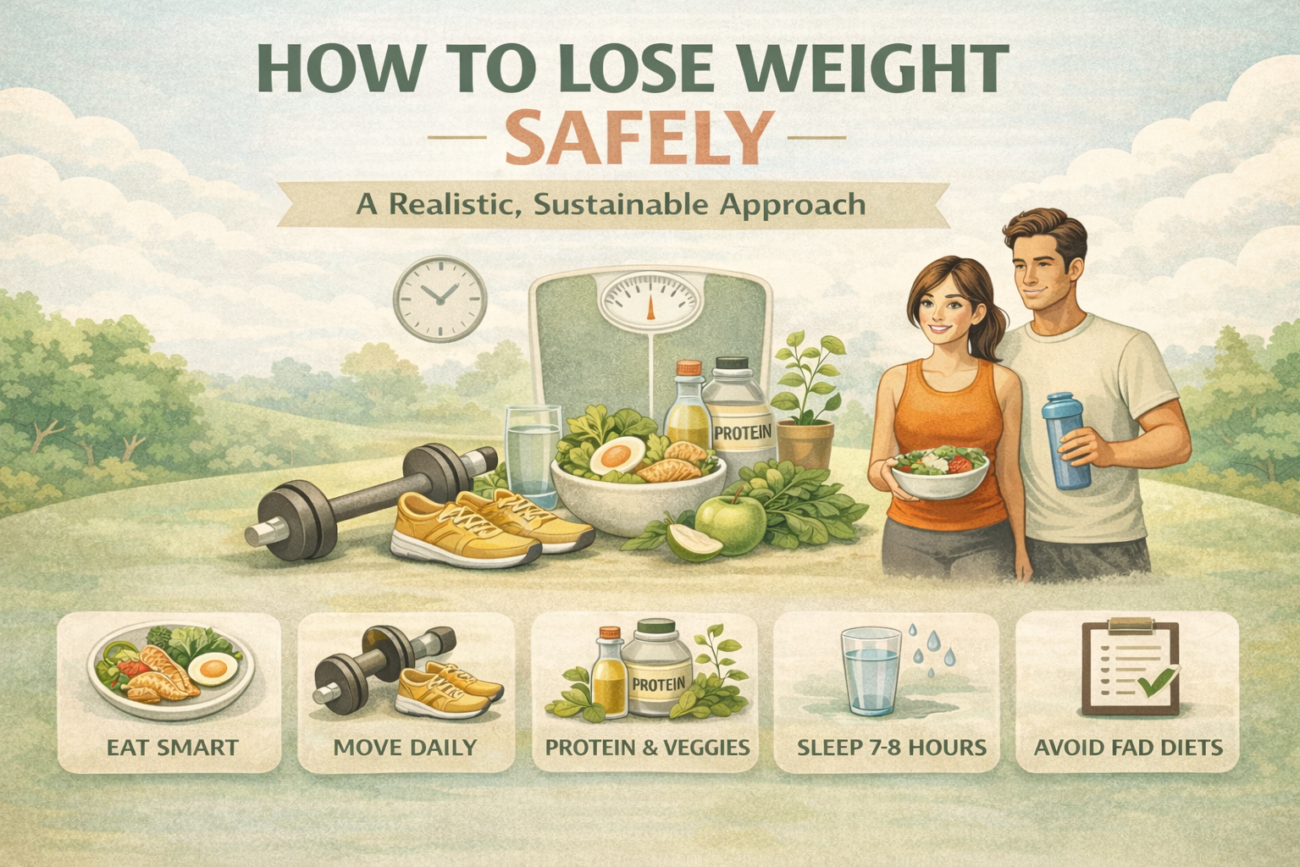
Crash dieting slows your metabolism and increases cravings. Safe weight loss starts with smart eating, not less eating.
1. Prioritize Protein
Protein keeps you full, preserves muscle, and stabilizes blood sugar.
Good sources:
- Lentils, beans, chickpeas
- Paneer, tofu, Greek yogurt
- Eggs or plant protein if preferred
Aim to include protein in every meal, especially breakfast.
2. Reduce Refined Carbs and Sugar
You do not need to eliminate carbs, but you must choose better ones.
Limit:
- Sugar
- White bread
- Biscuits, sweets, fried snacks
- Sugary drinks
Choose:
- Whole grains
- Fruits
- Vegetables
- Millets, oats, brown rice
3. Control Portions, Not Food Groups
Weight loss happens when calories are controlled, not when food groups are banned.
Simple portion guide:
- Half plate vegetables
- Quarter plate protein
- Quarter plate carbs
- Healthy fats in small amounts
This keeps meals satisfying and sustainable.
Step 3: Move Your Body Daily (No Extreme Workouts Needed)
You do not need a gym to lose weight safely.
Best activities for safe fat loss:
- Brisk walking 30 to 45 minutes daily
- Light strength training 2 to 3 times a week
- Yoga or stretching for recovery
- Simple bodyweight exercises at home
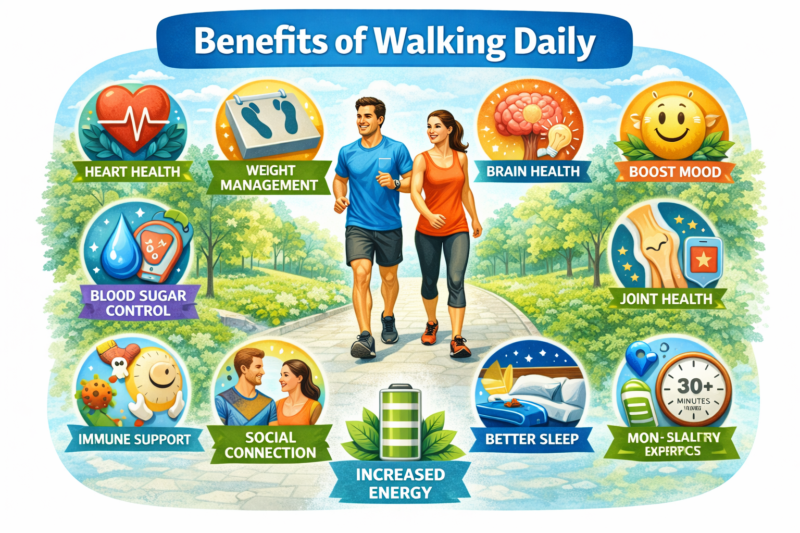
Walking is one of the most underrated fat-loss tools. It burns calories, reduces stress, and improves digestion.
Step 4: Sleep and Stress Matter More Than You Think
Many people struggle to lose weight despite eating well because sleep and stress are ignored.
- Poor sleep increases hunger hormones
- High stress increases belly fat storage
- Lack of rest slows recovery and metabolism
Aim for:
- 7 to 8 hours of sleep
- Fixed sleep and wake time
- Reduced screen time before bed
Weight loss becomes easier when your body is rested.
Step 5: Stay Hydrated
Sometimes hunger is actually dehydration.
- Drink water regularly throughout the day
- Start your morning with water
- Limit sugary drinks and packaged juices
Proper hydration supports digestion, metabolism, and appetite control.
Step 6: Avoid Common Weight Loss Mistakes
These mistakes slow progress and harm health:
- Skipping meals
- Eating too little for long periods
- Relying only on cardio
- Cutting out entire food groups
- Expecting quick results
- Comparing your journey with others
Consistency beats intensity every time.
Step 7: Supplements Are Optional, Not Mandatory
You do not need supplements to lose weight.
If required, consider only after food and lifestyle are fixed:
- Protein powder for convenience
- Basic multivitamin if deficient
Fat burners, detox teas, and extreme appetite suppressants are not safe or sustainable.
A Simple Safe Weight Loss Routine
Morning
- Water
- Light movement or walk
Breakfast
- Protein-rich meal
Lunch
- Balanced plate with vegetables, protein, and carbs
Evening
- Walk or light workout
- Healthy snack if needed
Dinner
- Lighter meal with protein and vegetables
Night
- Good sleep routine
This structure works for most people when followed consistently.
Final Thoughts
Safe weight loss is not about punishment. It is about creating a lifestyle your body can thrive on.
When you eat better, move more, sleep well, and manage stress, weight loss becomes a side effect of good health, not a daily struggle.
There is no shortcut to lasting results. But the good news is, you do not need one.