When money is tight, saving can feel impossible. In 2026, that pressure is real. Rent, groceries, transport, and everyday bills can take most of your income before the month even starts. But this is exactly why an emergency fund matters. It is the difference between a small crisis and a financial setback that takes months to recover from.
The good news is you do not need a big salary to start. You need a simple system, small consistent deposits, and a few smart cuts that do not ruin your lifestyle.
What an Emergency Fund Is (and Isn’t)
An emergency fund is cash you keep for unexpected, urgent, and necessary expenses, such as:
- Medical bills
- Car repairs needed to work
- Emergency travel for family
- Sudden job loss or reduced income
- Critical home repairs (leak, electrical issue)
What it isn’t:
- Shopping sales
- Holidays and festivals
- New gadgets
- Regular bills you already know are coming
A good rule: if it is predictable, plan for it separately. If it is sudden and essential, that is what emergency savings are for.
How Much Emergency Savings Do You Really Need?
People often hear “save 3–6 months of expenses” and give up before they start. So break it into stages.
Stage 1: Starter fund (fast win)
Aim for 1,000 in your local currency equivalent (or even 500 if needed).
This covers small shocks without using credit.
Stage 2: One month of essentials
Calculate your monthly “needs only” costs: rent, basic groceries, transport, minimum debt payments, utilities.
Stage 3: Three to six months
This is the long-term goal, especially if you have:
- Family responsibilities
- Unstable income
- A single source of income
- Health risks
The key is progress, not perfection.
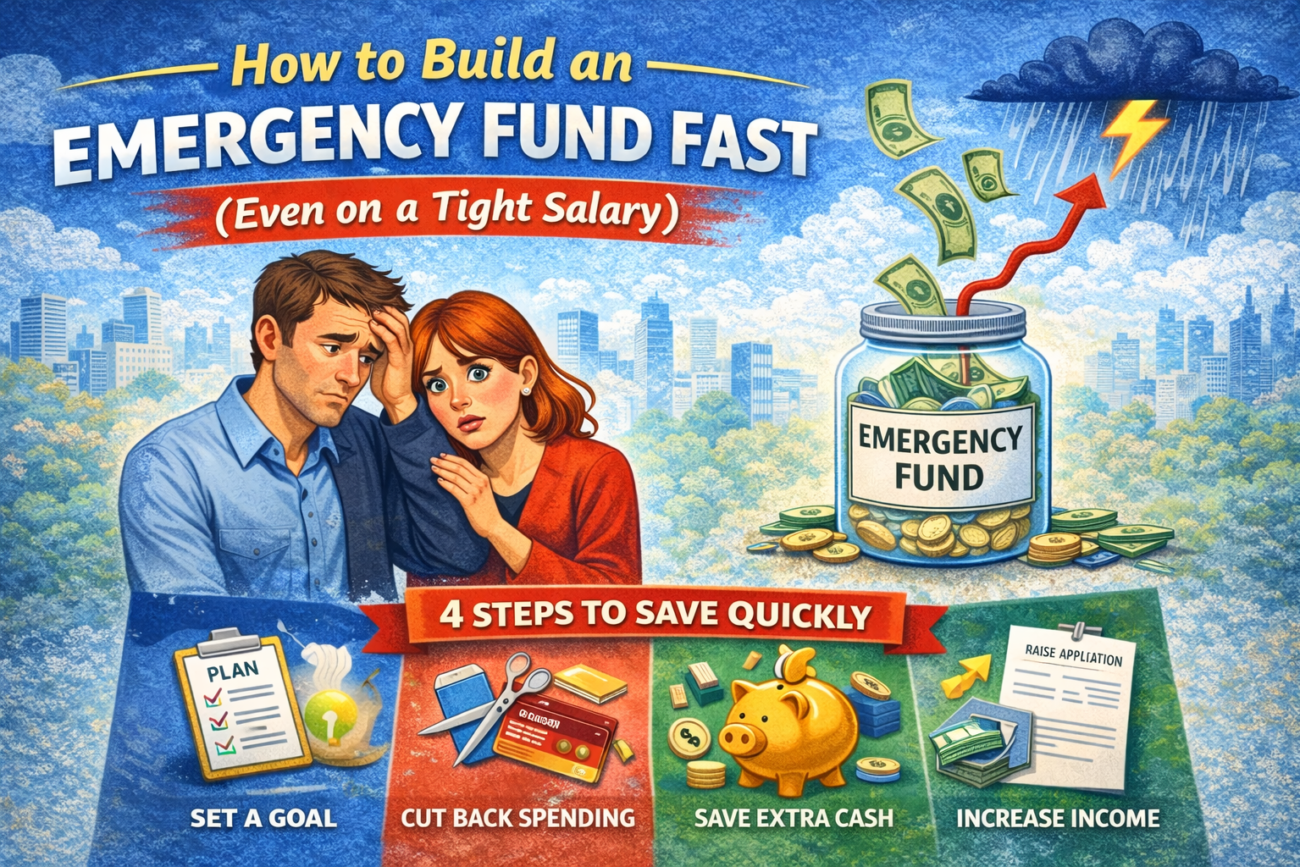
A Step-by-Step Plan to Build an Emergency Fund Fast on a Tight Salary
1) Pick a realistic target you can actually repeat
Start small, but make it automatic.
- If you can save 10 per day, that is 300 per month
- If you can save 250 per month, that is 3,000 per year
Even 100 per month is still building the habit.
2) Automate it on payday
The easiest way to build an emergency fund fast is to save before you spend.
- Set an auto-transfer the day your salary hits
- Treat it like a bill you must pay
If you wait for “leftover money,” you will usually have none.
3) Use a separate account (out of sight helps)
Keep emergency savings in a separate savings account, not your main spending account.
- No card linked if possible
- Easy access within 24–48 hours
- Safe and stable (not investments)
Emergency money should not be at risk in the market.
4) Stop 3–5 “silent leaks” that drain your salary
These are small expenses that feel harmless, but add up.
Here are common ones to check:
- Food delivery and service fees
- Multiple subscriptions you barely use
- Daily coffee or snacks “just because”
- Frequent taxi rides instead of planned transport
- Impulse online shopping
You do not need to cut all fun. You just need to reduce what is not giving you value.
5) Create sinking funds for predictable annual expenses
Many “emergencies” are actually predictable bills that arrive once or twice a year:
- Insurance renewal
- School fees
- Car registration and service
- Gifts and festivals
A sinking fund means saving a small amount monthly so these costs do not hit you like a surprise.
6) Use “micro-side income” safely and realistically
If your salary is genuinely stretched, adding small income can speed things up.
Safe options that work for many people:
- Sell unused items (clothes, gadgets, furniture)
- Weekend freelance work (design, writing, tutoring, basic admin)
- Extra shifts or overtime (if available)
- Cash-back and reward optimization (only on planned spending)
The rule: do not take risky schemes. The goal is stability.
7) Use windfalls smartly (this is where “fast” happens)
Whenever you receive extra money, decide in advance:
- 50% to emergency fund
- 50% to debt or essential needs
Windfalls include bonuses, refunds, gifts, incentives, or unexpected commissions. This alone can move you from zero to a starter fund quickly.
Simple Monthly Example (Tight Salary Scenario)
Let’s say your take-home pay is 4,000 per month.
A practical emergency fund plan could look like this:
- Auto-save on payday: 250
- Cut delivery fees and one subscription: 150
- Sell two unused items this month: 300
- Total emergency savings this month: 700
In 3 months, that’s 2,100 saved, without needing a big raise.
Mistakes That Slow You Down
- Using credit as your “emergency fund”: credit helps short-term but creates long-term stress
- Investing emergency money: emergency savings must not drop in value when you need it
- Stopping after the starter fund: keep going until you reach 1 month of essentials
- Trying to save too much and quitting: smaller consistent savings beats big promises
Quick Checklist: Your Emergency Fund Setup
- I defined what counts as a real emergency
- I set a starter goal (500–1,000 equivalent)
- I automated savings on payday
- I use a separate savings account
- I cut at least 3 silent leaks
- I have a sinking fund for annual bills
FAQ
How fast can I build emergency savings on a low salary?
If you automate even a small amount and cut a few leaks, most people can build a starter fund within 4 to 12 weeks, depending on income and expenses.
Should I pay debt or build an emergency fund first?
Do both in a simple order: build a small starter emergency fund first, then focus on debt while still saving a small amount monthly.
Where should I keep my emergency fund?
Keep it in a safe savings account with easy access, not in stocks, crypto, or long lock-in products.
Building an emergency fund is not about being rich. It is about protecting your life from financial shocks. Start with a small target, automate it, and grow it month by month. That one habit can change your entire financial stability.