A high-protein diet is often associated with chicken breasts, eggs, and fish. But the truth is, you can meet your protein needs without eating meat and do it in a balanced, sustainable way. Whether you are vegetarian by choice, cultural preference, health reasons, or ethics, building a protein-rich meat-free diet is completely achievable with the right approach.
The key is understanding plant-based protein sources, smart combinations, and realistic daily targets.
Why Protein Matters (Even Without Meat)
Protein plays a vital role in:
- Muscle repair and strength
- Hormone and enzyme production
- Immunity and recovery
- Keeping you full and reducing unnecessary snacking
Many people on vegetarian diets fall short not because options are limited, but because meals are carb-heavy and protein is not planned intentionally.
Step 1: Know Your Protein Requirement
A simple guideline:
- Sedentary adults: 0.8 g per kg body weight
- Active adults / fat loss / muscle building: 1.0–1.5 g per kg
For example, a 70 kg person should aim for 55–100 g of protein daily, depending on activity level.
Once you know your target, planning becomes easier.
Step 2: Build Meals Around Protein (Not Carbs)
Instead of thinking:
“What rice or roti should I eat?”
Start with:
“Where is my protein coming from in this meal?”
Then add carbs and fats around it.
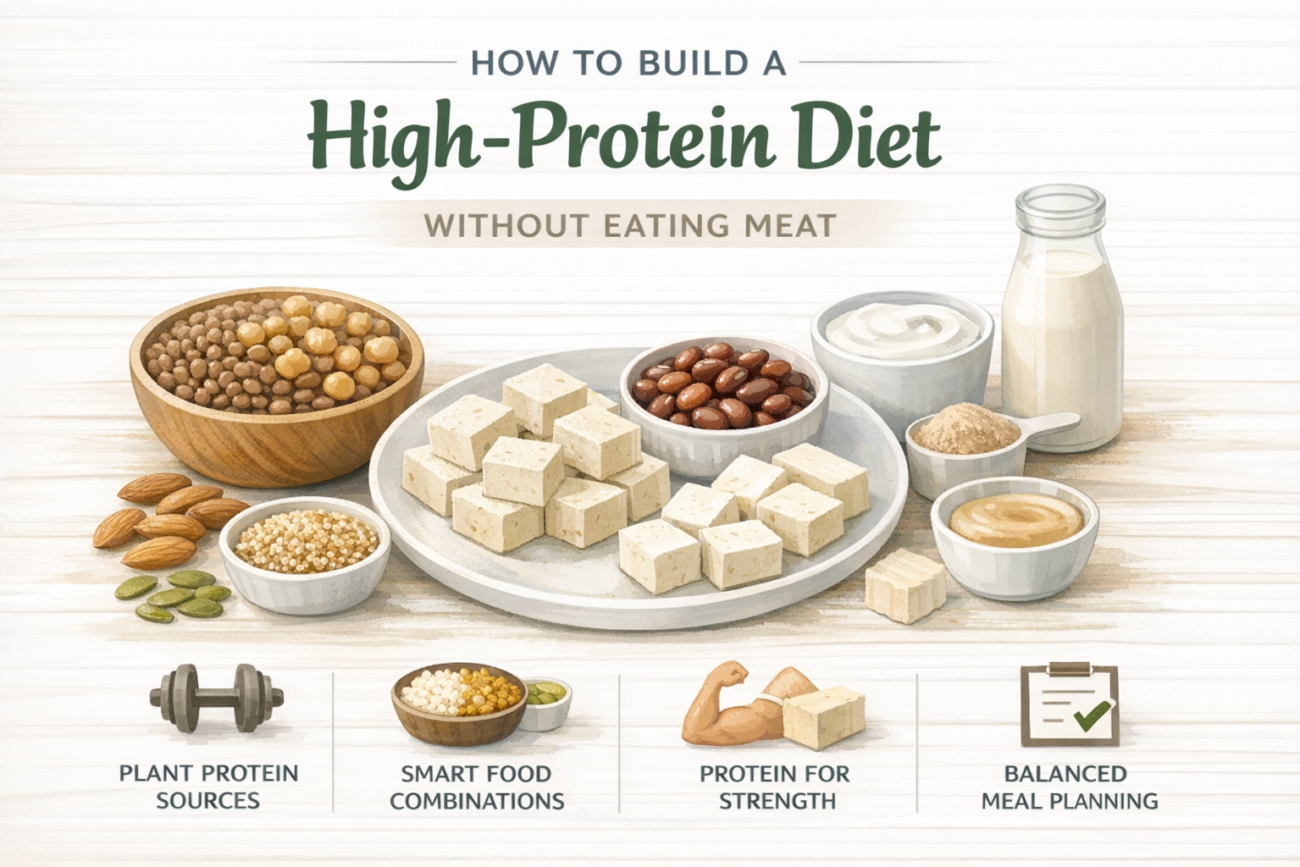
Step 3: Best Vegetarian High-Protein Foods
1. Lentils and Legumes
- Dal (moong, masoor, toor)
- Chickpeas (chana)
- Kidney beans (rajma)
- Black beans, white beans
Protein: 14–18 g per cooked cup
They are affordable, filling, and easy to include daily.
2. Dairy and Dairy Alternatives
If you consume dairy:
- Paneer
- Greek yogurt / thick curd
- Milk
- Cheese (in moderation)
Protein:
- Paneer: ~18 g per 100 g
- Greek yogurt: ~10 g per cup
Choose low-fat options if calories are a concern.
3. Soy-Based Foods (Protein Powerhouses)
- Tofu
- Tempeh
- Soy chunks
- Edamame
Protein:
- Soy chunks: ~50 g per 100 g (dry)
- Tofu: ~10–12 g per 100 g
Soy is one of the few plant proteins that is complete, meaning it contains all essential amino acids.
4. Nuts and Seeds (Support, Not Base)
- Almonds, peanuts
- Pumpkin seeds, chia seeds, flax seeds
- Peanut butter (unsweetened)
Protein: 6–9 g per handful
They are calorie-dense, so use them wisely as add-ons.
5. Whole Grains With Protein
- Quinoa
- Oats
- Buckwheat
- Millets
While not pure protein sources, they contribute meaningfully when combined with legumes.
Step 4: Combine Proteins for Better Quality
Plant proteins often lack one or more essential amino acids. The solution is combining foods, not stressing over perfection.
Classic combinations:
- Dal + rice
- Rajma + roti
- Hummus + whole-grain bread
- Peanut butter + multigrain toast
Over the day, these combinations naturally complete the amino acid profile.
Step 5: Sample High-Protein Vegetarian Day
Breakfast
- Greek yogurt with seeds + fruit
or - Oats cooked in milk with peanut butter
Lunch
- Rajma or chickpea curry
- Brown rice or millet roti
- Curd on the side
Snack
- Roasted chana / soy nuts
or - Protein smoothie with tofu or plant protein powder
Dinner
- Tofu or paneer stir-fry
- Vegetables + quinoa or roti
This structure easily crosses 70–90 g protein without meat.
Step 6: Consider Protein Supplements (Optional)
If you struggle to meet targets:
- Whey protein (for vegetarians who consume dairy)
- Plant protein blends (pea + rice)
Supplements are tools, not necessities. Whole foods should remain the foundation.
Common Mistakes to Avoid
- Eating only carbs (rice, bread, potatoes) and assuming it is “healthy”
- Over-relying on nuts for protein
- Ignoring portion sizes
- Skipping protein at breakfast
- Assuming vegetarian automatically means low protein
Final Thoughts
A high-protein diet without meat is not restrictive. It just requires intentional planning. When each meal includes a clear protein source, your energy improves, hunger reduces, and long-term health becomes easier to maintain.
You don’t need meat to build strength. You need consistency, balance, and smarter choices.