We’ve all heard the “eight glasses a day” rule, but the truth about daily water needs is more nuanced than a one-size-fits-all prescription. While staying hydrated is essential for everything from regulating body temperature to supporting cognitive function, the amount of water you actually need depends on several individual factors.
The Science Behind Hydration
Water makes up roughly 60% of your body weight and plays a crucial role in nearly every bodily function. It helps transport nutrients, flush out waste, cushion joints, and maintain blood pressure. Even mild dehydration can lead to headaches, fatigue, and difficulty concentrating.
General Guidelines
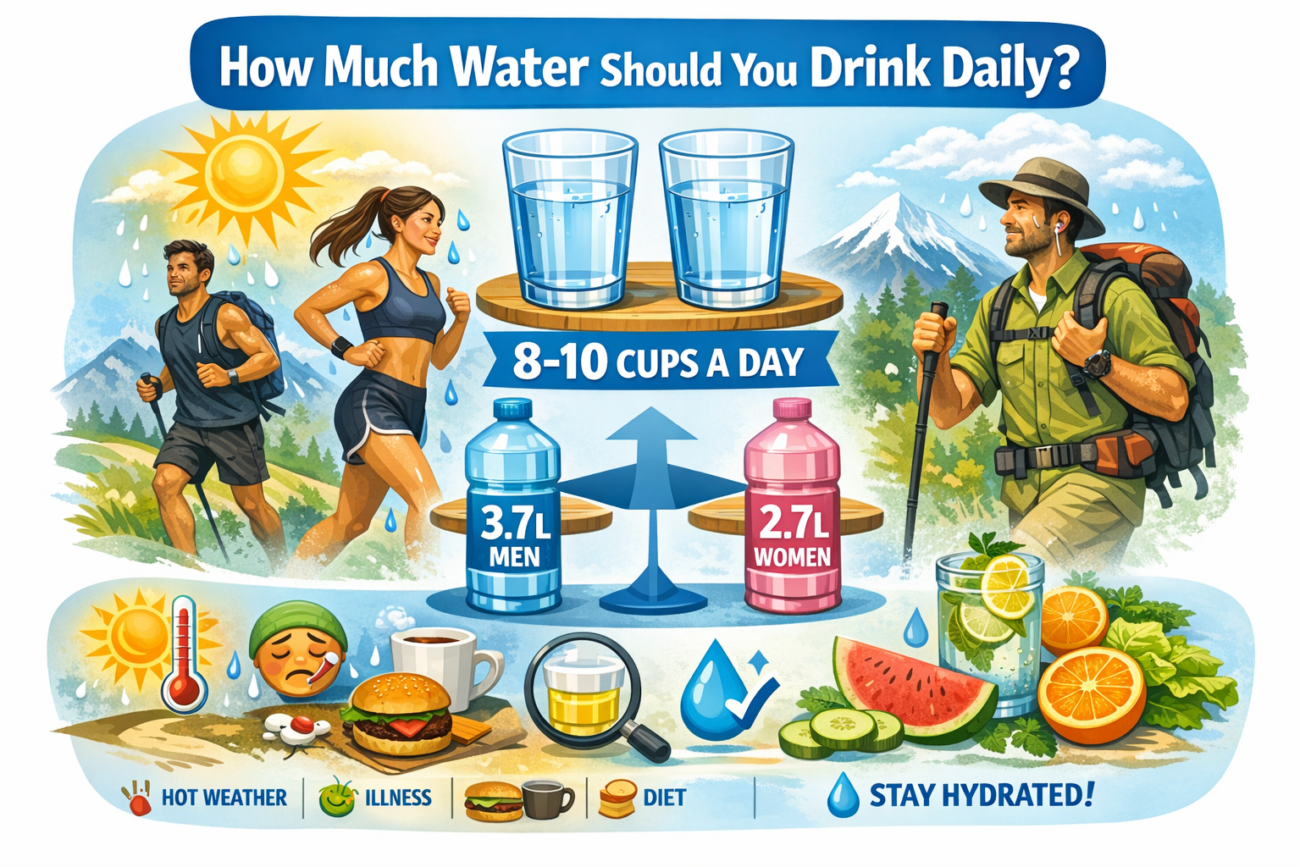
The National Academies of Sciences, Engineering, and Medicine suggests adequate daily fluid intake is about 15.5 cups (3.7 liters) for men and 11.5 cups (2.7 liters) for women. These recommendations include fluids from water, other beverages, and food—which typically provides about 20% of your daily fluid intake.
Translated to a simpler metric, this works out to roughly 8-10 cups of water daily for most adults, though this can vary significantly based on individual circumstances.
Factors That Increase Your Water Needs
Physical Activity: Exercise causes fluid loss through sweat, so you’ll need to drink extra water before, during, and after workouts. Intense or prolonged exercise may require electrolyte replacement as well.
Climate: Hot or humid weather increases perspiration and water loss. Higher altitudes can also trigger faster breathing and increased urination, raising fluid requirements.
Health Status: Fever, vomiting, or diarrhea cause your body to lose fluids rapidly. Certain conditions like urinary tract infections or kidney stones may require increased water intake. Pregnancy and breastfeeding also significantly increase hydration needs.
Diet: If you consume a lot of coffee, tea, or alcohol—all of which have diuretic effects—you may need additional water. A diet high in salty or spicy foods can also increase thirst and fluid needs.
Signs You’re Drinking Enough
Rather than obsessing over exact measurements, pay attention to your body’s signals. You’re likely well-hydrated if your urine is pale yellow or clear, you rarely feel thirsty, and you’re not experiencing symptoms like dry mouth or dizziness.
Thirst itself is actually a reliable indicator for most healthy people. By the time you feel thirsty, you may be mildly dehydrated, but responding to that thirst promptly is usually sufficient.
Can You Drink Too Much?
While rare, drinking excessive amounts of water can lead to hyponatremia, a dangerous condition where sodium levels in your blood become diluted. This typically only occurs when someone drinks several liters in a short period, often during endurance events without proper electrolyte replacement.
Practical Tips for Staying Hydrated
Start your day with a glass of water to replenish fluids lost overnight. Keep a reusable water bottle with you throughout the day as a visual reminder. Eat water-rich foods like cucumbers, watermelon, oranges, and lettuce. If you find plain water boring, try infusing it with fresh fruit, herbs, or a splash of citrus juice.
The Bottom Line
Rather than rigidly adhering to a specific number, the best approach is to drink water consistently throughout the day, increase intake during hot weather or physical activity, and listen to your body’s thirst signals. For most people, staying hydrated doesn’t require complex calculations—just mindful attention to how you feel and what your body is telling you it needs.