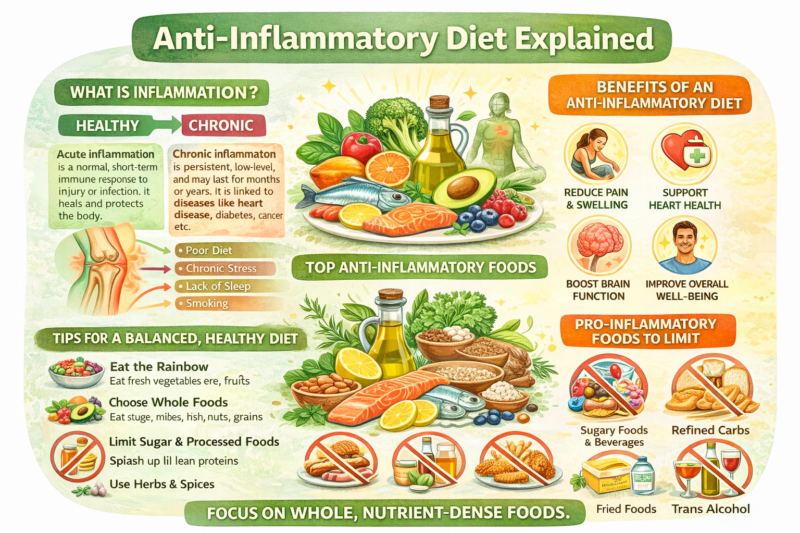
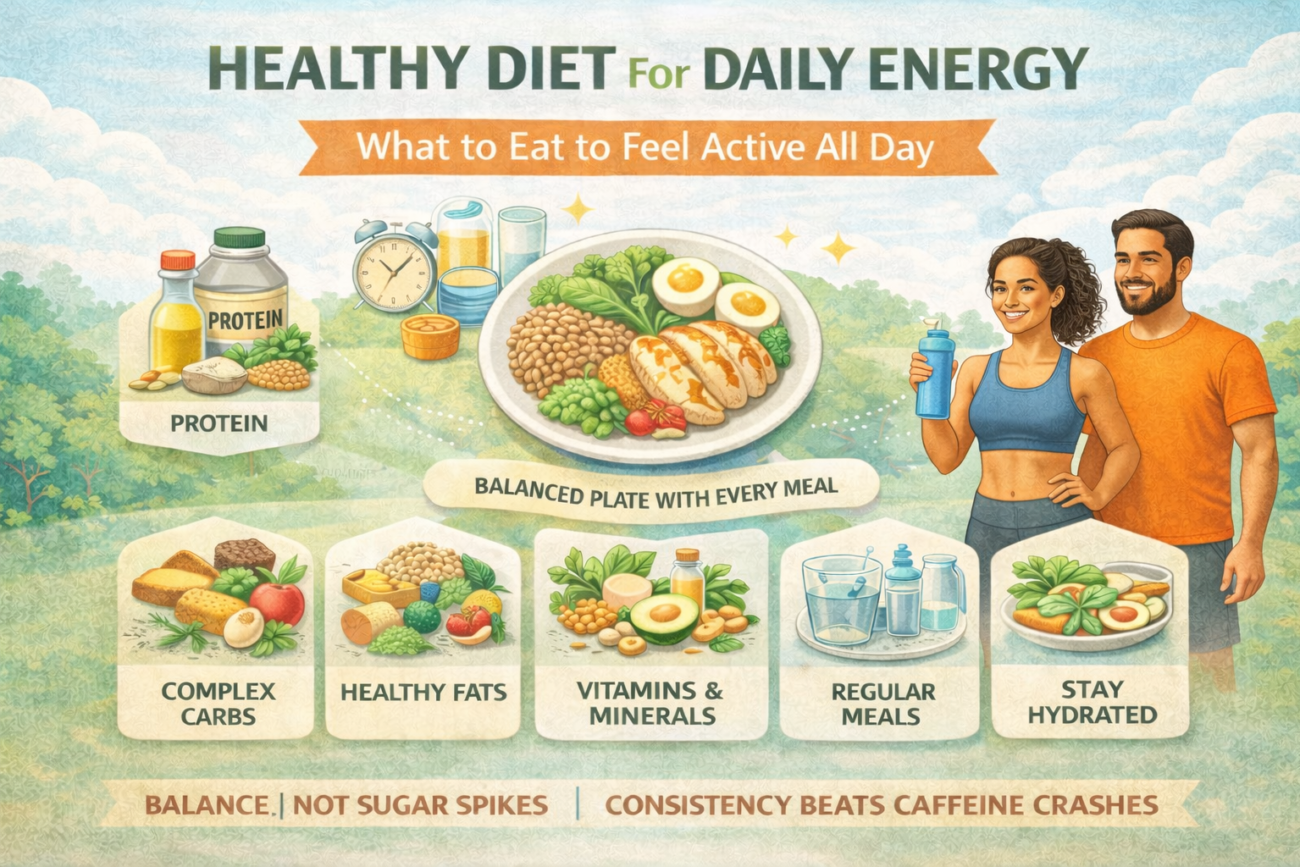
If you often feel tired, sluggish, or mentally drained, the problem may not be your workload. In most cases, low daily energy is linked to what you eat, when you eat, and how balanced your meals are.
A healthy diet for daily energy is not about eating more food or relying on caffeine. It is about fueling your body with the right nutrients that support stable blood sugar, good digestion, and steady energy throughout the day.
Why Diet Plays a Major Role in Energy Levels
Your body converts food into energy. When meals are unbalanced or heavily processed, energy spikes quickly and crashes just as fast.
Common diet-related causes of low energy include:
- Skipping meals
- Excess sugar and refined carbs
- Low protein intake
- Poor hydration
- Heavy, oily foods
- Irregular eating times
Fixing these issues can dramatically improve how you feel daily.
Step 1: Start Your Day with a Balanced Breakfast
Breakfast sets the tone for your energy levels.
Avoid:
- Sugary cereals
- Bakery items
- Only tea or coffee
Choose:
- Protein (eggs, paneer, tofu, Greek yogurt)
- Complex carbs (oats, whole grains)
- Healthy fats (nuts, seeds)
A balanced breakfast keeps blood sugar stable and prevents mid-morning crashes.
Step 2: Eat Enough Protein Throughout the Day
Protein helps maintain energy by slowing digestion and keeping you full longer.
Good protein sources:
- Lentils, beans, chickpeas
- Paneer, tofu, curd
- Eggs or plant-based proteins
Aim to include protein in every meal, not just lunch or dinner.
Step 3: Choose the Right Carbohydrates
Carbs are your body’s main energy source, but the type matters.
Limit:
- White bread
- Sugar
- Sweets
- Processed snacks
Choose:
- Whole grains
- Fruits
- Vegetables
- Millets and oats
Complex carbs release energy slowly and prevent fatigue.
Step 4: Don’t Fear Healthy Fats
Healthy fats support brain function and long-lasting energy.
Include in moderation:
- Nuts and seeds
- Olive oil
- Ghee (small amounts)
- Avocado
Avoid excessive fried and trans-fat foods, which cause sluggishness.
Step 5: Stay Hydrated Throughout the Day
Even mild dehydration can cause:
- Fatigue
- Headaches
- Poor concentration
Simple hydration tips:
- Drink water regularly
- Start your day with water
- Limit sugary drinks and excess caffeine
Water is one of the most underrated energy boosters.
Step 6: Eat Smaller, Balanced Meals Regularly
Large, heavy meals drain energy because digestion requires more effort.
Instead:
- Eat every 3 to 4 hours
- Keep meals balanced
- Avoid overeating at one time
This helps maintain consistent energy levels.
Step 7: Include Micronutrients That Support Energy
Certain vitamins and minerals are essential for energy production.
Focus on foods rich in:
- Iron (leafy greens, legumes)
- Magnesium (nuts, seeds)
- B vitamins (whole grains, dairy)
- Vitamin D (sunlight, fortified foods)
Deficiencies often show up as fatigue.
Step 8: Limit Energy Drainers
Some foods provide temporary energy but lead to crashes.
Limit:
- Excess sugar
- Fried foods
- Highly processed snacks
- Too much caffeine
Relying on coffee alone masks fatigue instead of fixing it.
A Sample Daily Energy-Friendly Eating Pattern
Morning
- Water
- Balanced breakfast with protein
Mid-morning
- Fruit or nuts
Lunch
- Protein + vegetables + whole grains
Evening
- Light snack
- Short walk
Dinner
- Light, balanced meal
This structure supports stable energy all day.
Final Thoughts
A healthy diet for daily energy is about balance, consistency, and quality. When your meals support stable blood sugar and good digestion, your body naturally feels more active and focused.
Energy is not something you need to chase. When you eat right, it shows up on its own.