Breakfast has long been called the most important meal of the day, and while the debate about whether you must eat breakfast continues, one thing is clear: when you do eat breakfast, what you choose matters significantly. A nutritious morning meal can set the tone for your entire day, influencing your energy levels, concentration, food choices, and even your mood. The key is finding options that are both nourishing and realistic for your lifestyle—because the healthiest breakfast is one you’ll actually eat consistently.
What Makes a Breakfast Healthy?
A truly healthy breakfast balances three key macronutrients: protein for satiety and muscle maintenance, complex carbohydrates for sustained energy, and healthy fats for satisfaction and nutrient absorption. This combination helps stabilize blood sugar levels, preventing the mid-morning energy crash that comes from sugary cereals or pastries.
Protein should be a priority, as it keeps you fuller longer and helps prevent overeating later in the day. Aim for at least 15-20 grams of protein at breakfast. Fiber from whole grains, fruits, and vegetables supports digestive health and adds volume without excessive calories. Healthy fats from sources like nuts, seeds, avocados, and olive oil support brain function and help you feel satisfied.
A nutritious breakfast should also minimize added sugars, which spike blood sugar and leave you crashing and craving more sweets. It should include vitamins and minerals from whole food sources rather than relying solely on fortified processed foods.
Quick and Easy Options for Busy Mornings
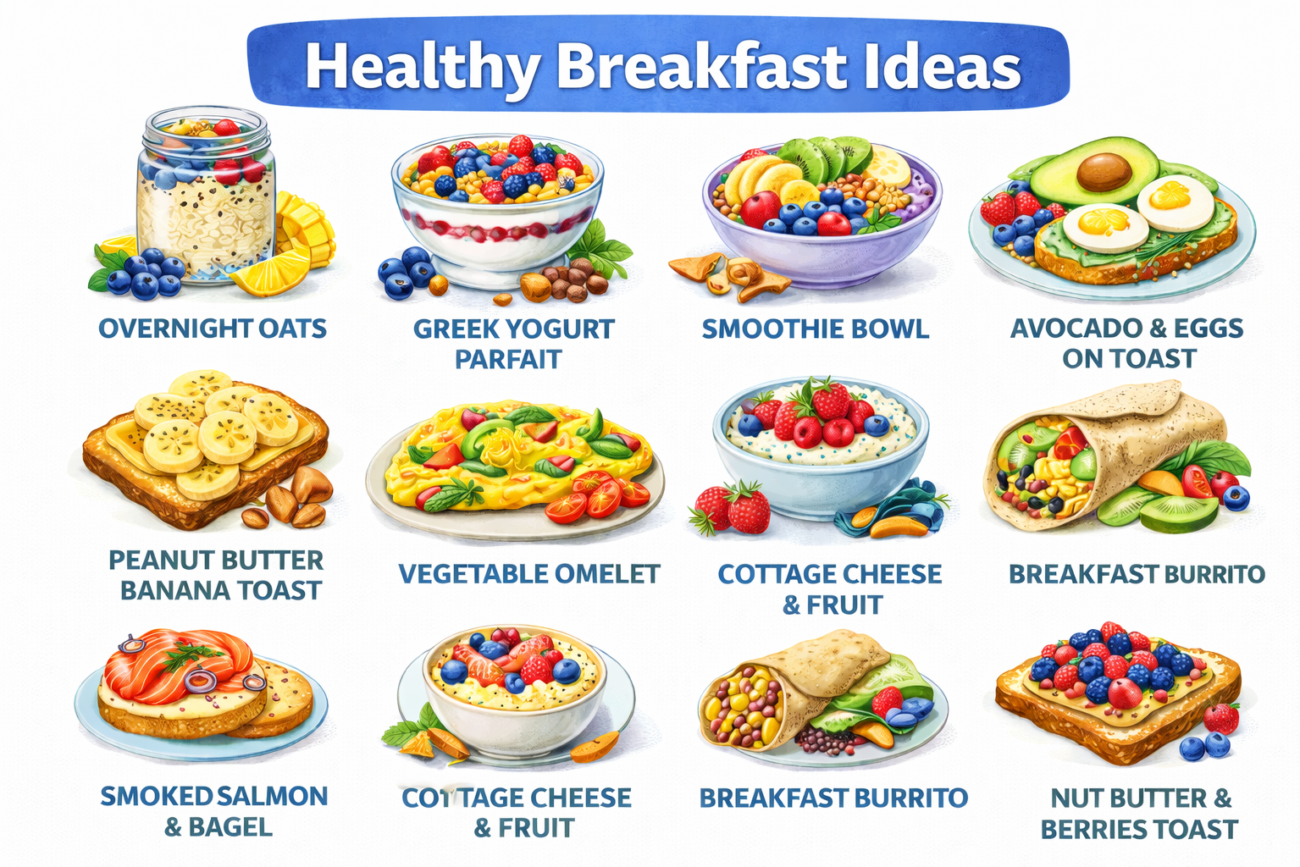
Overnight Oats: This make-ahead option requires just minutes of prep the night before. Combine rolled oats with milk or a milk alternative, Greek yogurt for extra protein, chia seeds for omega-3s and fiber, and your choice of toppings. Try combinations like banana and peanut butter, berries and almonds, or apple and cinnamon. In the morning, grab it from the fridge and eat it cold or heat it briefly. Each serving provides sustained energy, protein, and fiber.
Greek Yogurt Parfait: Layer Greek yogurt with fresh berries, a sprinkle of granola or nuts, and a drizzle of honey. Greek yogurt contains nearly twice the protein of regular yogurt—about 15-20 grams per cup. The berries provide antioxidants and fiber, while nuts add healthy fats and satisfying crunch. This takes less than five minutes to assemble and provides a balanced nutritional profile.
Smoothie Bowl: Blend frozen fruit, Greek yogurt or protein powder, a handful of spinach (you won’t taste it), and a liquid base like almond milk. Pour into a bowl and top with sliced fruit, nuts, seeds, and a sprinkle of granola. Unlike drinking a smoothie quickly, eating it from a bowl with toppings tends to be more satisfying and mindful. The combination of protein, fiber, and healthy fats keeps you full for hours.
Avocado Toast with Eggs: Whole grain toast topped with mashed avocado and a poached or fried egg creates a satisfying, Instagram-worthy breakfast in under ten minutes. The whole grain provides complex carbs and fiber, avocado offers healthy fats and potassium, and the egg delivers protein and essential nutrients. Add everything bagel seasoning, red pepper flakes, or sliced tomatoes for extra flavor and nutrients.
Peanut Butter Banana Toast: For an even simpler option, spread natural peanut butter on whole grain toast and top with banana slices. This classic combination provides protein, healthy fats, complex carbs, and potassium. For extra nutrition, sprinkle with chia seeds or drizzle with a touch of honey.
Protein-Packed Breakfasts
Vegetable Omelet: Whisk together two or three eggs with a splash of milk, pour into a heated pan, and fill with sautéed vegetables like spinach, tomatoes, mushrooms, and bell peppers. Add a sprinkle of cheese if desired. Omelets are incredibly versatile—use whatever vegetables you have on hand. Each egg provides about 6 grams of high-quality protein along with vitamins A, D, E, and B12.
Egg Muffins: These portable protein bombs can be made ahead for the entire week. Whisk eggs with chopped vegetables, cooked sausage or bacon, and cheese, then pour into muffin tins and bake. Store in the refrigerator and reheat one or two each morning for a grab-and-go option that’s far healthier than drive-through breakfast sandwiches.
Cottage Cheese Bowl: Cottage cheese has made a comeback, and for good reason—it’s packed with protein (about 25 grams per cup) and incredibly versatile. Top it with fresh fruit and a drizzle of honey for a sweet option, or go savory with cherry tomatoes, cucumber, everything bagel seasoning, and a drizzle of olive oil.
Breakfast Burrito: Scramble eggs with black beans, salsa, and a sprinkle of cheese, then wrap in a whole wheat tortilla with avocado. The combination of eggs and beans provides a complete protein along with fiber, while the whole wheat tortilla offers complex carbohydrates. Make several at once, wrap in foil, and freeze for quick reheating on busy mornings.
Smoked Salmon and Cream Cheese: Spread cream cheese on a whole grain bagel or toast and top with smoked salmon, sliced red onion, capers, and fresh dill. Salmon provides omega-3 fatty acids and high-quality protein, making this restaurant-quality breakfast surprisingly easy to prepare at home.
Whole Grain Options
Steel-Cut Oatmeal: Unlike instant oats, steel-cut oats have a lower glycemic index and provide more sustained energy. Cook a large batch at the beginning of the week and reheat portions each morning. Top with walnuts for omega-3s, berries for antioxidants, and a drizzle of maple syrup. The fiber in oats helps lower cholesterol and supports digestive health.
Whole Grain Toast with Nut Butter: Sometimes simple is best. Choose truly whole grain bread—check that whole wheat or another whole grain is the first ingredient—and top with almond butter, cashew butter, or peanut butter. Add sliced strawberries, a sprinkle of cinnamon, or a drizzle of honey. This combination provides protein, healthy fats, and complex carbs in minutes.
Quinoa Breakfast Bowl: Leftover quinoa makes an excellent breakfast base. Reheat it with milk or a milk alternative, add cinnamon and vanilla, then top with nuts, fresh fruit, and a touch of honey. Quinoa is a complete protein containing all nine essential amino acids, making it especially valuable for vegetarians.
Whole Grain Pancakes or Waffles: Make these healthier by using whole wheat flour, adding mashed banana or pumpkin puree to the batter, and including protein powder or Greek yogurt. Top with fresh fruit and a small amount of pure maple syrup rather than sugary syrups. Make extra and freeze individually for quick weekday breakfasts.
High-Fiber Starts
Chia Seed Pudding: Mix chia seeds with milk or a milk alternative and let sit overnight. The seeds absorb the liquid and create a pudding-like texture. Each serving provides about 10 grams of fiber along with omega-3 fatty acids, protein, and various micronutrients. Top with fresh fruit, nuts, and a touch of honey or maple syrup.
Bran Muffins: Homemade bran muffins made with whole wheat flour, wheat bran, and additions like shredded apple, carrots, or zucchini provide substantial fiber to support digestive health. Make a batch on the weekend and store for quick weekday breakfasts. Pair with a hard-boiled egg or Greek yogurt for added protein.
Berry and Flaxseed Smoothie: Blend mixed berries, ground flaxseed, banana, Greek yogurt, and milk. Berries and flaxseed are both high in fiber, while the yogurt adds protein. Ground flaxseed also provides omega-3 fatty acids, but make sure it’s ground rather than whole for better nutrient absorption.
Make-Ahead Options for Maximum Convenience
Breakfast Casserole: Layer whole grain bread cubes, vegetables, cheese, and cooked sausage or bacon in a baking dish, pour whisked eggs over everything, and refrigerate overnight. Bake in the morning for a hearty meal that serves the whole family, or bake ahead and reheat portions throughout the week.
Homemade Granola: Commercial granola is often loaded with sugar, but homemade versions let you control ingredients. Combine oats, nuts, seeds, a small amount of oil, and a touch of honey or maple syrup, then bake until golden. Serve with yogurt and fresh fruit for a satisfying crunch.
Freezer-Friendly Breakfast Sandwiches: Assemble English muffins with scrambled eggs, cheese, and Canadian bacon or turkey sausage. Wrap individually and freeze. Microwave for 60-90 seconds for a hot, portable breakfast that beats any fast-food option nutritionally and financially.
Sweet Yet Healthy Options
Banana Oat Pancakes: Mash one ripe banana with two eggs and a handful of oats to create a naturally sweet batter requiring no added sugar. Cook like regular pancakes and top with berries and a small amount of almond butter. This gluten-free, naturally sweetened option feels indulgent while providing protein and whole grains.
Baked Oatmeal: Mix oats with mashed banana, eggs, milk, cinnamon, and add-ins like blueberries, nuts, or dark chocolate chips. Bake in a dish and cut into squares. This portable option tastes like dessert but provides fiber, protein, and sustained energy.
Apple Cinnamon Quinoa: Cook quinoa in apple juice or milk with cinnamon, then top with diced apples, walnuts, and a drizzle of honey. The natural sweetness from the apples and cinnamon means you need minimal added sugar.
Tips for Breakfast Success
Plan ahead by deciding what you’ll eat the night before or even planning the full week. Prep what you can in advance—chop vegetables, hard-boil eggs, portion out overnight oats, or prep freezer meals on weekends.
Keep staples stocked including eggs, Greek yogurt, whole grain bread, oats, nuts, nut butter, fresh and frozen fruit, and milk or milk alternatives. Having these on hand makes healthy choices easier.
Don’t aim for perfection. Even a piece of whole grain toast with peanut butter and a banana is infinitely better than skipping breakfast or hitting the drive-through. Start where you are and gradually incorporate more nutritious options.
Consider your schedule. If mornings are chaotic, focus on grab-and-go options or make-ahead meals. If you have more time on weekends, enjoy more elaborate preparations then.
The Bottom Line
A healthy breakfast doesn’t have to be complicated, time-consuming, or boring. By focusing on the fundamentals—adequate protein, complex carbohydrates, healthy fats, and fiber—you can create countless combinations that fuel your body and taste delicious. Whether you prefer sweet or savory, hot or cold, quick or leisurely, there are nutritious options that fit your preferences and lifestyle.
The key is consistency. Making breakfast a regular habit, filled with whole foods rather than processed options, sets you up for better energy, improved focus, healthier food choices throughout the day, and long-term wellness. Experiment with different options to find your favorites, prep what you can in advance, and remember that even simple, quick choices can be nourishing when built on a foundation of whole foods and balanced nutrition.