Losing weight fundamentally comes down to creating a calorie deficit—burning more calories than you consume. However, not all calories are created equal, and certain foods make it significantly harder to maintain that deficit while staying satisfied and energized. Some foods are so calorie-dense, nutritionally empty, or engineered to promote overeating that they can sabotage even the most determined weight loss efforts. Understanding which foods to limit or avoid can make your weight loss journey considerably easier and more successful.
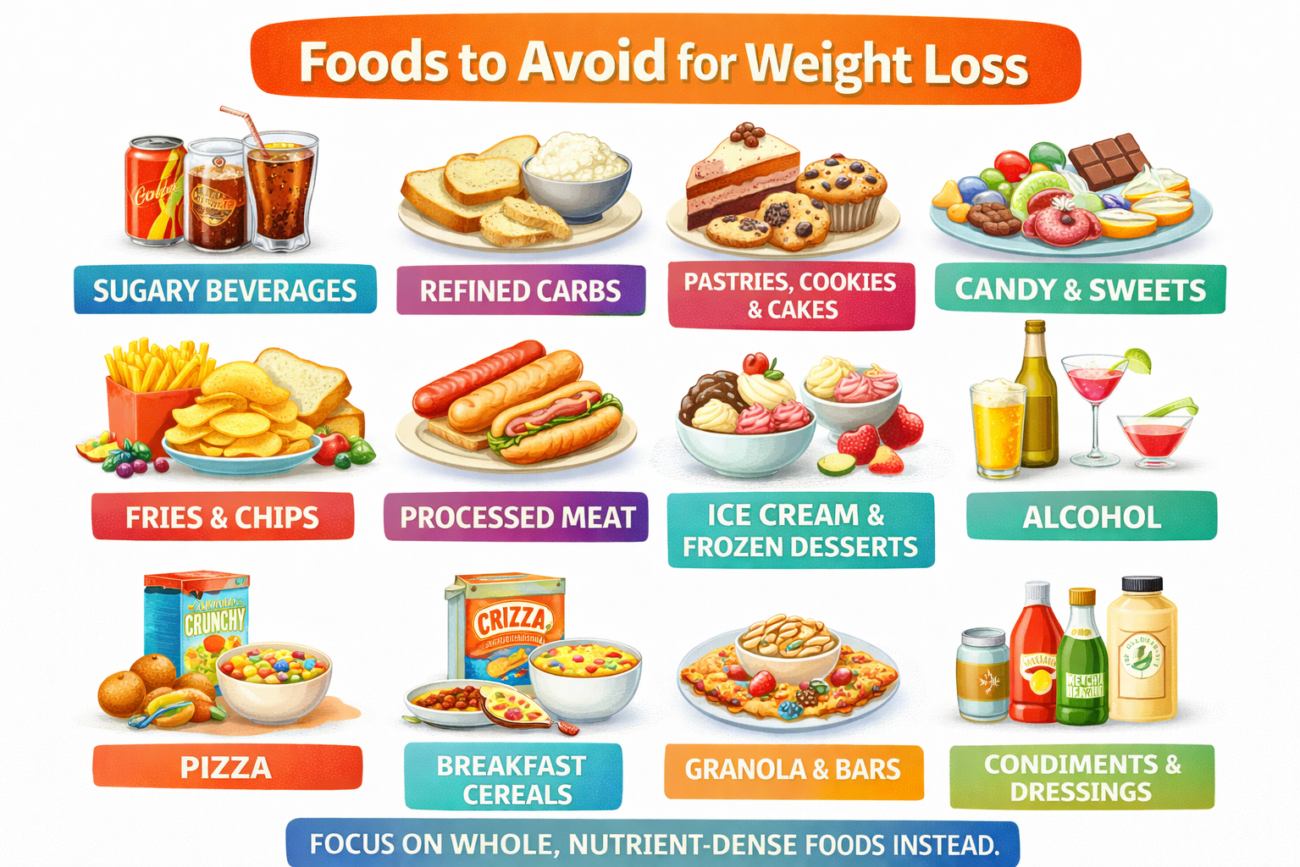
Sugary Beverages: Liquid Calories That Don’t Satisfy
Sodas, sweetened teas, energy drinks, and fruit juices are among the worst culprits for weight gain. These beverages deliver massive amounts of sugar and calories without providing any satiety—your body doesn’t register liquid calories the same way it does solid food, so you won’t feel full despite consuming hundreds of calories.
A single 20-ounce soda contains about 240 calories and 65 grams of sugar, yet provides zero nutritional value. Regular consumption of sugary drinks is strongly associated with obesity, type 2 diabetes, and metabolic syndrome. The rapid spike in blood sugar followed by a crash can also trigger cravings for more sugary foods.
Even fruit juice, often perceived as healthy, concentrates the natural sugars from multiple fruits while removing most of the beneficial fiber. A glass of orange juice contains nearly as much sugar as soda. If you enjoy fruit, eat it whole rather than drinking it—you’ll get fiber, feel fuller, and consume fewer calories overall.
Better alternatives include water, sparkling water with a splash of lemon or lime, unsweetened tea, or black coffee. If you need flavor, try infusing water with fresh herbs, cucumber, or berries.
Refined Carbohydrates and White Bread
White bread, white rice, regular pasta, and baked goods made with refined flour have been stripped of fiber and nutrients during processing. These foods digest rapidly, causing sharp spikes in blood sugar and insulin levels, followed by crashes that leave you hungry again quickly.
Studies show that people who consume large amounts of refined grains tend to have more belly fat than those who eat whole grains. The lack of fiber means these foods provide little satiety relative to their calorie content, making it easy to overeat.
Refined carbs also trigger the reward centers in your brain similarly to addictive substances, potentially creating cravings and making it harder to stop eating them. When you do eat grains, choose whole grain versions like whole wheat bread, brown rice, quinoa, or oats, which provide fiber, vitamins, and minerals while keeping you fuller longer.
Pastries, Cookies, and Cakes
Commercial baked goods combine the worst of multiple worlds: refined flour, added sugars, and unhealthy fats, all in a highly processed, calorie-dense package. A single muffin or large cookie can contain 400-600 calories with minimal nutritional value.
These foods are engineered to be hyperpalatable—the combination of sugar, fat, and salt triggers intense pleasure responses in the brain, making them extremely difficult to eat in moderation. The refined ingredients cause blood sugar spikes and crashes, perpetuating a cycle of cravings.
Additionally, many commercial baked goods contain trans fats or excessive amounts of saturated fats that can negatively impact heart health and inflammation levels. If you crave something sweet, opt for fresh fruit, a small piece of dark chocolate, or homemade treats made with whole food ingredients where you can control the sugar and fat content.
Candy and Sweets
Candy provides pure sugar with virtually no nutritional benefit. Whether it’s gummy candies, chocolate bars, hard candies, or caramels, these treats deliver rapid calories that don’t satisfy hunger and can trigger cravings for more sweets.
The problem with candy isn’t just the calories—it’s how those calories affect your appetite regulation. High-sugar foods can disrupt hormones like leptin and ghrelin that control hunger and fullness, making you more likely to overeat throughout the day.
Many people find that the more sugar they eat, the more they crave it, creating a difficult cycle to break. If you have a sweet tooth, satisfy it with naturally sweet foods like berries, dates, or a small amount of dark chocolate with at least 70% cocoa content.
French Fries and Potato Chips
Potatoes themselves aren’t inherently bad, but when deep-fried and heavily salted, they become calorie bombs with little nutritional value. French fries and potato chips are extremely calorie-dense—a medium order of fries contains about 400 calories, while a small bag of chips can pack 150-200 calories, and it’s incredibly easy to consume multiple servings.
These foods combine fat, salt, and starch in a way that’s engineered to be irresistible. The crunchiness and saltiness trigger dopamine responses that make you want to keep eating even after you’re no longer hungry. Studies have found that potato chips are one of the foods most strongly associated with weight gain over time.
The high temperatures used in deep frying also create harmful compounds like acrylamide, which may have negative health effects. If you’re craving something crunchy, try air-popped popcorn, roasted chickpeas, veggie sticks with hummus, or baked sweet potato wedges.
Processed Meats
Bacon, sausages, hot dogs, deli meats, and other processed meats are typically high in calories, sodium, and unhealthy fats while also containing preservatives like nitrates. A few slices of bacon can add 200+ calories to your breakfast without providing much satiety.
Beyond weight concerns, processed meats have been classified as Group 1 carcinogens by the World Health Organization, meaning there’s strong evidence they increase cancer risk, particularly colorectal cancer. The high sodium content can also contribute to water retention and bloating.
Choose lean, unprocessed proteins instead—chicken breast, turkey, fish, eggs, legumes, or tofu. These provide more protein per calorie and support satiety and muscle preservation during weight loss.
Ice Cream and Frozen Desserts
Ice cream is delicious, but it’s also packed with sugar and fat, making it extremely calorie-dense. A single cup can contain 300-500 calories, and most people eat more than the suggested serving size. The combination of sugar and fat is particularly problematic because it’s highly palatable and doesn’t trigger strong fullness signals.
Premium ice creams with mix-ins like cookie dough, candy pieces, or caramel swirls are even more caloric. The cold temperature can also numb taste buds slightly, encouraging you to eat more to get the same flavor satisfaction.
If you want something cold and sweet, try frozen fruit, Greek yogurt blended with berries and frozen, or small portions of sorbet, which typically contains fewer calories than ice cream.
Alcohol
Alcoholic beverages contribute significant calories without providing nutritional value or satiety. Alcohol contains 7 calories per gram, nearly as much as fat (9 calories per gram) and more than protein or carbohydrates (4 calories per gram each).
A single cocktail can easily contain 300-500 calories when you factor in mixers and syrups. Beer and wine are also caloric—a pint of beer contains about 200 calories, while a glass of wine has roughly 120-150 calories. Beyond the direct calorie content, alcohol lowers inhibitions and stimulates appetite, making you more likely to overeat or make poor food choices.
Alcohol is metabolized as a toxin by your liver, and while your body is processing alcohol, it prioritizes that over burning fat, essentially pausing fat loss. If you choose to drink, do so in moderation and opt for lower-calorie options like wine, light beer, or spirits with calorie-free mixers.
Pizza
While pizza can be part of a balanced diet when made with quality ingredients, commercial and delivery pizzas are typically loaded with refined flour crusts, excessive cheese, processed meats, and often hidden sugars in the sauce. A single large slice can contain 300-400 calories, and few people stop at one slice.
The combination of refined carbs, fat, and salt makes pizza highly palatable and easy to overeat. The large portion sizes typically served at restaurants compound the problem. If you love pizza, make it at home using whole wheat crust, plenty of vegetables, moderate cheese, and lean proteins. This way you control ingredients and portions.
Breakfast Cereals
Many breakfast cereals marketed as healthy are actually sugar-laden processed foods. Even those claiming to be “whole grain” or “natural” often contain shocking amounts of added sugar—sometimes more than cookies per serving.
The refined grains digest quickly, causing blood sugar spikes followed by crashes that leave you hungry mid-morning. The small serving sizes on nutrition labels (often just 3/4 cup) mean most people consume two to three times the suggested portion, multiplying the calorie and sugar intake.
Choose whole food breakfast options instead—oatmeal topped with berries and nuts, eggs with vegetables, Greek yogurt with fresh fruit, or whole grain toast with avocado.
Granola and Granola Bars
Despite their health halo, most commercial granolas and granola bars are packed with added sugars and oils, making them extremely calorie-dense. A small handful of granola can contain 200-300 calories. Many granola bars are essentially candy bars with some oats added.
The “health food” perception often leads people to eat larger portions than they would of foods they recognize as treats. Check labels carefully—if sugar appears in the first three ingredients or the product contains more than 8-10 grams of sugar per serving, it’s more dessert than health food.
Condiments and Dressings
Mayonnaise, ranch dressing, ketchup, BBQ sauce, and similar condiments can add hundreds of hidden calories to otherwise healthy meals. Two tablespoons of ranch dressing adds about 140 calories, while the same amount of mayo contributes roughly 200 calories.
Many people use far more than the serving size, and these calories add up quickly throughout the day without providing satiety. Creamy dressings and sauces are particularly problematic due to their fat content.
Opt for mustard, hot sauce, salsa, balsamic vinegar, or make your own dressings with olive oil and vinegar in controlled portions. When using higher-calorie condiments, measure carefully rather than eyeballing.
The Bottom Line: Focus on Whole Foods
The common thread among foods to avoid for weight loss is that they’re highly processed, calorie-dense, nutrient-poor, and engineered to encourage overeating. They provide lots of calories with minimal satiety, disrupt blood sugar regulation, and can trigger cravings.
Instead of focusing on restriction, shift your mindset toward abundance of whole, minimally processed foods—vegetables, fruits, lean proteins, whole grains, legumes, nuts, and seeds. These foods provide more volume, fiber, and nutrients per calorie, helping you feel satisfied while naturally creating the calorie deficit needed for weight loss.
This doesn’t mean you can never enjoy pizza, ice cream, or other treats—complete restriction often backfires. However, being aware of which foods make weight loss harder allows you to make informed choices, save indulgences for special occasions, and find healthier alternatives that you genuinely enjoy. Sustainable weight loss isn’t about perfection; it’s about making better choices most of the time while creating eating patterns you can maintain for life.