If money feels tighter in 2026, you’re not imagining it. Rent is up in many places, groceries cost more than they used to, subscriptions quietly stack up, and even “small” expenses like coffee, delivery fees, parking, and insurance add up fast. The result is a common problem: you earn, you pay bills, and somehow the month still ends with stress.
That’s why simple budgeting methods still matter. Not complicated spreadsheets. Not guilt. Just a clear structure that helps you spend on what you need, enjoy what you want, and protect your future.
One of the easiest frameworks is the 50/30/20 budgeting method. In this article, I’ll show you how it works, why it needs a small update for 2026 costs, and how to make it fit your real life.
What Is the 50/30/20 Budget Rule?
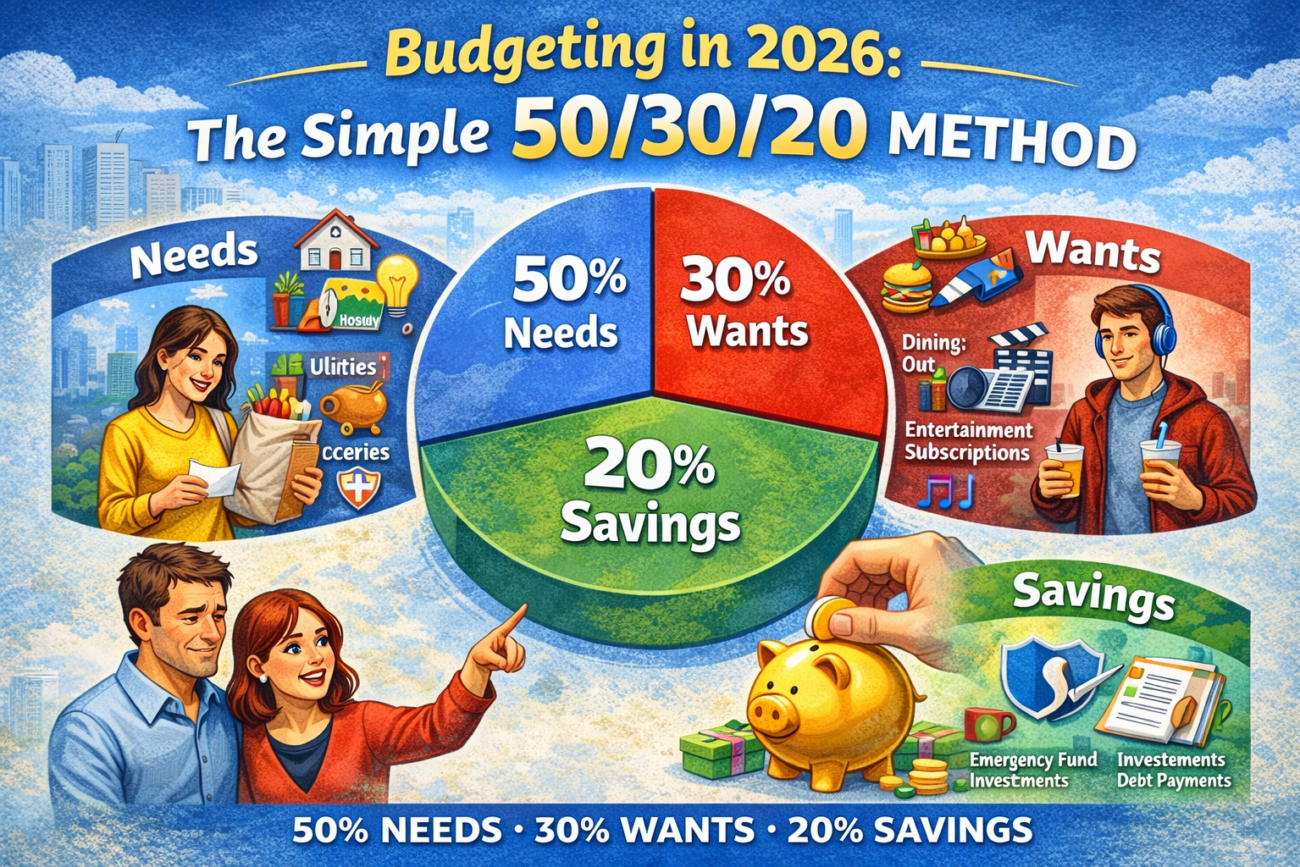
The 50/30/20 budgeting method splits your after-tax income into three buckets:
- 50% Needs: Must-pay essentials
- 30% Wants: Lifestyle choices and fun spending
- 20% Savings: Future you, including debt payoff
It became popular because it’s simple. You don’t need to track every rupee or dirham. You just need to know what category your spending belongs to and keep the big picture balanced.
The three buckets explained
1) Needs (50%)
These are expenses you must pay to live and work:
- Rent or mortgage
- Utilities (electricity, water, gas)
- Basic groceries
- Transportation (fuel, metro, basic car costs)
- Minimum debt payments
- Basic insurance
- Essential childcare
2) Wants (30%)
These are optional lifestyle upgrades:
- Dining out, cafés
- Shopping beyond basics
- Entertainment, streaming services
- Travel and staycations
- Gym upgrades, premium classes
- Gadgets (non-essential upgrades)
3) Savings and debt payoff (20%)
This includes:
- Emergency fund
- Retirement/investing
- Extra debt payments above the minimum
- Sinking funds (planned big expenses, like annual insurance or school fees)
Why the Classic 50/30/20 Rule Needs an Update in 2026
In many households, the biggest challenge is simple: needs don’t always stay at 50% anymore.
Housing has eaten a larger share of income in many cities. Insurance premiums, healthcare, and education costs have climbed. Groceries are not just “groceries” now. They include delivery fees, convenience pricing, and higher basics.
Also, the modern lifestyle has new “almost-needs”:
- Internet is a utility now
- Phone plans are essential for work
- Some subscriptions are genuinely used daily
- Work-from-home costs (devices, higher electricity) are real
So the solution isn’t to abandon 50/30/20. It’s to adapt it slightly while keeping it simple.
The Updated 50/30/20 Breakdown for Today’s Costs
Think of 50/30/20 as a starting point, not a strict rule. In 2026, these flexible versions often work better:
- 55/25/20: If rent, groceries, and essentials are high
- 60/20/20: If you’re in a high cost city or supporting family
- 50/25/25: If you want faster savings or investing
- 50/20/30: If you’re aggressively paying off debt (short term)
The goal is still the same: protect savings, control lifestyle spending, and keep needs realistic.
What counts as needs in 2026?
Needs (50% to 60%)
- Housing and utilities
- Basic groceries and household items
- Transport for work
- Essential insurance
- Minimum debt payments
- Necessary medical expenses
- Essential education costs
Wants (20% to 30%)
- Takeout and dining out
- Shopping for style, not necessity
- Entertainment and leisure
- Upgraded phone plans, premium subscriptions
- Impulse buys and convenience spending
Savings (20% minimum)
- Emergency fund
- Investing/retirement
- Extra debt payment
- Sinking funds for annual bills
Real-Life Example Budget (Monthly)
Let’s say your monthly take-home pay is 10,000 (use your local currency, the math stays the same).
Here’s a 55/25/20 version that fits many people in 2026:
| Category | % | Amount | Examples |
|---|---|---|---|
| Needs | 55% | 5,500 | Rent, utilities, groceries, transport, minimum EMIs, insurance |
| Wants | 25% | 2,500 | Eating out, shopping, subscriptions, entertainment, weekend plans |
| Savings | 20% | 2,000 | Emergency fund, investing, extra EMI payment, sinking funds |
A practical way to split the “Needs” bucket
If housing is your biggest cost, set a cap:
- Housing (rent + utilities): target 30% to 40%
- Groceries and basics: 10% to 15%
- Transport: 5% to 10%
- Insurance and essentials: 5% to 10%
If housing alone is crossing 45% or 50%, don’t panic. That’s common in many markets. Just tighten wants and protect savings as much as possible.
Common Mistakes People Make With the 50/30/20 Rule
Mistake 1: Calling wants “needs”
Food is a need. Daily delivery and premium snacks are usually wants. Transport is a need. A new car upgrade may not be.
Mistake 2: Forgetting irregular expenses
Annual insurance, car registration, school fees, medical checkups. These can destroy budgets if you don’t plan. Use a sinking fund: divide annual costs by 12 and save monthly.
Mistake 3: Saving whatever is left
In 2026, “whatever is left” is often nothing. Savings should be a fixed line item, even if it starts small.
Mistake 4: Budgeting with gross income
Always use take-home pay (after tax and fixed deductions). Otherwise the budget looks fine on paper and fails in real life.
How to Make the 50/30/20 Method Work for You in 2026
Here’s the simplest way to apply it without overthinking:
- Pick your version
Start with 55/25/20 if costs are high. Start with 50/30/20 if you have breathing room. - Automate savings on payday
Move the savings amount the day you get paid. This removes temptation and makes the system work. - Use two accounts if possible
- Account A: bills and needs
- Account B: wants spending
When Account B runs low, you naturally slow down.
- Do a “subscription audit” every quarter
Subscriptions are silent budget killers. Cancel what you don’t use weekly. - Make savings specific
Instead of “save money,” assign it a job:
- Emergency fund: 3 to 6 months expenses
- Investing: monthly contribution
- Sinking funds: travel, insurance, education
Who Should (and Shouldn’t) Use This Method?
Best for:
- People who want an easy, low-stress system
- Salaried earners with stable income
- Anyone starting budgeting for the first time
Not ideal for:
- People with irregular income (freelancers need a buffer-first approach)
- Anyone in heavy debt who needs a tighter plan short-term
- Extremely high or extremely low income situations where percentages don’t reflect reality
Final Thoughts
The 50/30/20 budgeting method is still one of the best starting points in 2026 because it’s simple and flexible. The update is not about perfection. It’s about honesty.
If your needs are higher right now, adjust to 55/25/20 or 60/20/20. If you’re trying to build wealth faster, shift to 50/25/25. What matters is that you’re controlling the big buckets instead of guessing each month.
Budgeting is not about restriction. It’s about getting your money to support the life you’re trying to build.