Fruit is undeniably healthy—packed with vitamins, minerals, fiber, and antioxidants that support overall wellbeing. Yet you’ve probably heard conflicting advice about when to eat fruit. Some sources claim eating fruit on an empty stomach is best, others say never eat fruit after meals, and still others insist timing doesn’t matter at all. So what does science actually say about the best time to eat fruit?
The Truth About Fruit Timing
Here’s the straightforward answer: for most healthy people, there is no universally “best” time to eat fruit. Your body is perfectly capable of digesting fruit whenever you eat it, and the nutritional benefits remain largely the same regardless of timing. That said, certain situations and health conditions may make specific timing strategies beneficial for optimizing digestion, blood sugar control, or achieving particular health goals.
The Morning Myth: Fruit on an Empty Stomach
A popular claim suggests that fruit should only be eaten on an empty stomach because it digests quickly and will “rot” or “ferment” if eaten after other foods, causing bloating and digestive issues. This is largely a myth. Your stomach produces powerful acids and enzymes specifically designed to break down all types of food together. Fruit doesn’t rot in your stomach waiting for other foods to digest.
However, there is a kernel of truth here. Fruit does digest relatively quickly compared to proteins and fats. For people with sensitive digestive systems, eating fruit on an empty stomach or between meals might reduce bloating or discomfort. If you experience digestive issues when eating fruit with meals, try eating it 30 minutes to an hour before meals or as a standalone snack.
Fruit in the Morning: A Good Start
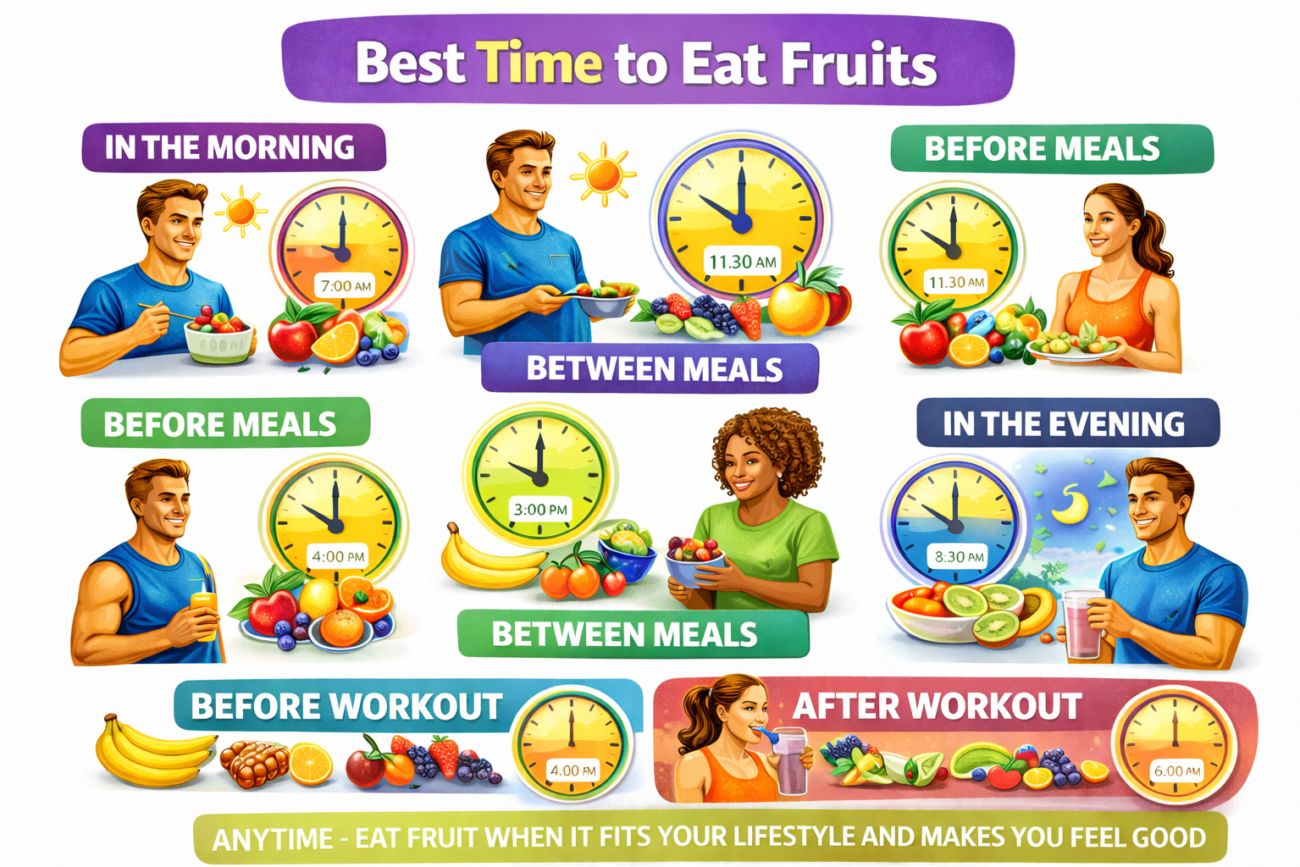
Eating fruit in the morning offers several advantages. After fasting overnight, your body has depleted its glycogen stores and fruit provides quick, natural energy from its carbohydrate content. The fiber in fruit helps you feel full and satisfied, potentially reducing overall calorie intake throughout the day.
Morning fruit also contributes to your hydration after sleep, since most fruits have high water content. Starting your day with fruit alongside other nutritious foods like whole grains, nuts, or yogurt creates a balanced breakfast that provides sustained energy.
Many people also find they have better appetite regulation when including fruit in their morning routine, making it easier to avoid less healthy snack choices later in the day.
Fruit Before Meals: Appetite Control
Some research suggests eating fruit about 30 minutes before a meal may help with weight management. The fiber and water content can help you feel fuller, potentially leading to consuming fewer calories during the main meal. A study found that people who ate an apple before lunch consumed significantly fewer calories overall compared to those who didn’t.
This strategy works particularly well with fruits high in fiber and water, such as apples, pears, berries, and citrus fruits. The key is allowing enough time for the fruit to begin digesting before adding other foods, which may enhance the satiety effect.
Fruit After Meals: The Debate
Many traditional eating patterns include fruit as dessert after meals, and this practice has both supporters and critics. The concern with eating fruit immediately after meals centers on blood sugar and digestion.
For people with diabetes or insulin resistance, eating fruit after a meal that already contains carbohydrates can cause a larger blood sugar spike. In these cases, it may be better to have fruit as a separate snack between meals, allowing better blood sugar management.
However, eating fruit after a meal that contains protein, fat, and fiber can actually slow down the absorption of fruit sugars, leading to a more gradual rise in blood sugar rather than a sharp spike. This can be beneficial for sustained energy and preventing the crash that sometimes follows eating fruit alone.
The digestive concern—that fruit ferments while waiting for other foods to digest—is unfounded for most people. Your digestive system handles mixed foods efficiently. That said, some individuals with conditions like irritable bowel syndrome (IBS) or small intestinal bacterial overgrowth (SIBO) may experience bloating or discomfort when eating fruit with meals. These individuals often do better eating fruit separately.
Between Meals: Fruit as a Snack
Eating fruit as a snack between meals is an excellent strategy for maintaining energy levels and avoiding unhealthy snack choices. The natural sugars provide quick energy while the fiber helps prevent blood sugar crashes.
For optimal blood sugar stability, pair fruit with a source of protein or healthy fat. Examples include apple slices with almond butter, berries with Greek yogurt, or a banana with a handful of nuts. This combination slows digestion and provides more sustained energy.
The mid-morning or mid-afternoon time slots are particularly good for fruit snacks, as these are when energy levels often dip and cravings for less healthy options emerge.
Evening Fruit: Does It Matter?
There’s a common belief that eating fruit in the evening, especially before bed, is problematic because the sugar will be stored as fat while you sleep. This is overly simplistic and not supported by solid evidence.
Weight gain occurs when you consistently consume more calories than you burn over time, not because of eating specific foods at specific times. If fruit fits within your daily calorie needs, eating it in the evening won’t cause weight gain.
However, there are some practical considerations for evening fruit consumption. The natural sugars can provide an energy boost that some people find interferes with sleep. If you’re sensitive to this, avoid fruit in the few hours before bed.
Citrus fruits and other acidic fruits might trigger heartburn or acid reflux when eaten close to bedtime, especially if you’re prone to these issues. In such cases, choosing less acidic fruits like bananas or melons, or eating fruit earlier in the evening, may be better.
Pre and Post-Workout Fruit Timing
Fruit can be excellent fuel for physical activity due to its easily digestible carbohydrates.
Before Exercise: Eating fruit 30-60 minutes before a workout provides readily available energy. Bananas are particularly popular among athletes because they’re rich in potassium and easily digestible carbohydrates. Other good pre-workout fruits include dates, oranges, and berries.
After Exercise: Fruit consumed after exercise helps replenish glycogen stores and provides antioxidants that may reduce exercise-induced inflammation. Pairing fruit with protein post-workout supports muscle recovery. A smoothie with berries, banana, and protein powder is a convenient option.
Special Considerations for Blood Sugar Management
For people with diabetes, prediabetes, or insulin resistance, fruit timing and pairing matter more than for the general population.
Eating fruit alone can cause rapid blood sugar spikes. Instead, always pair fruit with protein, healthy fat, or fiber-rich foods to slow sugar absorption. For example, have berries with cottage cheese, or an apple with cheese.
Spreading fruit intake throughout the day in smaller portions rather than consuming large amounts at once helps maintain steadier blood sugar levels. Testing blood sugar before and after eating fruit at different times can help you identify patterns and determine what works best for your body.
Individual Digestive Differences
Your digestive health plays a significant role in determining optimal fruit timing for you personally. People with SIBO, IBS, or other digestive conditions may find that eating fruit on an empty stomach or away from other foods reduces symptoms like bloating, gas, or discomfort.
Conversely, some people feel nauseous eating fruit on an empty stomach and do much better including it with meals. Pay attention to how your body responds and adjust accordingly.
The concept of “food combining”—eating certain foods separately for better digestion—lacks strong scientific support for most people, but if you notice you feel better eating fruit alone or at specific times, trust your experience.
The Bottom Line: Listen to Your Body
While there’s no universal best time to eat fruit for everyone, here are some general guidelines based on current evidence and practical experience:
For weight management, eating fruit before meals or as snacks between meals may help with appetite control. For blood sugar control, pair fruit with protein or fat and space portions throughout the day. For digestive comfort, experiment with eating fruit on an empty stomach or away from other foods if you experience bloating. For energy optimization, eat fruit when you need a natural energy boost—mid-morning, mid-afternoon, or before workouts. For overall health, simply ensure you’re eating a variety of fruits regularly, regardless of timing.
The most important factor isn’t when you eat fruit, but that you’re eating enough of it. Most people don’t consume the recommended two to three servings of fruit daily. Rather than obsessing over perfect timing, focus on increasing your overall fruit intake, choosing a variety of colors and types, and paying attention to how your body responds.
Ultimately, the best time to eat fruit is whenever it fits naturally into your lifestyle and makes you feel good. If you enjoy fruit with breakfast, great. If you prefer it as an afternoon snack, that works too. Your body is remarkably adaptable, and the health benefits of eating fruit far outweigh any potential timing concerns for most people.