In our fast-paced world, feeling energized and mentally sharp throughout the day can be challenging. Between work demands, family obligations, and personal goals, many people find themselves battling afternoon energy slumps, brain fog, and difficulty concentrating. While adequate sleep, a balanced diet, regular exercise, and stress management remain the foundation of sustained energy and focus, certain supplements have demonstrated the ability to support cognitive function and energy levels. Understanding which supplements have solid scientific backing and how they work can help you make informed decisions about what might benefit your unique situation.
Understanding Energy and Focus at a Cellular Level
Before diving into specific supplements, it’s helpful to understand what drives energy and focus in your body. Physical energy comes primarily from ATP (adenosine triphosphate), the molecule your cells use as fuel. This is produced in the mitochondria through the breakdown of carbohydrates, fats, and proteins. Mental focus and cognitive function depend on neurotransmitter balance, adequate blood flow to the brain, mitochondrial health in brain cells, and protection from oxidative stress that can damage neurons.
Many supplements that enhance energy and focus work by supporting one or more of these fundamental processes. Some provide building blocks for neurotransmitter production, others enhance mitochondrial function, and still others improve blood flow or protect against cellular damage.
Caffeine: The Time-Tested Energy Booster
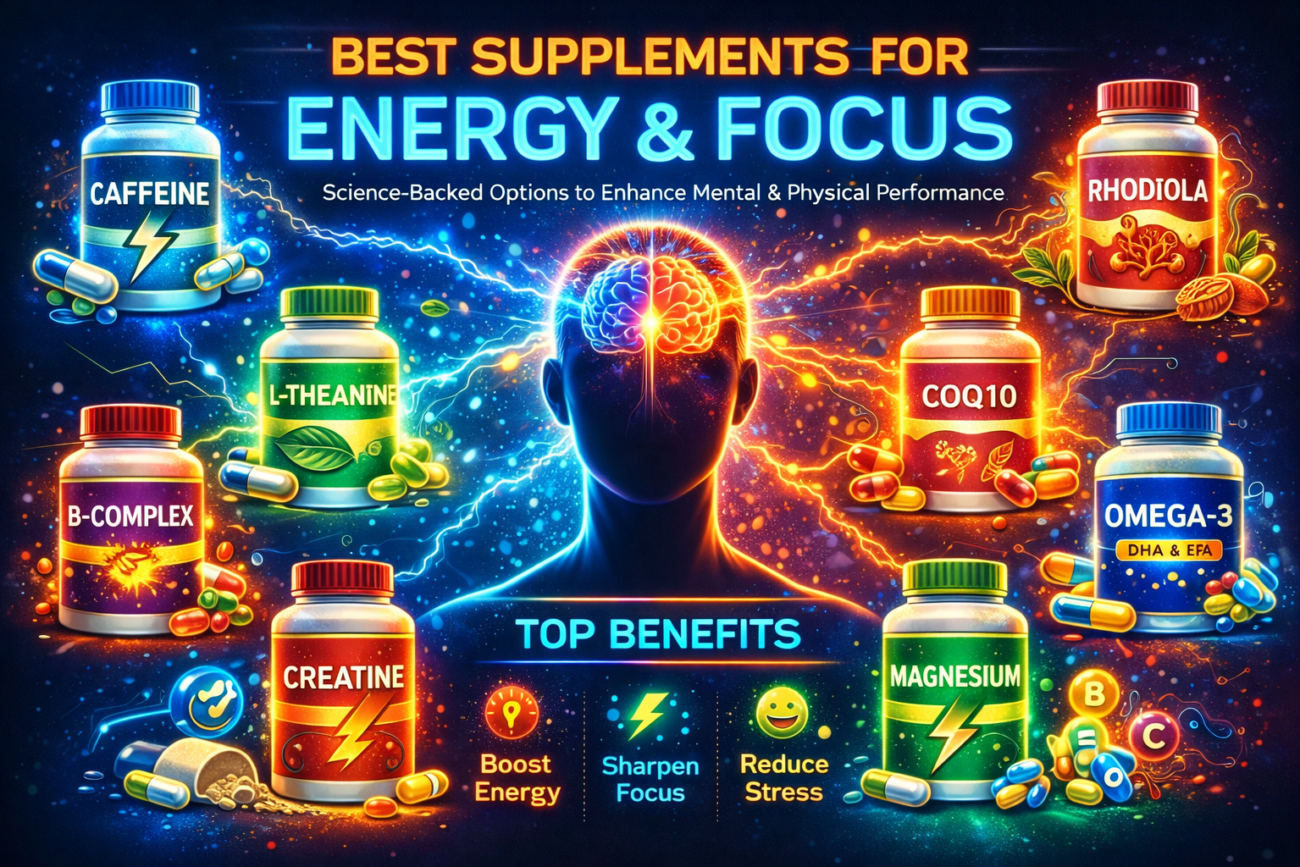
Caffeine remains the most widely consumed psychoactive substance in the world, and for good reason. It’s highly effective at increasing alertness, improving focus, and boosting physical energy. Caffeine works primarily by blocking adenosine receptors in the brain. Adenosine accumulates throughout the day and makes you feel sleepy, so blocking it promotes wakefulness and alertness.
Beyond wakefulness, caffeine enhances cognitive performance in multiple ways. It improves reaction time, attention, and vigilance, enhances memory consolidation, increases dopamine signaling which supports motivation and focus, and can improve physical performance and endurance. The effects typically begin within 15-45 minutes and last for several hours.
The optimal dose varies by individual tolerance, typically ranging from 50-400 mg daily. A standard cup of coffee contains about 95 mg, while energy drinks and supplements can contain much more. Starting with lower doses and increasing gradually helps avoid side effects like jitters, anxiety, or sleep disruption.
The main downsides include tolerance development with regular use, potentially requiring higher doses for the same effect, dependence and withdrawal symptoms like headaches when stopped abruptly, sleep disruption if consumed too late in the day, and increased anxiety or jitters in sensitive individuals. For best results, consume caffeine strategically during times you need enhanced focus, take occasional breaks to reset tolerance, and avoid consumption within 6-8 hours of bedtime.
L-Theanine: The Perfect Caffeine Companion
L-theanine is an amino acid found primarily in tea leaves, particularly green tea. It’s gained popularity as a supplement that promotes calm focus without sedation. L-theanine has a unique ability to cross the blood-brain barrier and influence neurotransmitter activity, increasing alpha brain wave activity associated with relaxed alertness, boosting GABA, dopamine, and serotonin levels, and reducing stress-related brain chemicals.
What makes L-theanine particularly valuable is its synergistic relationship with caffeine. When taken together, L-theanine smooths out the jittery effects of caffeine while preserving or even enhancing its focus-boosting benefits. This combination produces what many describe as “calm alertness”—focused attention without anxiety or overstimulation.
Research has shown that the caffeine-theanine combination improves accuracy on attention-switching tasks, reduces susceptibility to distractions, enhances working memory performance, and minimizes the post-caffeine “crash” feeling. The typical ratio used in research is 2:1 theanine to caffeine, so if you consume 100 mg of caffeine, you might take 200 mg of L-theanine.
L-theanine is remarkably safe with virtually no side effects reported at typical doses of 100-400 mg daily. It can be taken with your morning coffee or as a standalone supplement when you need to reduce stress without sedation.
B-Complex Vitamins: Essential Energy Cofactors
B vitamins are crucial for converting food into energy at the cellular level. They function as cofactors in numerous metabolic reactions, particularly those involved in ATP production. The B-complex includes eight vitamins: B1 (thiamine), B2 (riboflavin), B3 (niacin), B5 (pantothenic acid), B6 (pyridoxine), B7 (biotin), B9 (folate), and B12 (cobalamin).
These vitamins support energy and focus through multiple mechanisms. They’re required for converting carbohydrates into glucose for energy, play critical roles in fat and protein metabolism, support neurotransmitter synthesis including serotonin, dopamine, and GABA, and are essential for maintaining healthy myelin sheaths that insulate nerve cells.
B12 deserves special attention for energy and cognitive function. Deficiency is surprisingly common, particularly among older adults, vegetarians and vegans, people taking certain medications like metformin or proton pump inhibitors, and those with digestive conditions affecting absorption. Low B12 can cause profound fatigue, brain fog, difficulty concentrating, and memory problems that can mimic dementia in severe cases.
B6 is particularly important for neurotransmitter production, while folate (B9) supports brain health and cognitive function. Research suggests that adequate B vitamin status is associated with better cognitive performance and reduced mental fatigue.
For people with adequate dietary intake, supplementation may not provide dramatic benefits. However, if you’re deficient or have marginal status, B-complex supplementation can significantly improve energy levels and mental clarity within days to weeks. A balanced B-complex containing all eight B vitamins is generally preferable to mega-doses of individual B vitamins, as they work synergistically.
Rhodiola Rosea: The Adaptogenic Energy Enhancer
Rhodiola rosea is an adaptogenic herb used for centuries in traditional medicine to combat fatigue and enhance mental performance. Adaptogens are substances that help the body adapt to stress and maintain homeostasis. Rhodiola’s active compounds, particularly rosavins and salidroside, influence multiple systems related to energy and stress response.
Research has shown that rhodiola can reduce mental fatigue during stressful periods, improve attention and cognitive function, particularly during demanding tasks, enhance physical endurance and reduce perceived exertion, help maintain performance during night shifts or extended work periods, and reduce stress-related fatigue and burnout symptoms.
Unlike stimulants that provide immediate but temporary energy, rhodiola works more subtly to enhance your body’s resilience to physical and mental stressors. People often report feeling more capable of handling demanding situations without becoming overwhelmed or exhausted.
Studies have used doses ranging from 200-600 mg daily of standardized extracts containing 3% rosavins and 1% salidroside. Effects typically build over days to weeks rather than being immediately noticeable. Rhodiola is generally well-tolerated, though some people experience mild stimulation that could interfere with sleep if taken late in the day. It’s best taken in the morning or early afternoon.
Creatine: Not Just for Muscles
While creatine is best known as a muscle-building supplement for athletes, emerging research suggests it also benefits brain function and mental energy. Your brain requires enormous amounts of energy to function, and creatine helps maintain ATP levels during periods of high demand.
Creatine supplementation has been shown to improve cognitive performance, particularly during mentally demanding tasks or sleep deprivation, enhance working memory and processing speed, reduce mental fatigue during prolonged cognitive effort, and potentially benefit people with stress or anxiety by supporting energy metabolism in the brain.
The cognitive benefits appear most pronounced in situations of metabolic stress—when your brain is working particularly hard, when you’re sleep-deprived, or during aging when brain energy metabolism naturally declines. Vegetarians and vegans may experience particularly noticeable benefits since they don’t consume dietary creatine from meat.
The typical dose for cognitive benefits is 5 grams daily, the same used for athletic performance. Creatine is extremely safe with decades of research supporting its use. Some people experience slight water retention, but this is generally minimal. It can be taken at any time of day, with or without food.
CoQ10: Mitochondrial Energy Support
Coenzyme Q10 (CoQ10) is a compound produced naturally in your body that plays a critical role in mitochondrial energy production. It functions as both an energy facilitator and an antioxidant, protecting cells from oxidative damage. CoQ10 levels decline with age and are reduced by certain medications, particularly statins used for cholesterol management.
For energy and mental function, CoQ10 supplementation may help reduce fatigue, particularly in people with CoQ10 deficiency or mitochondrial dysfunction, support cognitive function and potentially slow age-related decline, enhance physical energy and exercise performance, and reduce the fatigue side effect sometimes experienced with statin medications.
The evidence for cognitive benefits is still developing, but the rationale is strong given the brain’s high energy demands and vulnerability to oxidative stress. CoQ10 supplementation is particularly worth considering for people over 40, those taking statins, individuals experiencing unexplained fatigue, and anyone interested in supporting long-term brain health.
Typical doses range from 100-300 mg daily. CoQ10 is fat-soluble, so taking it with a meal containing fat improves absorption. Ubiquinol, the reduced form of CoQ10, may be better absorbed than ubiquinone, particularly in older adults, though it’s typically more expensive.
Omega-3 Fatty Acids: Brain Structure and Function
While omega-3s, particularly EPA and DHA, are often discussed for heart health, they’re equally important for brain function. DHA is a major structural component of brain cell membranes, comprising about 40% of the polyunsaturated fatty acids in the brain. EPA influences neurotransmitter function and reduces inflammation.
Adequate omega-3 status supports mental clarity and focus, mood regulation and emotional resilience, information processing speed, and long-term cognitive health and may reduce age-related decline. While the effects on day-to-day energy aren’t as dramatic as stimulants, omega-3s provide foundational support for optimal brain function.
Studies suggest that higher omega-3 intake is associated with better cognitive performance across various domains. For immediate cognitive enhancement, the effects are subtle, but for long-term brain health and optimal function, omega-3s are essential.
A dose of 1,000-2,000 mg combined EPA and DHA daily is typical for brain health, obtained through fatty fish consumption or high-quality supplements. The benefits accumulate over weeks to months of consistent intake.
Ginseng: Traditional Energy Tonic with Modern Validation
Both Asian ginseng (Panax ginseng) and American ginseng (Panax quinquefolius) have long histories of use for combating fatigue and enhancing mental performance. Modern research has validated many traditional uses, showing that ginseng can reduce mental and physical fatigue, improve working memory and attention, enhance cognitive performance during demanding tasks, support immune function which indirectly affects energy levels, and help regulate blood sugar which influences energy stability.
The active compounds in ginseng, called ginsenosides, have diverse effects on the brain and body. Different ginseng species have somewhat different properties, with Asian ginseng typically considered more stimulating and American ginseng more calming.
Standardized extracts containing 2-5% ginsenosides at doses of 200-400 mg daily are commonly used in research. Like rhodiola, ginseng works as an adaptogen, with effects building over time rather than providing immediate stimulation. It’s generally well-tolerated, though some people may experience mild digestive upset or, with higher doses of Asian ginseng, slight overstimulation.
Acetyl-L-Carnitine: Mitochondrial Fuel Transporter
Acetyl-L-carnitine (ALCAR) is a modified amino acid that plays a crucial role in energy metabolism by transporting fatty acids into mitochondria where they’re burned for energy. Beyond this metabolic function, ALCAR crosses the blood-brain barrier and supports brain energy metabolism and neurotransmitter production.
Research suggests ALCAR may reduce mental and physical fatigue, support cognitive function, particularly memory and processing speed, enhance mood and motivation, and potentially slow cognitive decline with aging. The evidence is particularly strong for reducing age-related cognitive decline and supporting brain function in older adults.
Typical doses range from 500-2,000 mg daily, often divided into two doses. ALCAR is generally taken on an empty stomach for better absorption. It’s well-tolerated, though some people experience mild digestive upset or, if taken late in the day, difficulty sleeping due to increased energy.
Citicoline: Brain Health and Mental Clarity
Citicoline (CDP-choline) is a compound that provides choline, a precursor to the neurotransmitter acetylcholine, which is crucial for memory, learning, and focus. Citicoline also supports the production of phospholipids that maintain healthy brain cell membranes.
Studies have shown that citicoline supplementation can enhance attention and focus, improve memory formation and recall, support mental energy and reduce brain fog, and protect against age-related cognitive decline. It’s particularly valued by people who need to maintain high cognitive performance for extended periods.
The typical dose is 250-500 mg daily, though some research has used higher amounts. Citicoline is very well-tolerated with few side effects. It can be taken with or without food and at any time of day, though some people prefer morning dosing to support daytime mental performance.
Lion’s Mane Mushroom: Neuroplasticity Support
Lion’s mane mushroom (Hericium erinaceus) is a medicinal mushroom gaining attention for its potential cognitive benefits. It contains compounds called hericenones and erinacines that may stimulate nerve growth factor (NGF) production, supporting brain plasticity and neuron health.
While research is still emerging, studies suggest lion’s mane may improve focus and cognitive function, support memory and learning, promote nerve regeneration and brain health, and reduce mild symptoms of anxiety and depression that can impair focus. The effects are subtle and build over time rather than providing immediate cognitive enhancement.
Typical supplemental doses range from 500-3,000 mg of the fruiting body or mycelium extract daily. Lion’s mane is well-tolerated with minimal side effects. It’s often taken as part of a long-term cognitive health strategy rather than for acute performance enhancement.
Magnesium: The Overlooked Energy Mineral
Magnesium is involved in over 300 enzymatic reactions in the body, including many related to energy production. It’s required for converting food into ATP and plays crucial roles in nerve function and neurotransmitter regulation. Despite its importance, magnesium deficiency is relatively common.
Adequate magnesium supports energy production at the cellular level, helps regulate stress responses that drain mental energy, supports quality sleep which is fundamental to daytime energy and focus, and may improve symptoms of fatigue and low energy when deficient.
For people with marginal or deficient magnesium status, supplementation can significantly improve energy levels, reduce fatigue, and enhance mental clarity. The effects are typically noticeable within days to weeks. Magnesium glycinate or magnesium L-threonate are preferred forms for cognitive benefits, with doses of 200-400 mg daily being typical.
Creating an Effective Supplement Strategy
Rather than taking every supplement on this list, most people benefit from a targeted approach. Start by addressing foundational deficiencies. If you’re low in B12, vitamin D, or magnesium, correcting these deficiencies will likely provide the most noticeable improvements in energy and focus. Blood tests can identify deficiencies before you invest in supplements.
For daily cognitive support, many people find success with a caffeine and L-theanine combination for immediate focus, a B-complex vitamin for metabolic support, and omega-3 fatty acids for long-term brain health. This simple stack addresses multiple mechanisms without excessive complexity or cost.
For additional support during particularly demanding periods, consider adding adaptogens like rhodiola or ginseng for stress resilience and sustained energy, citicoline or acetyl-L-carnitine for enhanced mental performance, or creatine for cognitive endurance during mentally demanding tasks.
Timing matters for optimal results. Take B vitamins and adaptogens with breakfast for all-day support, use caffeine strategically when you need peak focus, and reserve CoQ10 and omega-3s for meals containing fat to improve absorption. Avoid stimulating supplements after mid-afternoon to protect sleep quality.
What Supplements Can’t Replace
While supplements can support energy and focus, they cannot replace fundamental health practices. No amount of supplementation can compensate for chronic sleep deprivation, which remains the most powerful determinant of daytime energy and cognitive function. Most adults need 7-9 hours of quality sleep nightly.
Similarly, supplements work best when combined with a nutrient-dense diet rich in whole foods, regular physical activity that supports mitochondrial health and brain function, effective stress management to prevent mental and physical depletion, and adequate hydration, as even mild dehydration impairs cognitive performance.
View supplements as tools that optimize an already healthy foundation rather than band-aids for poor lifestyle habits. The people who benefit most from energy and focus supplements are those who’ve already addressed the basics but want to optimize performance further.
Safety Considerations and Interactions
Most of the supplements discussed are generally safe when used appropriately, but some considerations apply. Caffeine can interact with certain medications and may not be suitable for people with anxiety disorders, heart arrhythmias, or sleep disorders. Adaptogens like rhodiola and ginseng may interact with medications for diabetes, blood pressure, or mood disorders.
If you take prescription medications, particularly for mental health, blood pressure, blood thinning, or diabetes, consult your healthcare provider before adding supplements. This is especially important for supplements that affect neurotransmitters or energy metabolism.
Pregnant and breastfeeding women should be particularly cautious, as safety data for many supplements is limited in these populations. When in doubt, consult with a qualified healthcare professional.
The Bottom Line
The best supplements for energy and focus work through diverse mechanisms—some provide immediate cognitive enhancement while others build long-term resilience and brain health. Caffeine remains the gold standard for acute mental performance, particularly when combined with L-theanine. B vitamins provide essential metabolic support, especially for people with deficiencies or high nutritional needs. Adaptogens like rhodiola and ginseng help maintain performance during stress without the jitters of stimulants.
For comprehensive support, combining supplements that address different aspects of energy and cognition often produces better results than relying on any single compound. However, more isn’t always better—start with targeted interventions based on your specific needs, and add complexity only if justified by results.
Remember that supplements are most effective when they complement, not replace, foundational health practices. Prioritize sleep, nutrition, exercise, and stress management first, then use supplements to optimize from an already solid foundation. With this approach, the right supplements can meaningfully enhance your energy, focus, and cognitive performance, helping you meet life’s demands with greater mental clarity and sustained vitality.