
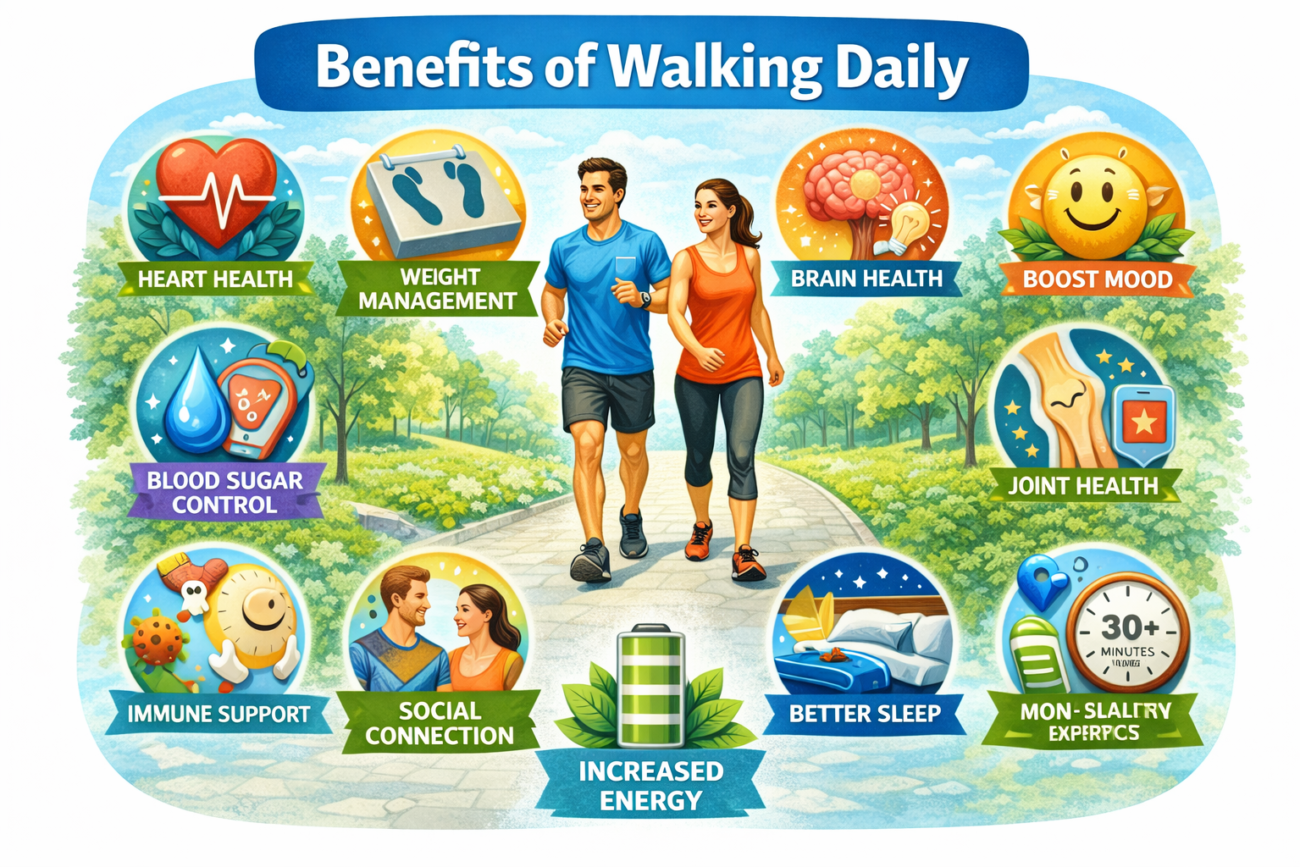
Walking is perhaps the most underrated form of exercise. It requires no special equipment, costs nothing, and can be done almost anywhere at any time. Yet this simple activity offers remarkable benefits for both physical and mental health. Whether you’re strolling through your neighborhood, power walking on a trail, or simply pacing while taking phone calls, every step counts toward better health.
A Full-Body Workout in Disguise
While walking may seem gentle compared to high-intensity workouts, it’s actually a comprehensive form of exercise that engages multiple muscle groups. Your legs, core, and even your arms all work together with each stride. Regular walking strengthens bones, improves balance and coordination, and helps maintain muscle mass as you age—all without the joint stress that comes with running or high-impact activities.
Heart Health Benefits
Walking is excellent cardiovascular exercise that strengthens your heart and improves circulation. Studies show that walking just 30 minutes a day can reduce the risk of heart disease and stroke by up to 35%. It helps lower blood pressure, improves cholesterol levels by raising HDL (good cholesterol) and lowering LDL (bad cholesterol), and enhances overall cardiovascular fitness. The American Heart Association recommends at least 150 minutes of moderate-intensity aerobic activity per week, and brisk walking fits perfectly into this guideline.
Weight Management Made Simple
Walking burns calories, and the more you walk, the more energy you expend. A 30-minute brisk walk can burn approximately 150-200 calories depending on your weight and pace. While this might not seem dramatic compared to more intense exercises, the beauty of walking lies in its sustainability. You’re far more likely to stick with a walking routine than an exhausting workout regimen, and consistency is what truly matters for long-term weight management.
Blood Sugar Control
Walking after meals is particularly effective for managing blood sugar levels. Research shows that even a short 15-minute walk after eating can help reduce blood sugar spikes, which is especially beneficial for people with type 2 diabetes or those at risk of developing it. The muscle activity during walking helps your body use insulin more effectively and allows your muscles to absorb glucose from your bloodstream.
Mental Health and Mood Enhancement
The psychological benefits of walking are just as impressive as the physical ones. Walking triggers the release of endorphins—your brain’s natural mood elevators. Regular walkers report reduced symptoms of depression and anxiety, improved self-esteem, and better stress management. There’s something inherently therapeutic about the rhythmic nature of walking, especially when done outdoors in natural settings. Studies have found that walking in green spaces can reduce rumination and negative thought patterns.
Cognitive Function and Brain Health
Walking isn’t just good for your body—it’s excellent for your brain. Regular walking has been shown to improve memory, enhance creativity, and reduce the risk of cognitive decline as you age. It increases blood flow to the brain, promotes the growth of new brain cells, and may help prevent or slow the progression of dementia and Alzheimer’s disease. Many people find that walking helps them think more clearly and solve problems more effectively, which is why “walking meetings” have become popular in some workplaces.
Better Sleep Quality
People who walk regularly tend to sleep better. Physical activity helps regulate your circadian rhythm, reduces the time it takes to fall asleep, and increases the amount of deep, restorative sleep you get. Just be mindful of timing—vigorous evening walks close to bedtime might be too stimulating for some people, though gentle evening strolls often promote relaxation.
Immune System Support
Moderate exercise like walking can give your immune system a boost. Regular walkers tend to experience fewer colds and respiratory infections compared to sedentary individuals. One study found that people who walked at least 20 minutes a day, five days a week, had 43% fewer sick days than those who exercised once a week or less.
Joint Health and Pain Relief
Contrary to what you might think, walking actually helps protect your joints rather than wearing them down. It strengthens the muscles around your joints, improves flexibility, and helps lubricate joint cartilage. For people with arthritis, regular walking can reduce pain and stiffness while improving mobility and quality of life.
Increased Energy Levels
It might seem counterintuitive, but expending energy through walking actually gives you more energy overall. Walking increases oxygen flow throughout your body and boosts levels of hormones like cortisol, epinephrine, and norepinephrine that help elevate energy levels. Many people find that a midday walk is more effective than a cup of coffee for beating the afternoon slump.
Social Connection Opportunities
Walking can be a wonderfully social activity. Whether you join a walking group, meet a friend for regular walks, or simply chat with neighbors you encounter on your route, walking creates opportunities for human connection that benefit mental health and emotional wellbeing. Even walking your dog provides social interaction with other pet owners and strengthens the bond with your furry companion.
Practical Tips for Making Walking a Habit
Start small if you’re new to regular walking. Even 10 minutes a day is beneficial, and you can gradually increase duration and intensity. Schedule walks at consistent times to build a routine—many people find that morning walks energize their entire day. Make it enjoyable by choosing scenic routes, listening to music or podcasts, or exploring new neighborhoods. Track your steps with a smartphone or fitness tracker if that motivates you, but don’t obsess over hitting arbitrary numbers.
Invest in comfortable, supportive walking shoes to prevent discomfort and injury. Dress appropriately for the weather, but don’t let less-than-perfect conditions stop you—walking in light rain or cool weather can be invigorating. If outdoor walking isn’t possible, indoor alternatives like mall walking or using a treadmill work just fine.
How Much Should You Walk?
While the often-cited goal of 10,000 steps per day has become popular, research suggests that significant health benefits begin at much lower levels. Aim for at least 30 minutes of brisk walking most days of the week, which typically translates to about 3,000-4,000 steps. Any amount of walking is better than none, and increasing your daily steps gradually over time will help you build sustainable habits.
The Bottom Line
Walking is one of the most accessible and effective forms of exercise available. It requires minimal investment, carries low risk of injury, and delivers impressive returns for both physical and mental health. The key is consistency—making walking a regular part of your daily routine rather than an occasional activity. Whether you’re walking for fitness, stress relief, social connection, or simply because you enjoy it, every step you take is an investment in your long-term health and wellbeing.