Belly fat is one of the most stubborn and frustrating areas to lose weight from. Many people try hundreds of crunches, extreme diets, or quick detox plans, only to see little or no change. The truth is, spot reduction is a myth. Belly fat reduces when your overall body fat decreases, and that happens through a combination of smart nutrition, movement, sleep, and stress control.
The good news? You do not need extreme measures. You need the right approach.
Why Belly Fat Is Hard to Lose
Belly fat is influenced by:
- Poor diet and excess sugar
- High stress and cortisol levels
- Lack of sleep
- Sedentary lifestyle
- Hormonal imbalance (especially after 30–35)
- Insulin resistance
Because belly fat is closely linked to hormones, lifestyle matters more than endless ab exercises.
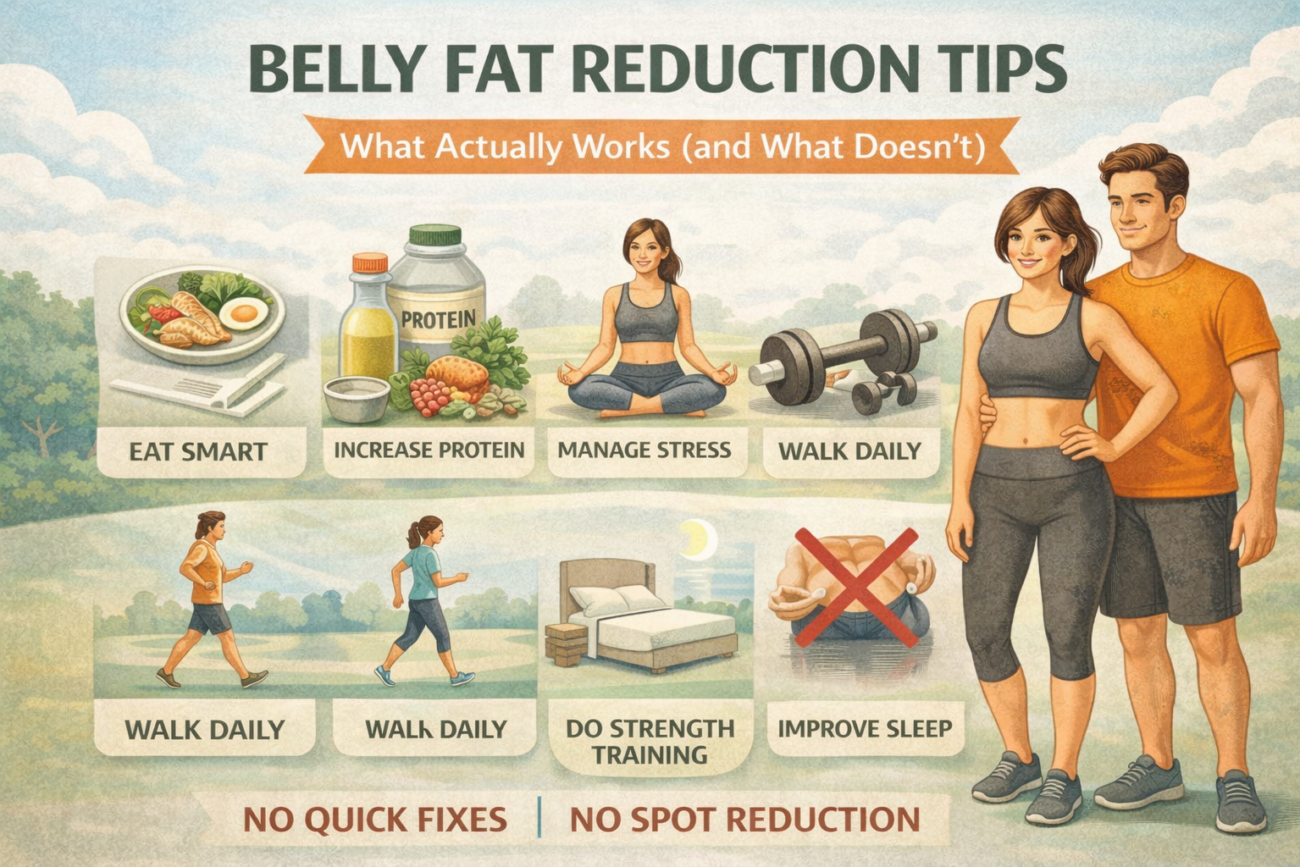
Tip 1: Fix Your Diet First (This Matters Most)
No exercise can outwork a poor diet when it comes to belly fat.
Reduce Sugar and Refined Carbs
Excess sugar and refined carbs are the biggest contributors to belly fat.
Limit:
- Sugary drinks
- Sweets and desserts
- White bread and bakery items
- Packaged snacks
Choose:
- Whole grains
- Fruits in moderation
- Vegetables
- Natural carbs like oats, millets, and brown rice
Tip 2: Increase Protein Intake
Protein helps:
- Reduce cravings
- Control appetite
- Preserve muscle during fat loss
- Improve metabolism
Good protein sources:
- Lentils, beans, chickpeas
- Paneer, tofu, Greek yogurt
- Eggs or plant protein options
Include protein in every meal, especially breakfast.
Tip 3: Don’t Skip Healthy Fats
Healthy fats do not cause belly fat when eaten in moderation.
Include:
- Nuts and seeds
- Olive oil
- Ghee (small amounts)
- Avocado
They help balance hormones and keep you full longer.
Tip 4: Walk Daily (Underrated but Powerful)
You don’t need intense workouts to reduce belly fat.
- Walk 30–45 minutes daily
- Brisk pace is enough
- Consistency matters more than speed
Walking reduces stress hormones and improves fat-burning efficiency.
Tip 5: Add Strength Training 2–3 Times a Week
Strength training builds muscle, which increases calorie burn even at rest.
Simple exercises:
- Squats
- Lunges
- Push-ups
- Planks
- Resistance band workouts
You do not need heavy weights. Bodyweight is enough to start.
Tip 6: Reduce Stress to Reduce Belly Fat
Chronic stress increases cortisol, a hormone that promotes belly fat storage.
To manage stress:
- Practice deep breathing
- Take short walks
- Limit overworking
- Reduce screen time before bed
- Try yoga or meditation
Less stress often leads to visible belly fat reduction.
Tip 7: Improve Sleep Quality
Poor sleep increases hunger hormones and fat storage around the abdomen.
Aim for:
- 7–8 hours of sleep
- Fixed sleep schedule
- No screens 60 minutes before bed
Better sleep alone can significantly reduce belly fat over time.
Tip 8: Stay Hydrated
Drinking enough water:
- Reduces bloating
- Improves digestion
- Controls appetite
Start your day with water and sip regularly throughout the day.
Tip 9: Stop Chasing Spot Reduction Myths
Avoid:
- Hundreds of daily crunches
- Belly fat creams or wraps
- Detox teas and fat burners
- Extreme fasting without guidance
Core exercises strengthen muscles but do not burn belly fat alone.
A Simple Daily Routine for Belly Fat Reduction
Morning
- Water
- Light stretching or walk
Meals
- Protein in every meal
- Plenty of vegetables
- Controlled portions
Evening
- Walk or light workout
Night
- Light dinner
- Good sleep routine
Follow this consistently for weeks, not days.
Final Thoughts
Belly fat reduction is not about shortcuts. It is about hormonal balance, consistency, and patience.
When you eat better, move regularly, sleep well, and manage stress, belly fat reduces naturally. The goal is not just a flatter stomach, but a healthier body overall.