Acid reflux, also known as gastroesophageal reflux disease (GERD) when chronic, affects millions of people worldwide. That burning sensation in your chest, the bitter taste in your mouth, and the uncomfortable feeling of stomach contents backing up into your esophagus can significantly impact quality of life. While medications play an important role in managing severe cases, dietary modifications are fundamental to controlling symptoms and potentially reducing the need for medication. Understanding which foods trigger reflux, which ones soothe it, and how eating patterns affect symptoms can empower you to take control of this common condition.
Understanding Acid Reflux and How Diet Affects It
Acid reflux occurs when stomach acid flows backward into the esophagus, the tube connecting your mouth to your stomach. Normally, the lower esophageal sphincter (LES), a ring of muscle at the bottom of the esophagus, acts as a valve that opens to allow food into the stomach and then closes to prevent backflow. When this sphincter weakens or relaxes inappropriately, acid reflux occurs.
The esophagus lacks the protective lining that shields the stomach from acid, so when acid enters it, you experience the characteristic burning sensation called heartburn. Chronic exposure can damage esophageal tissue, potentially leading to complications including esophagitis, Barrett’s esophagus, and in rare cases, esophageal cancer.
Diet influences acid reflux in several ways. Certain foods relax the LES, making reflux more likely. Some foods increase stomach acid production, providing more acid to reflux. Large meals distend the stomach, putting pressure on the LES. Lying down with a full stomach allows gravity to work against you, facilitating reflux. Understanding these mechanisms helps explain why the timing and composition of meals matter as much as specific food choices.
Foods to Avoid: Common Trigger Foods
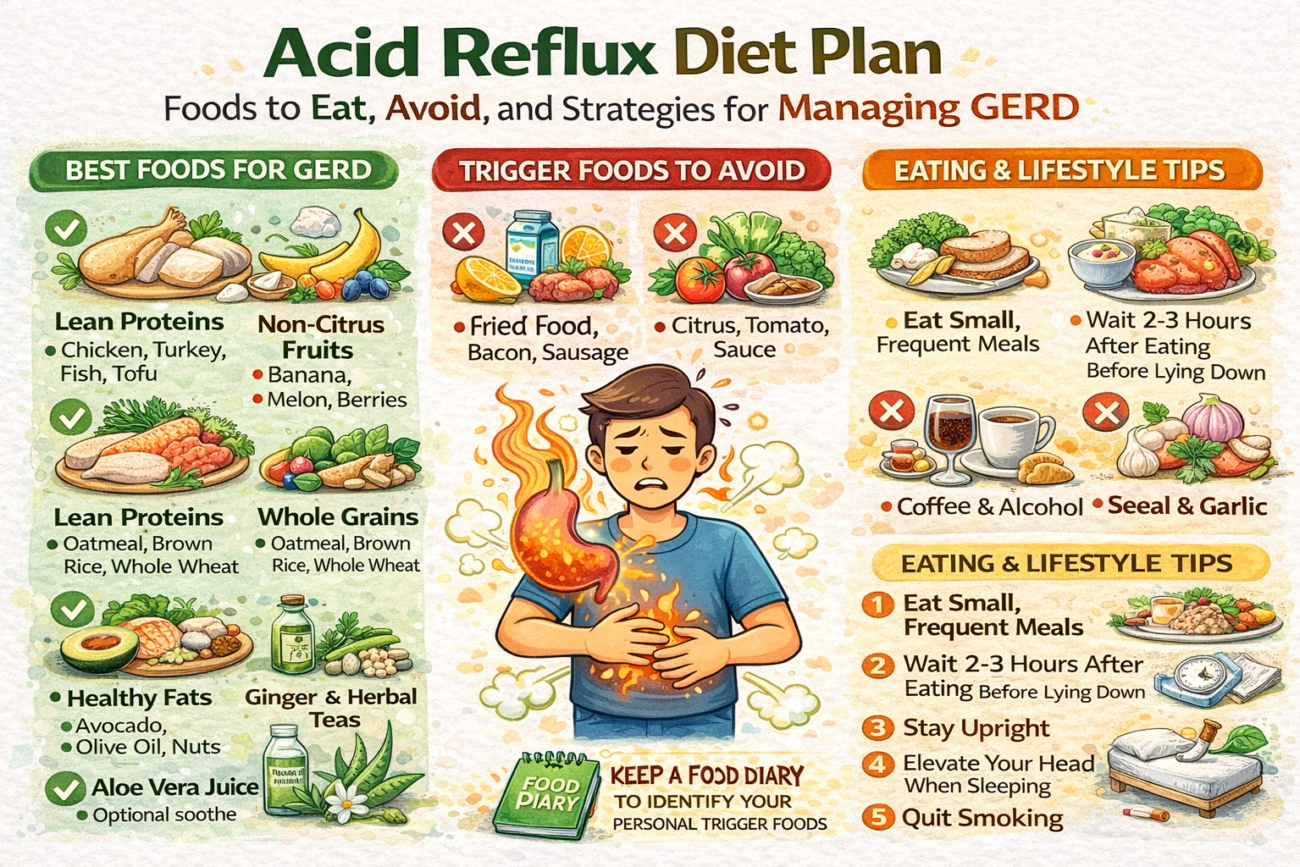
While triggers vary somewhat between individuals, certain foods consistently worsen acid reflux for most people. Identifying and limiting these can dramatically reduce symptoms.
High-Fat Foods
Fatty foods are among the most problematic for acid reflux. They slow gastric emptying, meaning food sits in your stomach longer, increasing the likelihood of reflux. Fat also relaxes the LES, creating the perfect conditions for acid to escape upward. Particularly problematic high-fat foods include fried foods like French fries, fried chicken, and doughnuts, fatty meats such as bacon, sausage, and high-fat cuts of beef or pork, full-fat dairy including whole milk, cream, butter, and high-fat cheeses, and creamy sauces, gravies, and salad dressings.
This doesn’t mean eliminating all fats—healthy fats in moderation are important for overall health. The key is choosing smaller portions of healthier fat sources like avocados, nuts, and olive oil while avoiding large amounts of saturated and fried fats.
Acidic Foods and Beverages
Foods with high acidity can directly irritate an already inflamed esophagus and increase stomach acid production. Common acidic triggers include citrus fruits and juices like oranges, grapefruits, lemons, and limes, tomatoes and tomato-based products including pasta sauce, pizza sauce, ketchup, and salsa, vinegar and vinegar-based dressings, and certain berries, particularly when consumed in large quantities.
Many people with acid reflux find they need to significantly limit or eliminate these foods, at least during symptom flare-ups. Some can tolerate small amounts, particularly when combined with other less acidic foods.
Chocolate
As disappointing as it may be, chocolate is a common reflux trigger. It contains compounds including methylxanthines that relax the LES. Chocolate also contains caffeine and is typically high in fat, making it a triple threat for reflux sufferers. Dark chocolate tends to be more problematic than milk chocolate due to higher concentrations of these compounds.
If you can’t imagine life without chocolate, try limiting portion sizes, choosing lower-fat varieties, and consuming it earlier in the day rather than as an evening treat.
Caffeine
Coffee, tea, and other caffeinated beverages relax the LES and increase stomach acid production. Many people with acid reflux notice that their morning coffee triggers symptoms. Both regular and decaffeinated coffee can be problematic, though decaf is generally better tolerated.
If you’re not ready to give up coffee entirely, try limiting consumption to one cup daily, choosing low-acid coffee varieties, avoiding drinking it on an empty stomach, and not consuming it within three hours of bedtime. Some people find cold brew coffee less irritating than hot coffee.
Alcohol
Alcoholic beverages relax the LES, increase stomach acid production, and can irritate the esophageal lining directly. Wine, beer, and liquor all pose problems, though some people tolerate certain types better than others. Red wine and beer are particularly acidic.
If you choose to drink alcohol, do so in moderation, avoid drinking on an empty stomach, stay upright for several hours after consuming alcohol, and dilute drinks with water or ice to reduce concentration.
Spicy Foods
Peppers, hot sauce, curry, and other spicy foods can irritate the esophagus and increase acid production. The capsaicin in hot peppers is particularly problematic for many reflux sufferers. However, response to spicy foods is highly individual—some people tolerate them fine while others experience immediate symptoms.
Mint
Peppermint and spearmint, while soothing for some digestive issues, relax the LES and can worsen reflux. This includes mint teas, candies, and gum. If you enjoy the fresh taste, try alternative herbs like ginger or fennel that don’t have the same effect on the LES.
Carbonated Beverages
Sodas and other carbonated drinks introduce gas into the stomach, increasing pressure that can force the LES open. The carbonation itself, regardless of sugar or caffeine content, can trigger reflux. Even carbonated water can be problematic for some people.
Onions and Garlic
These aromatic vegetables are frequent triggers, particularly when raw. They can relax the LES and increase acid production. Some people tolerate cooked onions and garlic better than raw, while others need to avoid them entirely.
Foods to Include: Reflux-Friendly Options
Focusing on what you can eat rather than just what to avoid makes dietary changes more sustainable and enjoyable. Many delicious, nutritious foods are well-tolerated by most people with acid reflux.
Lean Proteins
Lean protein sources are generally well-tolerated and help you feel satisfied without triggering reflux. Excellent choices include skinless chicken breast, turkey, fish and seafood (baked, grilled, or steamed, not fried), lean cuts of beef or pork with visible fat trimmed, eggs prepared without added fat, and plant-based proteins like tofu and tempeh.
Preparation methods matter significantly. Grilling, baking, steaming, or poaching are preferable to frying. Removing skin from poultry reduces fat content substantially.
Non-Citrus Fruits
Many fruits are safe and beneficial for people with acid reflux. Good options include bananas, which are alkaline and can help neutralize stomach acid, melons like cantaloupe, honeydew, and watermelon, apples and pears (though some people find certain varieties too acidic), papaya, which contains digestive enzymes that may help, and berries in moderation, particularly blueberries.
Bananas deserve special mention—they’re often recommended as a natural antacid due to their alkaline nature and are gentle on the digestive system.
Vegetables
Most vegetables are reflux-friendly, with a few exceptions like tomatoes and onions. Particularly beneficial vegetables include leafy greens such as spinach, kale, and lettuce, root vegetables including carrots, sweet potatoes, and beets, green beans and asparagus, broccoli and cauliflower (though these can cause gas in some people), and cucumbers and celery.
These vegetables provide essential nutrients and fiber while being low in acid and fat. Steaming or roasting vegetables often makes them easier to digest than eating them raw.
Whole Grains
Complex carbohydrates from whole grains are generally well-tolerated and provide sustained energy. Good choices include oatmeal, which is particularly soothing for acid reflux, brown rice, quinoa, whole wheat bread and pasta, and couscous.
Oatmeal is often recommended as an ideal breakfast for reflux sufferers—it’s filling, absorbs stomach acid, and provides fiber that supports digestive health.
Healthy Fats in Moderation
While high-fat foods are problematic, you need some healthy fats in your diet. Choose small amounts of olive oil for cooking and dressings, avocado in reasonable portions, nuts and seeds (though watch portion sizes as they’re calorie-dense), and fatty fish like salmon, which provide anti-inflammatory omega-3s.
The key is moderation—small amounts of healthy fats with meals rather than large quantities.
Ginger
Ginger has natural anti-inflammatory properties and has been used traditionally to treat digestive issues. It may help reduce nausea and support healthy digestion without triggering reflux. Fresh ginger tea, grated ginger in cooking, or ginger supplements can all be beneficial.
Aloe Vera Juice
Some people find that drinking aloe vera juice helps soothe the esophagus and reduce inflammation. Choose products specifically designed for internal consumption, as topical aloe products aren’t safe to ingest.
Herbal Teas
Non-mint herbal teas can provide soothing relief. Good options include chamomile tea, which has anti-inflammatory properties, licorice tea (avoid if you have high blood pressure), fennel tea, which may aid digestion, and slippery elm tea, which can coat and soothe the esophagus.
Creating an Acid Reflux-Friendly Meal Plan
Understanding individual foods is important, but creating balanced meals that control symptoms while meeting nutritional needs is the ultimate goal. Here’s how to structure your eating patterns:
Breakfast Ideas
Start your day with reflux-friendly options like oatmeal topped with banana and a small amount of almond butter, egg white omelet with vegetables and whole grain toast, smoothie made with non-citrus fruits, leafy greens, and almond milk, or whole grain cereal with low-fat milk and melon.
Avoid breakfast triggers like orange juice, coffee on an empty stomach, and high-fat breakfast meats.
Lunch Suggestions
Midday meals might include grilled chicken breast with steamed vegetables and brown rice, turkey and avocado wrap with lettuce and cucumber, quinoa salad with vegetables and grilled fish, or vegetable soup with whole grain crackers and lean protein.
Focus on lean proteins, plenty of vegetables, and whole grains while avoiding heavy, fatty, or acidic options.
Dinner Options
Evening meals should be lighter and consumed at least three hours before bedtime. Good choices include baked salmon with roasted sweet potato and green beans, stir-fry with lean chicken, vegetables, and brown rice prepared with minimal oil, turkey meatballs with whole wheat pasta and a cream-based (not tomato) sauce, or grilled fish tacos with lettuce, avocado, and corn tortillas.
Keep portions moderate and avoid lying down immediately after eating.
Snack Ideas
Healthy snacks that won’t trigger reflux include apple slices with a small amount of almond butter, whole grain crackers with low-fat cheese, carrot sticks with hummus, banana, or a small handful of almonds.
Avoid late-night snacking, which increases nighttime reflux risk.
Eating Habits That Reduce Reflux
How you eat matters as much as what you eat. Implement these strategies to minimize symptoms:
Eat Smaller, More Frequent Meals
Large meals distend your stomach, putting pressure on the LES and making reflux more likely. Instead of three large meals, try eating five or six smaller meals throughout the day. This approach keeps your stomach from becoming too full while maintaining steady energy levels.
Eat Slowly and Chew Thoroughly
Rushing through meals causes you to swallow air and doesn’t allow proper digestion to begin in your mouth. Take time to chew each bite thoroughly, put your utensils down between bites, and make meals a relaxed, mindful experience rather than something to rush through.
Don’t Eat Before Bedtime
Lying down with a full stomach almost guarantees reflux for many people. Finish your last meal or snack at least three hours before going to bed. If you must eat closer to bedtime, keep it very light and stay upright afterward.
Stay Upright After Eating
Gravity helps keep stomach contents where they belong. Remain upright for at least two to three hours after meals. If you need to rest, prop yourself up at an angle rather than lying flat.
Elevate the Head of Your Bed
If nighttime reflux is a problem, elevating the head of your bed by 6-8 inches (not just using more pillows, which can actually worsen reflux by bending you in the middle) allows gravity to help prevent acid from flowing into your esophagus while you sleep.
Lifestyle Factors Beyond Diet
Diet is crucial, but other lifestyle factors also significantly impact acid reflux:
Maintain a Healthy Weight
Excess weight, particularly around the abdomen, puts pressure on your stomach and can push acid into your esophagus. Even modest weight loss can significantly reduce reflux symptoms. Combine your dietary changes with regular physical activity to achieve and maintain a healthy weight.
Quit Smoking
Smoking weakens the LES, increases acid production, and reduces saliva production (saliva helps neutralize acid). If you smoke, quitting is one of the most important steps you can take for reflux and overall health.
Manage Stress
Stress doesn’t directly cause acid reflux, but it can worsen symptoms and may lead to behaviors that trigger reflux like eating quickly, choosing unhealthy foods, or drinking alcohol. Incorporate stress-reduction techniques like meditation, deep breathing, yoga, or regular exercise.
Review Medications
Certain medications including NSAIDs, calcium channel blockers, sedatives, and some asthma medications can worsen reflux. If you take prescription medications and experience reflux, discuss alternatives with your healthcare provider. Never stop prescribed medications without medical guidance.
Wear Loose Clothing
Tight belts, waistbands, and clothing that constrict your abdomen can put pressure on your stomach and contribute to reflux. Choose comfortable, loose-fitting clothes, particularly around meals.
Tracking and Personalizing Your Diet
While the guidelines above apply to most people with acid reflux, individual responses vary. Keeping a food and symptom diary helps identify your personal triggers. Record everything you eat and drink, the time of consumption, portion sizes, and any symptoms that occur, noting when they started and their severity.
After a few weeks, patterns typically emerge showing which specific foods or eating patterns trigger your symptoms. This personalized information is more valuable than generic lists, as you may tolerate foods that bother others or need to avoid foods that don’t appear on typical trigger lists.
When to Seek Medical Attention
While dietary changes help most people with occasional reflux, certain symptoms require medical evaluation. Consult your healthcare provider if you experience frequent heartburn (more than twice weekly), difficulty swallowing, persistent nausea or vomiting, unintended weight loss, symptoms that don’t improve with dietary changes and over-the-counter medications, chest pain (to rule out cardiac issues), or chronic cough or hoarseness related to reflux.
These could indicate complications or more serious conditions requiring medical treatment beyond dietary management.
The Bottom Line
An acid reflux diet plan centers on avoiding foods that trigger symptoms while emphasizing those that are well-tolerated. Eliminating or reducing high-fat foods, acidic items, chocolate, caffeine, alcohol, and other common triggers while building meals around lean proteins, non-citrus fruits, vegetables, and whole grains can dramatically reduce symptoms for most people.
Beyond food choices, eating smaller meals, avoiding eating before bed, staying upright after meals, and maintaining healthy lifestyle habits all contribute to symptom control. The goal isn’t deprivation but rather creating a sustainable eating pattern that allows you to enjoy food while minimizing discomfort.
Start by implementing a few changes at a time rather than overhauling your entire diet overnight. Track your responses to identify personal triggers and tolerances. With patience and consistency, most people can significantly reduce acid reflux symptoms through dietary modifications, potentially reducing or eliminating the need for medication while improving overall quality of life. Working with a registered dietitian experienced in digestive health can provide personalized guidance and ensure you’re meeting nutritional needs while managing reflux effectively.